
A new study shows that pairing native rooftop gardens with solar panels cools urban areas, boosts renewable energy output, and restores local biodiversity.
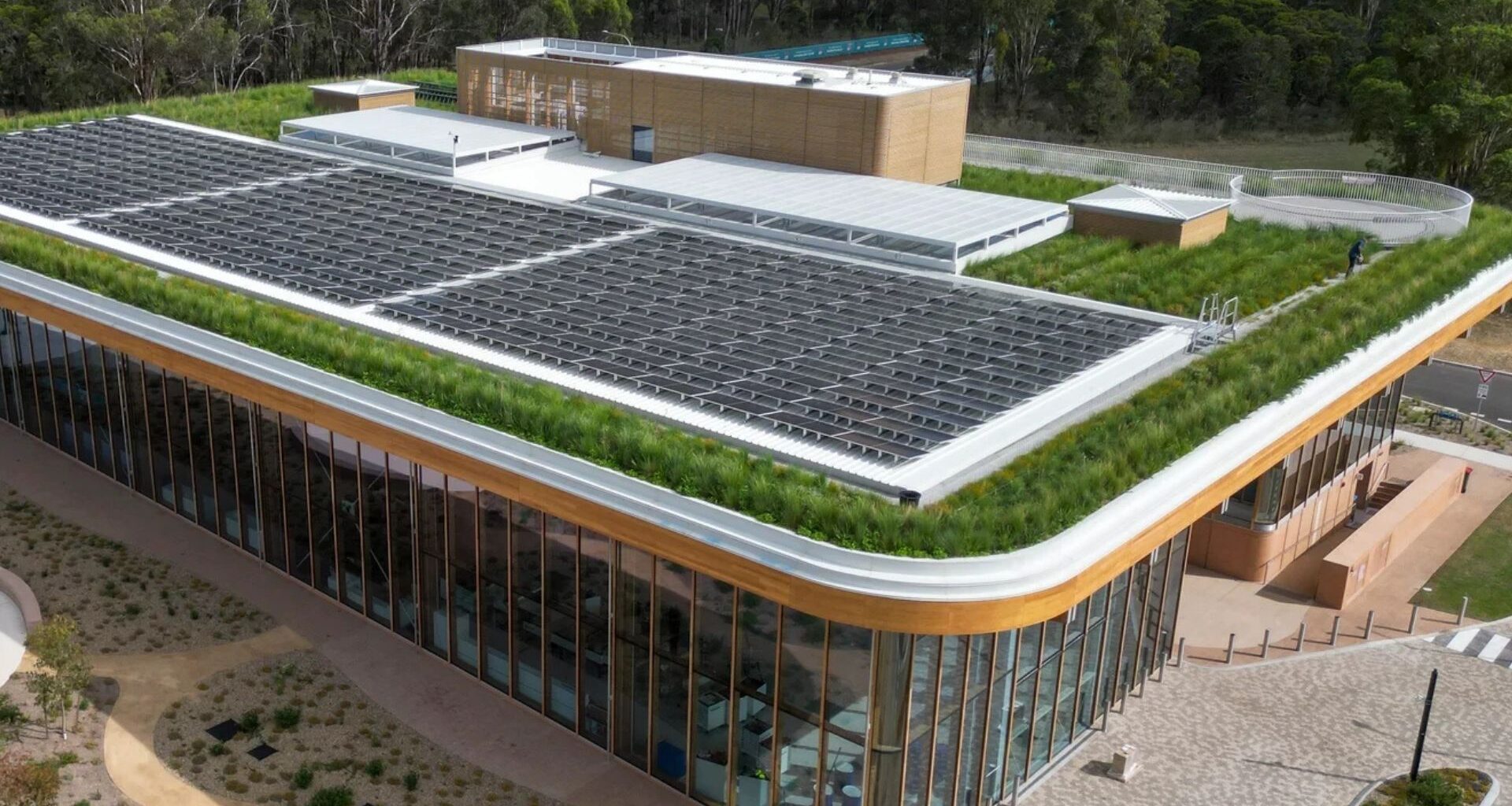
Led by the University of Technology Sydney and the Bradfield Development Authority, a performance assessment evaluated the 1,300-square-meter biosolar green roof on Bradfield City’s award-winning First Building.
As the new city’s inaugural 3,000-square-meter structure, the building serves as a model for sustainable design by combining low-carbon timber and rammed earth walls with an integrated biosolar system. The cooling vegetation enables the solar panels to generate an average of 11.1 percent more power throughout summer.
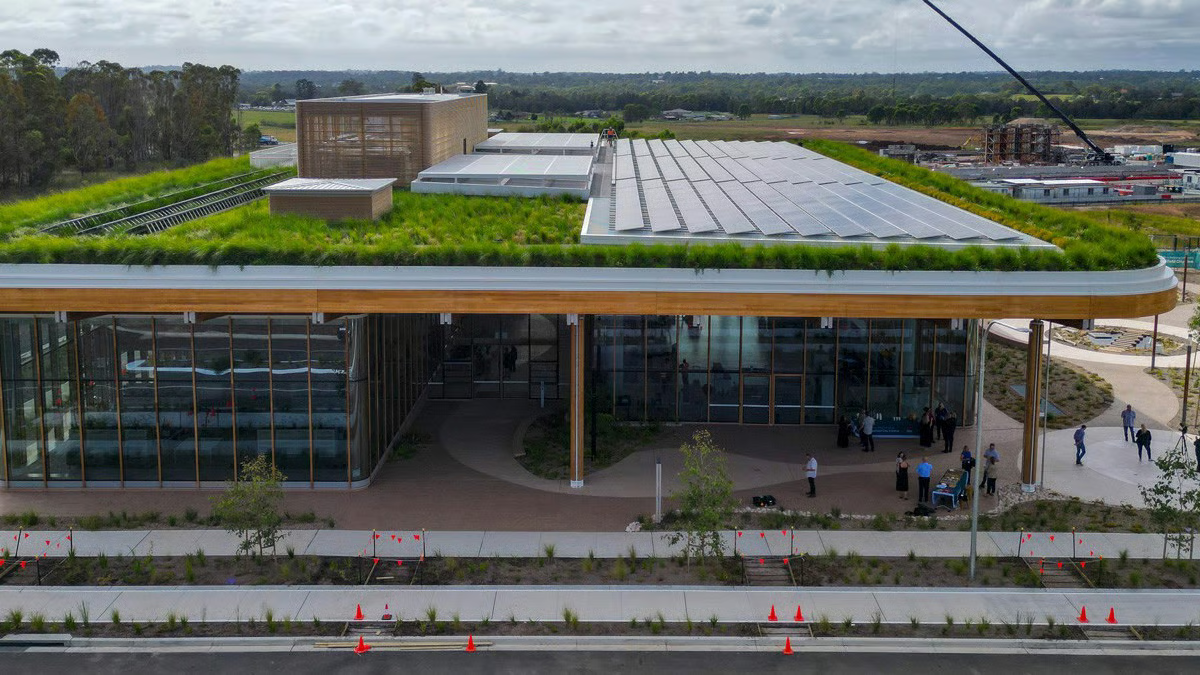 The 1,300 m² roof integrates 14,000 native Cumberland Plain plants with 319 north-facing photovoltaic (PV) panels. Photo: Elmich.
Enhanced energy efficiency
Here is a counterintuitive truth about solar energy: the sunnier and hotter it gets, the worse solar panels perform.
Standard photovoltaic panels hit their peak performance at around 25°C (77 F). For every degree the mercury climbs beyond that threshold, panel efficiency drops by up to two percent. On a hot summer afternoon, a conventional rooftop can become a heat trap that chokes off the power generation it was built to capture.
Researchers evaluated the biosolar roof across five key performance areas: PV efficiency, biodiversity, stormwater filtration, air quality, and heat.
The First Building’s biosolar roof combines 319 north-facing solar panels with over 14,000 native Cumberland Plain plants, leveraging natural evapotranspiration to cool the surrounding air.
“We found the cooling effect of the vegetation was highly dynamic, and became more effective as the ambient temperature rose,” said Associate Professor Peter Irga.
“This means the hotter the day, the harder the plants work to moderate the building’s microclimate and keep the solar panels operating efficiently,” the lead researcher added.
The setup creates a mutually beneficial microclimate where the vegetation cools the solar panels to boost their efficiency and the panels provide shade to support plant growth.
The numbers back up the science.
The biosolar green roof demonstrated environmental and energy benefits by lowering rooftop temperatures by up to 28°C on extreme heat days, which boosted solar power generation by as much as 23.25 percent compared to a conventional roof.
Urban biodiversity
Designed by Hassell and Three Owls Landscaping, the thriving rooftop ecosystem supported 39 distinct species within its first year, including 13 pollinator species like the rare blue-banded bee.
Apart from establishing a complete multi-trophic food web, the green roof served as an effective natural filter by retaining 73 percent of stormwater runoff, stripping over 91 percent of toxic heavy metals, and capturing nearly 24 kilograms of air pollutants annually.
“Seeing a complete multi-trophic food web establish itself in little more than a year, from pollinators and spiders through to kookaburras, was remarkable,” Associate Professor Irga said. “The roof acts as a giant natural filter, substantially reducing the volume of toxic metals entering urban stormwater networks.”
As Australia’s first new city in over a century, Bradfield City establishes a climate-resilient, urban framework in Western Sydney. It integrates housing, education, industry, and public spaces within a regenerative landscape designed to blend sustainable infrastructure with local ecosystem restoration.
The results validate Bradfield City’s Master Plan policy, which mandates green or biosolar setups on 80 percent of suitable new rooftops across Australia’s first new city in a century.
It demonstrates that sustainable architecture can serve as the baseline standard for future urban development when integrated from day one.