
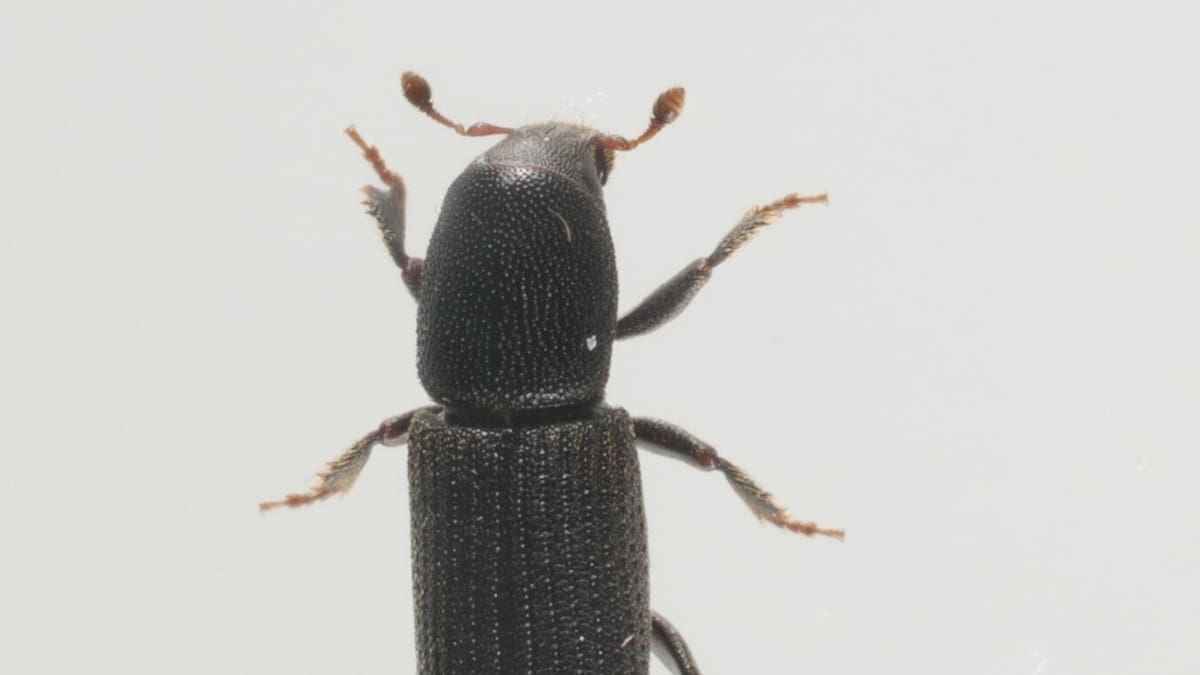
While most of these fungi are common plant associates, the team has detected species with the potential to disrupt plantation forestry, horticulture and native ecosystems if conditions change or new beetle species arrive.
The work includes assessing potential risks to native bush, urban environments and botanical collections and monitoring beetle activity in and around orchards, where new associations and increased aggressiveness in the beetle-fungal system could pose future threats.
Bark and ambrosia beetles tunnel into trees and interact with fungi in different ways.
The latter carry and cultivate specific fungi, while the former pick up a more mixed assortment.
Together, they’re associated with a wide range of woody plants across plantation forests, orchards, urban areas and the native estate.
Their rapid breeding ability means beetle numbers can rise quickly – so their fungal passengers are never short of taxis.
“It’s often these fungi that cause the greatest harm,” Herron said.
“Some fungal species block a tree’s ability to move water and nutrients, weaken natural defences or accelerate disease, particularly when trees are already stressed by drought, age or harvesting activity.
“By identifying these fungal ‘passengers’, we’re building a clearer picture of the microscopic communities being moved across New Zealand and which beetles are more important to focus on from a biosecurity perspective.
“This helps us assess whether these beetles have the potential to facilitate the movement of fungi not currently established in New Zealand.”
Overseas, certain beetle-fungus partnerships have caused extensive forest dieback.
“Our focus is understanding what risks exist here before those impacts occur,” Herron said.
“If we know which beetles can carry damaging fungi and where they’re moving, we can respond faster and reduce the risk to forests and export markets.”
Task lead and Bioeconomy Science Institute Maiangi Taiao scientist Darryl Herron.
The research also contributes valuable information to national surveillance efforts led by the Ministry for Primary Industries (MPI) and industry partners, including the Forest Owners Association, alongside other research programmes.
Understanding fungal diversity carried by these tiny beetle taxis could help refine risk modelling tools, guide where and how surveillance and monitoring are most effective and strengthen post-border surveillance.
Together, these investments support New Zealand’s ability to stay ahead of emerging biosecurity risk, helping protect forests, horticulture and ecosystems and the industries and communities that depend on them.
“Maintaining strong biosecurity pathways is critical for protecting plantation forestry and export markets,” Herron said.
Because bark and ambrosia beetles can occasionally arrive in wood packaging and untreated wood products brought into New Zealand, sector and public awareness remains vital.
Anyone noticing dying trees accompanied by significant insect activity is asked to report it to the Ministry for Primary Industries or email the Bioeconomy Science Institute (fhdiagnostics@scionresearch.com) with a clear photo of the damage and insect activity, and the GPS co-ordinates or address.