
“I’m super optimistic and I think the people of Northland deserve it,” he said.
A decision on which robotic platform will be used is yet to be made but Harmston expects it to be operational early next year.
“Potentially we would look at performing around a hundred surgeries in the first year, increasing to several hundred per year,” Harmston said.
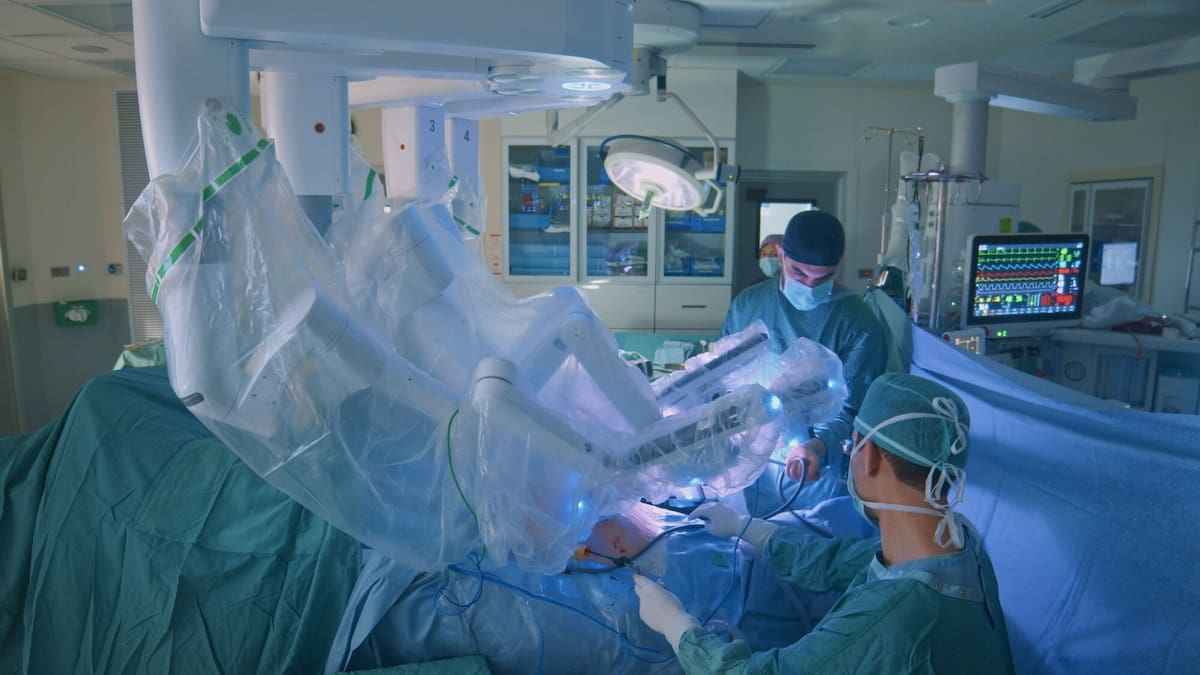
The surgical robot will cost about $2 million and includes a surgeon’s console, robotic arms beside the patient, an imaging system, software and instruments.
“This is not a robot that’s doing anything autonomously, it’s basically a mechanical robot where the surgeon controls the robot,” Harmston said.
The robotic system enhances precision, for example by removing the effects of hand tremors, he said.
The robot would initially be used for urology procedures, particularly prostate cancer surgery, before expanding into colorectal, general and gynaecological surgery.
Northlanders needing robotic prostate surgery currently have to travel to the North Shore, as does the Northland-based surgeon who performs the operations.
Harmston said the North Shore robot was already operating at capacity, making it a struggle for eligible Northland patients to access robotic surgery.
A robot in Northland would allow more surgeries to be performed locally.
Harmston said the key aim was to allow Northlanders to receive treatment closer to home while giving them access to technology that could improve outcomes and speed up recovery.
According to Harmston, there was good evidence using a robotic platform for colorectal cancer surgery, particularly rectal cancer surgery, could lead to better outcomes than laparoscopic or open surgery.
Robotic surgery could also reduce hospital stays for prostate cancer patients by allowing procedures to be performed using minimally invasive techniques.
“So essentially for patients who are coming in and having major surgery, they get home quicker to their families, they have a smoother recovery, they can go back to work quicker, and they can get back to normal life quicker,” Harmston said.
Becoming a “centre of excellence” for robotic surgery was expected to help attract and retain specialist surgeons and theatre staff.
Northland patients could have robotic surgery performed locally at Whangārei Hospital. Photo / NZME
Harmston said clinicians trained in robotic surgery were more likely to work in hospitals where they could use it.
New Zealand faces shortages across several surgical specialities, with workforce studies finding provincial and rural hospitals struggle to recruit and retain staff.
Discussions about introducing robotic surgery to Northland’s public health system began two to three years ago.
Harmston said the focus was on ensuring the technology was publicly available rather than via the private sector.
“ … Which is how it usually starts in lots of other regions around New Zealand.”
Although a philanthropic donor from Whangārei has provided significant funding and Health NZ has given the project the green light, Harmston said “we’re not there yet”.
The next step was confirming the robot’s purchase and seeking further community funding to ensure the programme remained sustainable year on year.
“There is a cost to the equipment needed to run the robot, so we’re going to need ongoing funding from the community but this philanthropic donation has given us a really good start,” Harmston said.
A Northland urologist has trained in robotic surgery, while another surgeon has performed robotic procedures in Auckland, and additional surgeons and theatre staff were beginning training, Harmston said.
Dr Chris Harmston, clinical director of general surgery in Northland.
The donor also committed to more funding if the programme gets up and running.
Harmston said the robotic surgery programme would be closely monitored through a governance framework, with all cases audited during the initial rollout.
Outcomes for major cancers, including prostate and colorectal cancer, would continue to be tracked against national benchmarks, allowing clinicians to monitor safety, complications and patient outcomes.
Harmston said New Zealand had been “a bit late to the party” to adopt robotic surgery compared with Australia and the United Kingdom because of funding constraints, differences in healthcare infrastructure and the time needed to establish other technologies first, such as laparoscopic surgery.
Robotic surgery had been used internationally for about two decades and was already well established overseas, Harmston said.
“This is not a new untested technology. This is just overdue.”
Health New Zealand group director of operations Te Tai Tokerau Alex Pimm said having a soft tissue surgical robot in Whangārei is expected to expand the range of procedures available locally and reduce the number of Northland patients needing to travel to Auckland for treatment.
Health New Zealand is working through the final stages of the process and will make a further announcement soon.
“In the meantime, we would like to thank the generosity of donors that are making this possible,” Pimm said.