
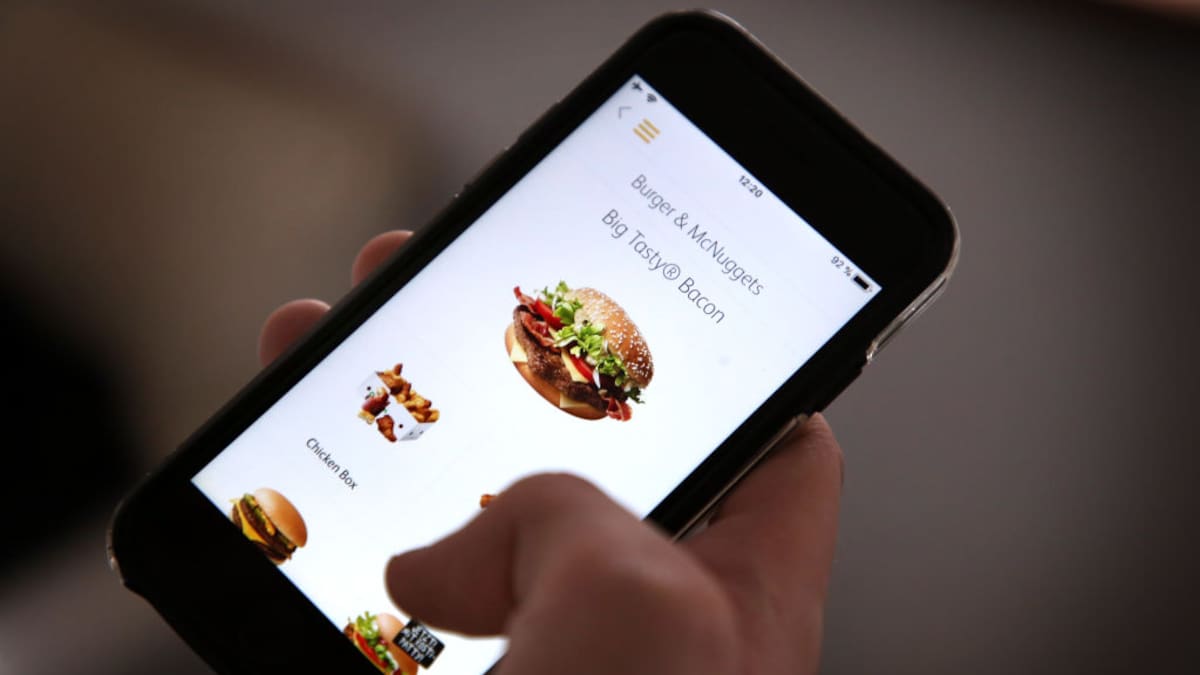
The dossier also stated Rogers had a “Customer Attrition Likelihood” of zero, meaning McDonald’s believed there was no chance he would stop eating there.
In a piece for Wired magazine, Rogers said he understood there would be data tracking by McDonald’s when he joined the loyalty programme, but the volume of information surprised him.
Joseph Turow, a professor emeritus at the University of Pennsylvania’s Annenberg School for Communication, told the New York Post 515 pages on one customer “boggles the mind”.
“That’s AI going crazy,” he added.
“We ought to be concerned globally. This is one case,” Turow told the NY Post.
“Imagine this going on in, you know, hundreds and hundreds of retailers across the United States, right? This is not a one-off.”
The file included numerous predictions on the customer’s shopping habits, including how many times he was likely to visit the store and his average spend.
Photo / File
He said the file is a symptom of a shift towards more personalised marketing, tailored to each individual.
“McDonald’s goal is to make its relationship with you so personalised that you will see yourself in their relationship with you,” the expert said.
After the discovery, Rogers asked McDonald’s Privacy Rights Center to delete the data.
He also vowed to stop eating at McDonald’s.
Sign up to Herald Premium Editor’s Picks, delivered straight to your inbox every Friday. Editor-in-Chief Murray Kirkness picks the week’s best features, interviews and investigations. Sign up for Herald Premium here.