
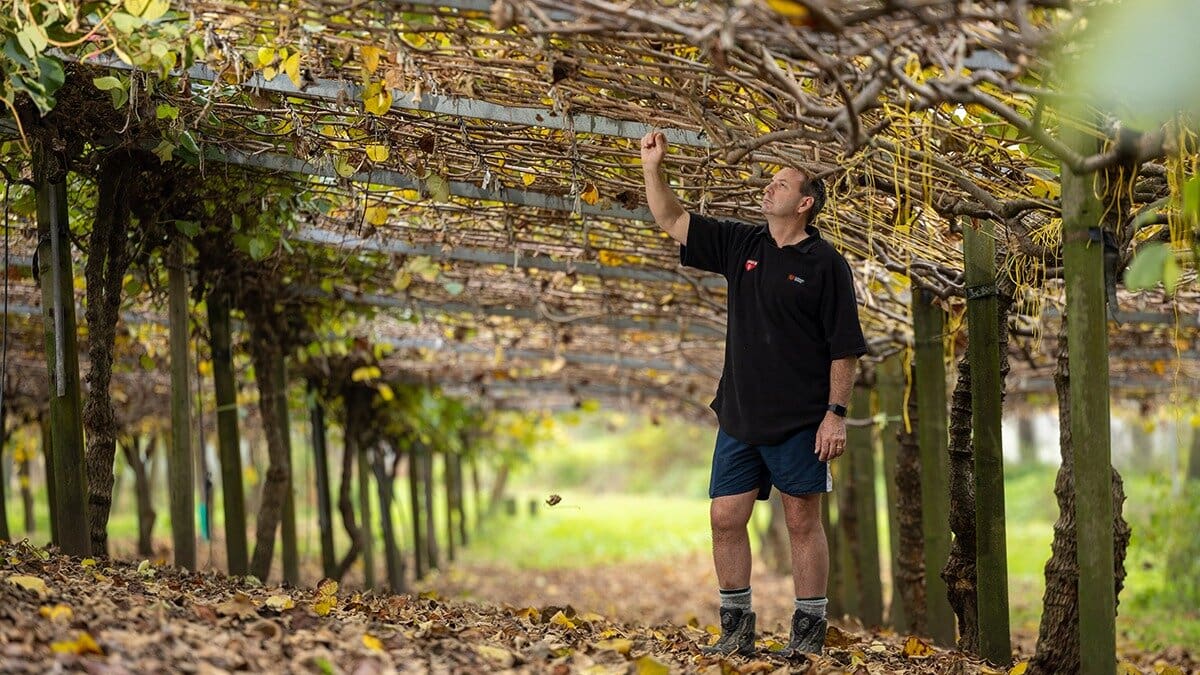
Cook, who was based near the Te Puke farm where Psa was first detected, was contracted by the Ministry for Primary Industries during the initial response to spray infected vines.
He saw an industry under existential pressure, with customers cutting vines back to stumps and some facing the loss of their properties.
“I realised that I can be the best spray contractor in a failing industry, or I can help lift the industry so that my little business survives alongside it.”
Cook said the lesson from Psa was blunt: New Zealand had been “horribly unprepared”.
He saw the same complacency overseas during his Nuffield scholarship, from citrus greening in Florida to banana disease in Queensland.
Too often, industries put “the walls up” only after the threat was inside, he said.
“Think of biosecurity investment as insurance,” he said.
“Your house may not have burnt down, but you know there’s a risk it could, so you get insurance – it’s the same with biosecurity.”
Cook said New Zealand had strong border biosecurity, but growers and farmers must also understand the risks and manage what moves on and off their own properties.
“You have to be your own border control.”
He said the Government had a key role in border protection, rapid responses and working with industry through the Government Industry Agreement framework.
He pointed to brown marmorated stink bug as an example of where more risk management had been pushed offshore, including heat-treating vehicles before they arrived in New Zealand.
Once a threat gets past the border, speed matters, he said.
Biosecurity priorities
Drawing on these experiences, Cook supports Horticulture NZ’s call for stronger early detection, rapid responses and regulatory settings that allow quick approvals during emerging threats.
He said New Zealand had a sound science-based system for assessing these tools through the Environmental Protection Authority and Agricultural Compounds and Veterinary Medicines.
Cook said the challenge was that New Zealand’s small market could make it uneconomic for companies to register newer chemistry here, especially for minor crops.
“A new chemical registration can cost hundreds of thousands of dollars and take years, even when similar information has been accepted by trusted overseas regulators.
“That may be manageable for kiwifruit as a strong industry, but not for smaller crops such as tamarillos, strawberries, passionfruit or avocados, where sales may never justify the cost.”
Cook said that could leave growers using older, broader-spectrum products because newer, softer and more targeted alternatives were not available here.
Cook said one of Horticulture NZ’s election manifesto priorities was practical: protect New Zealand from pests and diseases that could devastate crops and ensure growers could access the tools they needed to produce healthy food responsibly.
“We are the biggest protectors of our environment,” he said.
“We need policies and rules that allow us to manage our environment and work in that environment.”