
Health authorities with ARS Auvergne-Rhône-Alpes have noted an unusual increase in cases of Legionnaires’ disease in Savoie since June. Investigations are underway to determine the source or sources of contamination. Several samples have been taken and are currently being analyzed.
Between June 1st and August 12th, 43 cases of Legionnaires’ disease were reported to health authorities in Savoie:
36 cases reside in Savoie, 7 have stayed in the department.
The sick people are between 26 and 91 years old.
41 cases were hospitalized for respiratory problems; most have been discharged and recovered.
Two deaths have been reported, both involving people over 80 years old.
Epidemiological and environmental investigations are underway to try to determine the origin of the contamination. They are being carried out by the Auvergne-Rhône-Alpes Regional Health Agency and Public Health France, in conjunction with the Regional Directorate for the Environment, Planning and Housing (DREAL), the Departmental Directorate for Employment, Labour, Solidarity and Population Protection (DDETSPP) and the National Reference Centre (CNR).
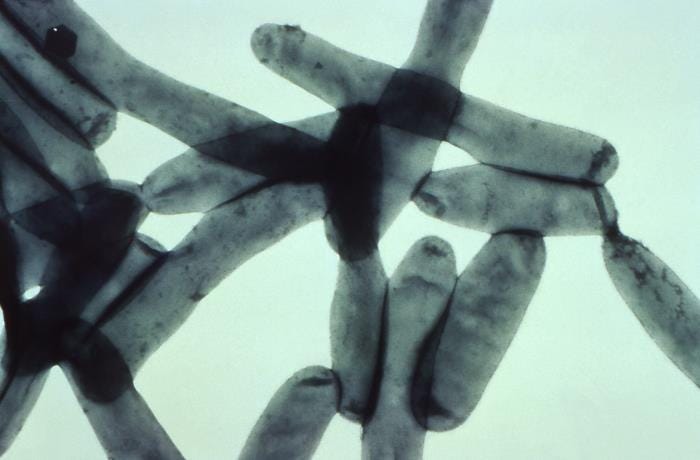
Legionella: A waterborne bacterium of major concern
They made it possible to prioritize the west of the department, particularly the Chambéry basin : 27 of the 43 cases reside and/or have frequented the area.
Around thirty samples were taken : water networks in apartment buildings, cooling towers, supermarkets, restaurants, etc. The first results will be available by August 17.
Healthcare professionals in the sector have been informed of the situation so that they can more quickly identify potential patients with symptoms suggestive of this infection.
Legionnaires’ disease is a lung infection caused by bacteria found in water: Legionella. Human infection occurs through inhalation of fine water droplets containing a high concentration of Legionella, dispersed as aerosols.
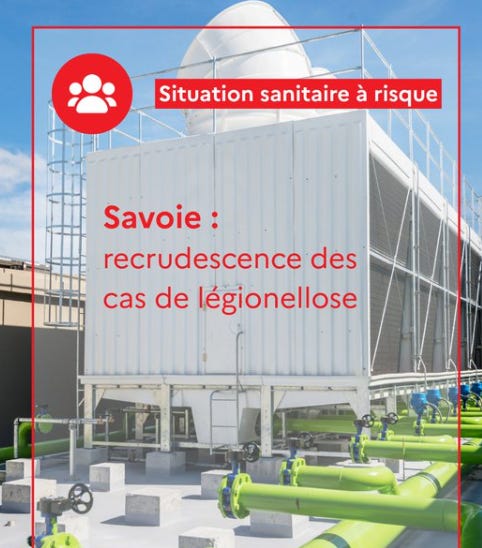
Thus, the most frequent sources of contamination are domestic hot water systems in private or public buildings: showers, hand showers, whirlpool or jet baths, spas, jacuzzis, etc. Less frequently, other sources can cause contamination, such as cooling towers, decorative fountains, misting systems, or sprinklers.
Legionnaires’ disease is not contagious; it is not transmitted from person to person.
Drinking tap water does not present a risk of contamination; only inhalation via the respiratory system presents a risk.
Symptoms of Legionnaires’ disease typically appear between 2 and 10 days after exposure to the bacteria. The illness initially manifests as a severe cough and high fever, sometimes accompanied by gastrointestinal problems in older individuals. In more advanced stages, symptoms can progress to respiratory difficulties . Legionnaires’ disease most often results in hospitalization and, in some cases, death.
Legionnaires’ disease mainly affects adults and especially vulnerable people: the elderly, smokers, people suffering from chronic respiratory diseases, diabetes, diseases or treatments that weaken the immune system.
Legionnaires’ disease requires specific antibiotic treatment which, in most cases, allows for a favorable outcome.