
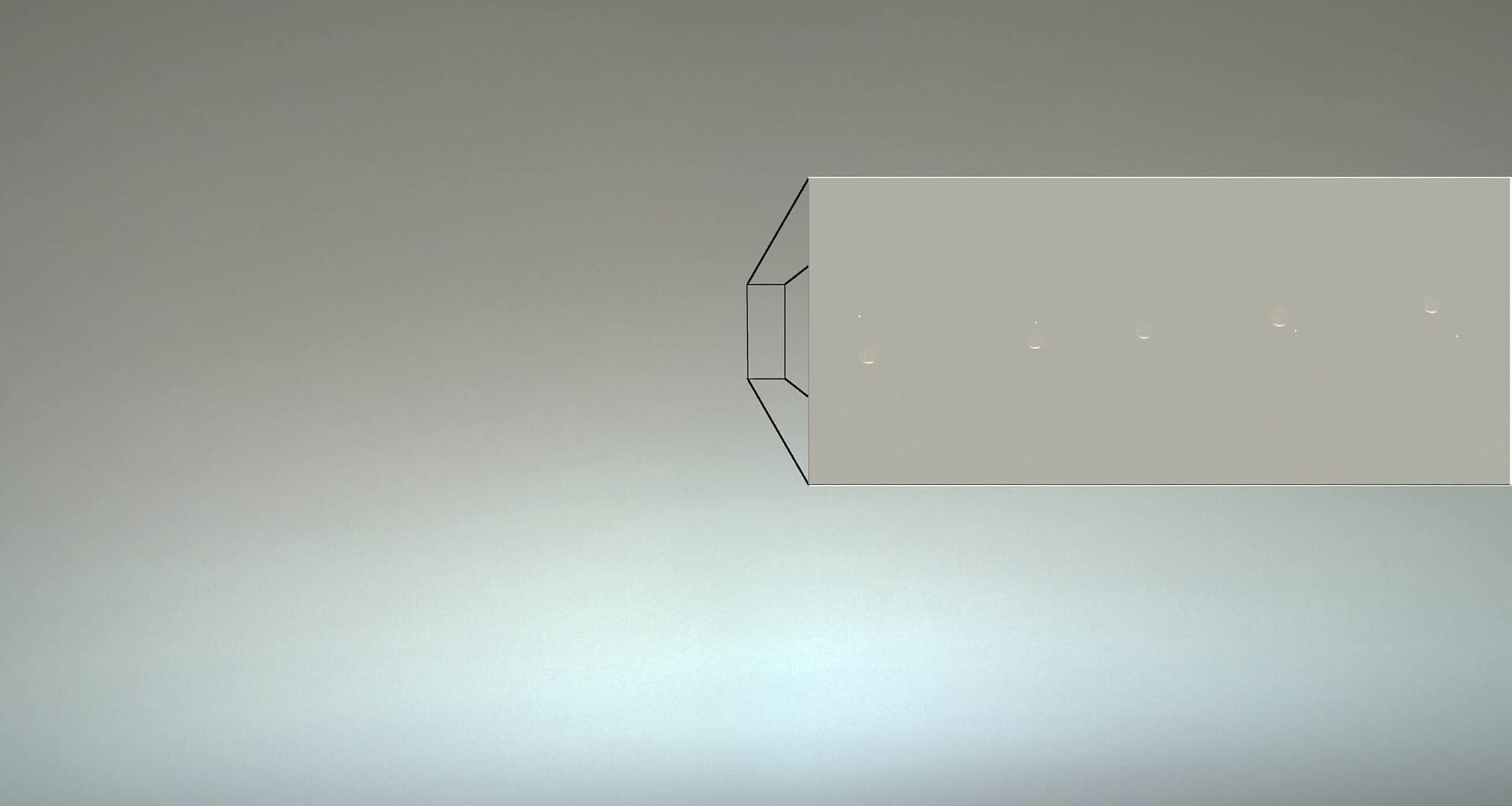
Perseverance caught Earth slipping behind Phobos on Mars, the first time anyone has recorded the sight from another planet’s surface.
In a historic “first-ever” in the history of space exploration, NASA’s Perseverance rover has recorded Earth disappearing behind another object. In this instance, it was Mars’ moon, Phobos.
Because Phobos orbits so close to the Martian surface, it can completely block Earth from view – a perspective impossible to experience from our own planet.
Earth and Phobos meet on camera
The pictures came from Mastcam-Z, the rover’s zoom camera, on July 2, 2026. They were taken on the 1,907th Martian day of the mission.
Earth drifted from the upper left of the frame toward the lower right, while Phobos swept in from the lower left toward the upper right and crossed its path.
On the third of five frames, taken over about 40 seconds, the two met, and Earth blinked out behind the little moon’s shadowed edge.
“The composite image makes for a unique Earth self-portrait, taken from the surface of another planet, with a Phobos photobomb,” said Justin Maki, the Mastcam-Z deputy principal investigator and an imaging scientist for Perseverance at NASA’s Jet Propulsion Laboratory in Southern California.
A moon that orbits impossibly close
Phobos is lumpy and potato-shaped, measuring about 17 miles (27 kilometers) across at its widest point. That’s tiny for a moon.
Earth’s own Moon stretches roughly 2,159 miles (3,475 kilometers) across, well over a hundred times wider.
What Phobos lacks in size, it makes up in closeness. It orbits Mars at a distance of about 4,850 miles (7,800 kilometers), which is roughly a fiftieth of the 239,000 miles (384,000 kilometers) separating Earth from its own Moon. Phobos hugs its planet.
That nearness is why the tiny moon still looked substantial in Perseverance’s pictures. Even though it’s minuscule next to our Moon, Phobos appeared roughly one-third as wide in the Martian sky as our Moon looks from the ground on Earth.
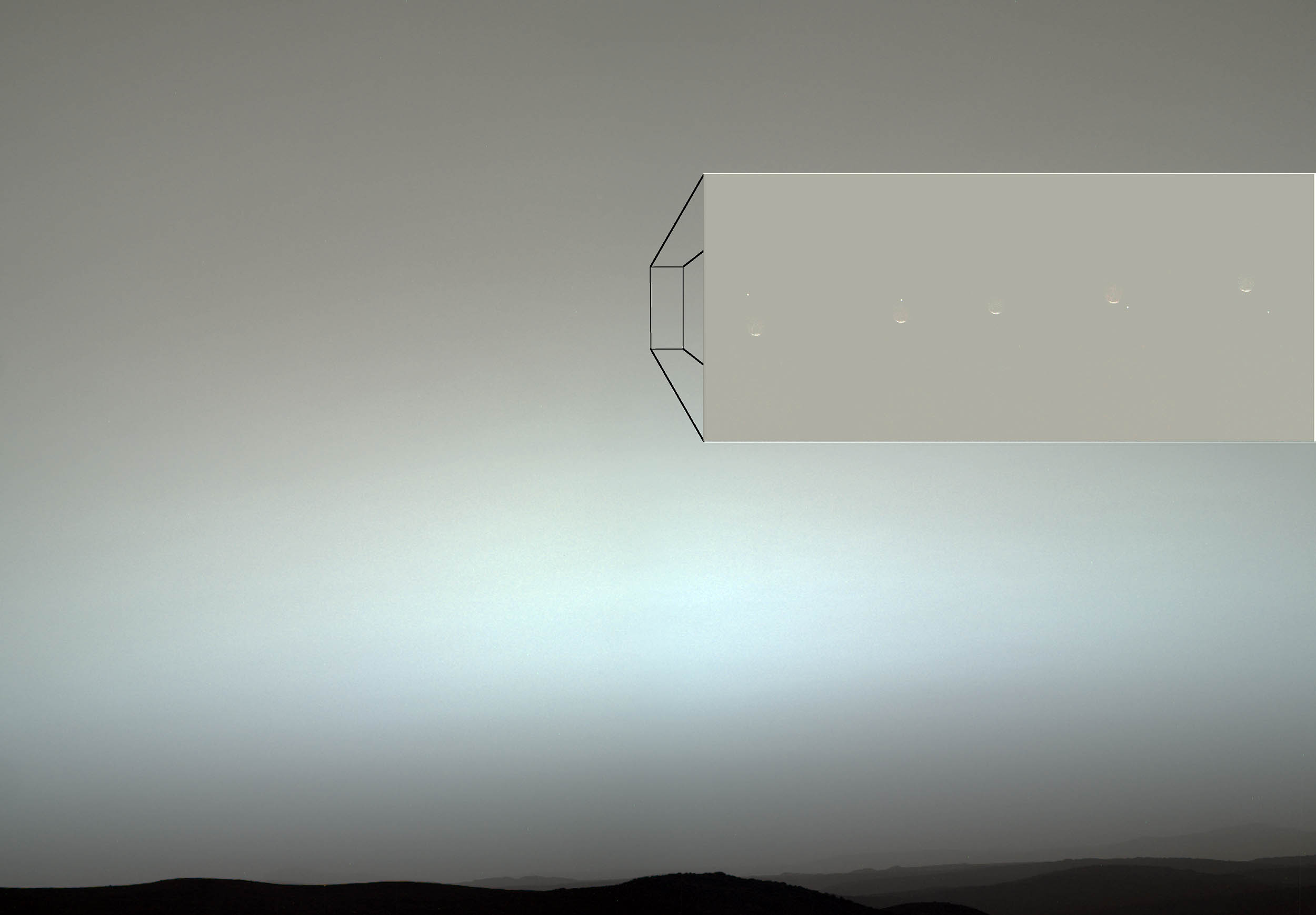 This annotated composite of nine images taken by Perseverance’s Mastcam-Z on July 2, 2026, shows Earth — the small bright dot moving from upper left to lower right — passing behind the Martian moon Phobos. The images in the inset were captured from the same rectangular patch of sky outlined in black. Credit: NASA/JPL-Caltech/ASU/MSSS/SSI. Click image to enlarge.Earth shrinks to a single pixel
Distance did the rest of the work. At the time of the pictures, Earth was about 195 million miles (314 million kilometers) from Mars, more than twice the distance between Earth and the Sun.
From that far off, our entire planet, oceans, mountains, cities and all, appeared as a single point of light, one pixel in the frame.
Phobos, by contrast, filled enough of the picture that its shadowed edge was visible sweeping across the sky.
This wasn’t two equals meeting. It was a nearby lump of rock passing in front of a distant point of light that happened to be home.
Planning, and a little luck
Catching the two together took timing. Perseverance has been exploring the rim of Jezero Crater since it landed in 2021. The images were taken close to 7 p.m. local Martian time, in the evening twilight about 40 minutes after sunset.
Mark Lemmon, a Mastcam-Z co-investigator at the Space Science Institute in Boulder, Colorado, planned the observation and put the sequence together.
“Phobos crosses the Martian sky three times a day, and Earth is visible for months at a stretch, but catching one directly behind the other takes planning and a little luck,” he said.
Mastcam-Z is operated out of Arizona State University, with Malin Space Science Systems in San Diego handling the camera’s design, construction and testing.
Three ways a sky can go dark
Astronomers have separate names for this kind of event, depending on which object looks bigger and which one crosses in front.
What Perseverance recorded is called an occultation: one body, appearing larger from the viewer’s position, completely blocks another.
An eclipse works differently. It happens when an object moves into another’s shadow, the way the Moon goes dark during a lunar eclipse.
A solar eclipse happens because the Moon and the sun happen to look about the same size from Earth, letting the Moon block the sun outright.
Flip the sizes again and you get a transit, when something that looks smaller crosses in front of something that looks bigger.
Perseverance has caught those too, filming Phobos and its smaller sibling moon, Deimos, crossing the face of the sun as seen from Mars. People sometimes call these Martian solar eclipses, even though they’re really transits.
Watching and waiting for a repeat
Nobody has picked a date for the next occultation attempt.
Lining up Earth and Phobos again depends on watching the sky and waiting for the geometry to repeat, and future Mars missions may get the next shot at it.
NASA’s Jet Propulsion Laboratory released the images as a mission update. No research paper accompanies them, since this is a photograph rather than a study.
—–
Like what you read? Subscribe to our newsletter for engaging articles, exclusive content, and the latest updates.
Check us out on EarthSnap, a free app brought to you by Eric Ralls and Earth.com.
—–