
The report showed each entity had been paid $56,734 in the liquidation process, representing 1.13 cents on the dollar for their claims.
Claims totalling $253,801 from former QE Health employees were fully paid out.
No payments had been made for secured claims of $218,499, preferential claims of $347,580 from Inland Revenue and unsecured claims of $1.5m.
QE Health was placed into voluntary liquidation in November and, after failing to secure a buyer, closed in December.
It was originally established in 1942 as a temporary hospital to rehabilitate soldiers returning from World War II. It opened to the wider public in 1948.
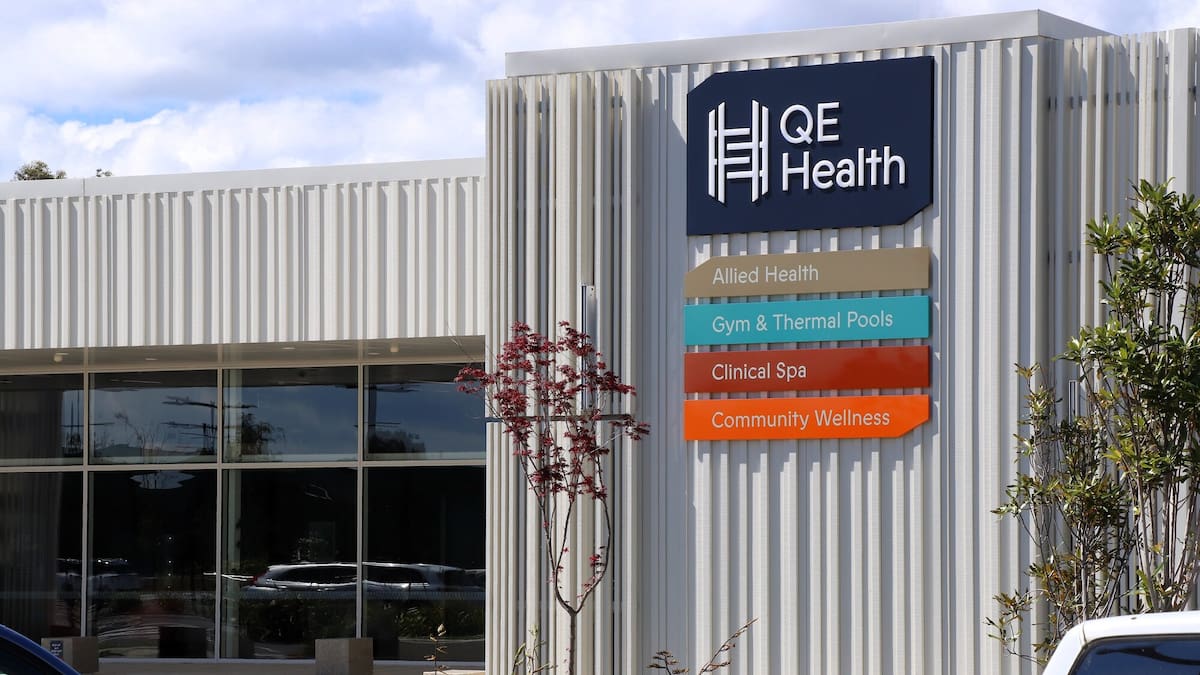
Clinical services included rheumatology, physiotherapy, psychology, orthotics, dietetics, and occupational therapy.
The first liquidator’s report in November showed QE Health owed at least $13m to 132 creditors.
It said the company reported it had been unable to generate enough income to cover its costs.
The former QE Health building being demolished in 2023. Photo / Andrew Warner
The second liquidator’s report showed the company had an “estimated realisable value” of assets worth $760,227 as of June 2. This included cash, debtors, and plants and equipment.
It owed $10.1m to preferential and secured creditors. The total owed to unsecured creditors was to be determined.
The liquidator would continue working through QE Health’s assets and investigating its records and books.
Govt could write off unrecoverable funds
QE Health had funding from loans and grants for its new build.
These included an $8m loan and a $1.5m grant from the Provincial Growth Fund, a $2m loan and a $1m grant from Rotorua Trust, and a $1m grant from the Rotorua Lakes Council.
The Provincial Growth Fund is now administered by Kānoa, the Government’s regional economic development and investment unit.
Kānoa general manager of investment management Brent Chalmers told the Rotorua Daily Post it was waiting on the liquidator to finalise its work, “so we have a full understanding of the position”.
Chalmers said usual practice would be to write off any unrecoverable funds.
Rotorua Trust chief executive Blair Gilbert said the trust was “deeply disappointed” by the loss of QE Health services, which had benefited people from Rotorua and beyond for decades.
He said the trust had worked closely with the liquidator to recover all available funds and to ensure staff were prioritised for payment.
“Despite the financial loss, Rotorua Trust acknowledges the positive impact generated through its investment during the period QE Health remained operational.”
This included removing the ageing buildings and providing health services for patients, he said.
Gilbert said the trust’s diversified investment portfolio had helped mitigate the overall financial impact.
“We remain focused on achieving strong investment performance to ensure we can continue delivering lasting benefits to the Rotorua community.”
What is happening to the building?
Liquidator Steven Khov told the Rotorua Daily Post the QE Health building was no longer an asset of the company, and it had been passed to the landlord as per its lease agreement.
Khov said he was uncertain if there would be other potential avenues for distributions as the liquidation process remained ongoing.
Landowner Pukeroa Oruawhata Trust chief executive Mark Gibb said its subsidiary, Pukeroa Lakefront Holdings Ltd (PLHL), had reached an agreement with the liquidators to surrender the existing ground lease, with the building reverting to PLHL as the landowner.
PLHL also agreed to buy equipment inside the building following QE Health’s closure.
Gibb said PLHL was saddened by the developments with QE Health and its subsequent closure.
He said PLHL took possession of the building from the liquidator late last year and was exploring potential lease options for the site.
Financial struggles
The former interim chief executive of QE Health previously said the primary reason for closure was Health NZ’s “lack of meaningful increases” since 2018 to contract funding, making it “impossible” to cover operating costs.
A potential sale of the business collapsed after Health NZ refused to transfer its contracts, which represented 80% of the business’s income.
Health NZ has said it does not believe its contracting decisions caused QE Health’s closure, and that it understood the decision to place QE Health into liquidation was not based on whether service contracts would transfer.
Patient services formerly provided by QE Health were now being delivered by Health NZ teams and contractors.
Megan Wilson is a health and general news reporter for the Bay of Plenty Times and the Rotorua Daily Post. She has been a journalist since 2021.