
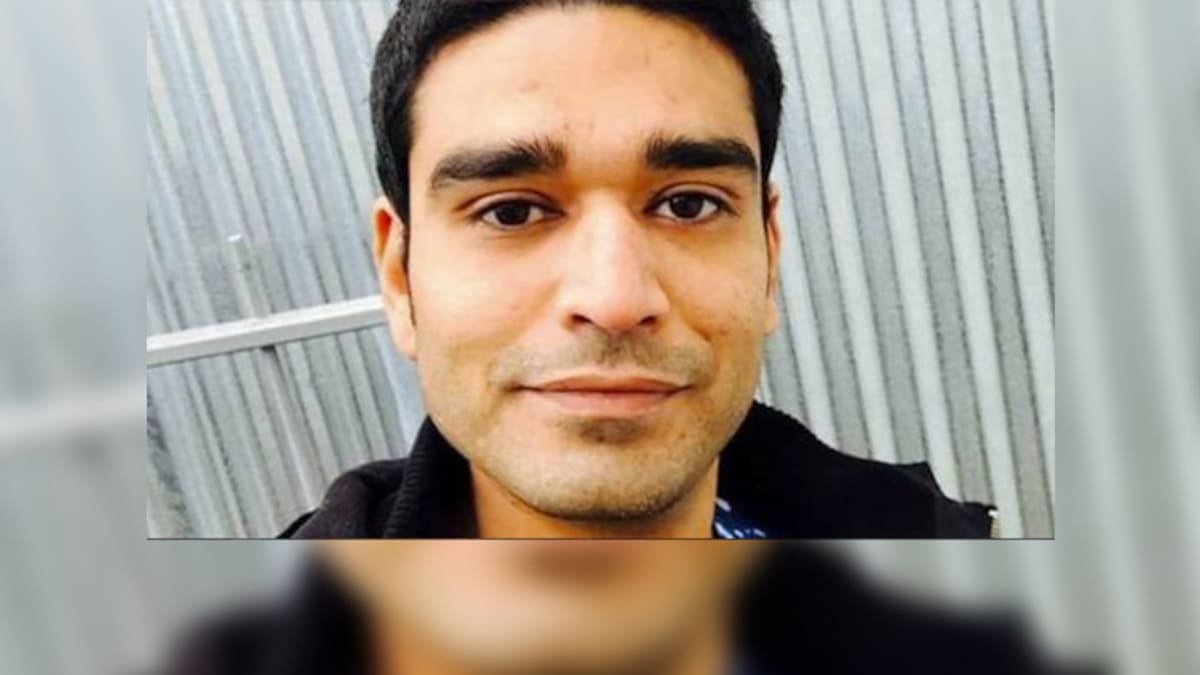
According to a recently released decision, Karauria and Rosie Page Lewis, also 17, hatched a plan in December 2017 to steal a car.
As part of that plan, Dhiman was befriended on Tinder by Lewis and told to drive to a remote area.
The decision said he was effectively “set up”.
Once there, Karauria took Dhiman for a walk, during which he attacked the 30-year-old with a knife, stabbing him nine times.
Despite his injuries, Dhiman managed to stagger back towards the road, where he collapsed.
At that point, Karauria attacked him again, stomping on his face and head.
“The clear purpose was to make sure he was dead,” the decision stated.
As Karauria went to drive off in Dhiman’s car, Lewis said she thought Dhiman had moved.
Karauria returned and repeated the attack.
Dhiman was left where he lay on Matahorua Rd near Tūtira, and was found dead 12 hours later.
The IT professional had been living in Napier for about seven months before his death. He came to New Zealand from India to pursue study and job opportunities.
Sentencing a teenager
When sentencing Karauria in the High Court eight years ago, Justice Simon France described the murder as involving both extensive planning and extreme brutality.
Those features triggered provisions of the Sentencing Act reserved for the most serious murders and resulted in a starting point of a 17-year minimum period of imprisonment (MPI).
But Justice France also paid close attention to the then-teenager’s background.
The court heard that Karauria’s father died when he was 11, after which his life became increasingly unstable.
He moved between relatives, lived briefly in Wairoa and Taranaki, and reported being subjected to violence during some of those periods. He left school without qualifications and spent time homeless.
Mental health difficulties emerged after his father’s death, and he struggled with depression, alcohol abuse, thoughts of suicide and self-harm.
Justice France described Karauria as emotionally immature and noted that, despite the deliberate nature of the murder, he lacked the capacity to fully understand “what it truly means to kill someone”.
Sandeep Dhiman’s body was found in a shallow ditch on Matahorua Rd in Tūtira.
“You are not an adult,” he said at the time.
“You do not think like one, you are not capable of thinking like one, and culpability is not to be assessed as if you are one.”
Those factors led Justice France to reduce the MPI by three years. A further two-year reduction was granted for his early guilty plea, resulting in life imprisonment with an MPI of 12 years.
Lewis also admitted to the murder and was sentenced to life imprisonment with a minimum term of 11 years.
In Karauria’s recent application to the Court of Appeal, he relied on a 2023 ruling known as Dickey v R, which recognised that the neurocognitive underdevelopment of young people can reduce their culpability and, in some cases, make life imprisonment for murder manifestly unjust.
His lawyer argued that the decision represented a change in the approach to sentencing some young offenders for murder and that, had the principles applied in Dickey been available in 2018, a finite prison term might have been imposed instead.
But the Court of Appeal disagreed.
Its decision found Justice France appeared to have anticipated the “thrust of Dickey” when he sentenced Karauria, by considering his age, disadvantaged upbringing, mental health struggles and immaturity.
The senior court also pointed to a critical distinction.
Unlike the offenders in Dickey, Karauria’s case involved calculated planning and a high level of brutality.
His offending was more culpable than that of several other young offenders who had sought to reopen their sentences since Dickey.
“In our view, the culpability attending his planned and brutal murder of Mr Dhiman would have prevented the imposition of a finite sentence,” the Court of Appeal ruled.
“A sentence of life imprisonment with an MPI of at least 12 years would not have been manifestly unjust.”
It also noted that almost seven years had passed between Karauria’s sentencing and the filing of his application in April 2025, saying such delays undermined the principle that criminal cases should eventually reach a point of finality.
The application was declined, leaving Karauria’s life sentence unchanged.
Tara Shaskey is an assistant editor and reporter for the Open Justice team. She joined NZME in 2022 and has worked as a journalist since 2014.
Join the NZ Herald’s Open Justice team for Case by Case, a video and podcast series examining the disputes and decisions making headlines across New Zealand.