
Communities are being “left in limbo” by the government’s unwillingness to decide how the country will pay for climate change adaptation, the Climate Change Commission’s boss says.
In a report published on Tuesday, the commission said New Zealand’s progress on adaptation was “patchy” and was not keeping pace with how fast the risks were growing.
While there had been some progress since its last update in 2024, delays on crucial issues such as funding were leaving communities exposed to greater damage, disruption and costs.
“The pace and scale of the action required is growing year by year,” the report said.
“Sharp efforts to reduce future climate-related risk are needed to avoid an intensifying spiral of urgent response to extreme events without time between to fully recover.”
It made six urgent recommendations, saying they were not “pick and mix” but must be put in place together.
Commission chief executive Jo Hendy said the government’s next national adaptation plan was not due until 2028, but the commission was looking for progress on its recommendations earlier than that.
“There is a lot that people can do to reduce their risk to changing climate – the problem is, that lack of clarity around these fundamental areas is standing in the way.”
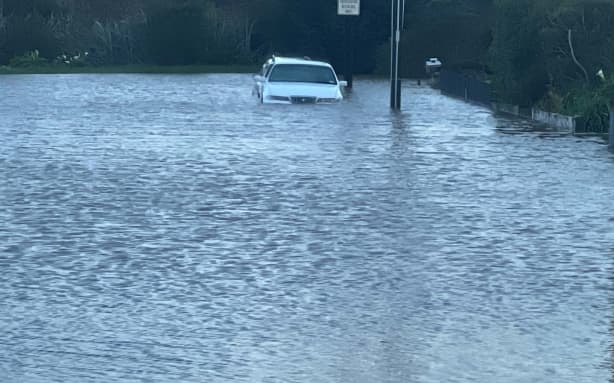
Flooding in Cobden, in the north of Greymouth, July 2026
Supplied
Investing in proactive adaptation would help to reduce future costs and protect communities, but there were not enough resources available at the moment to do that, the report found.
Central government must first decide what it would and would not pay for itself, to make it clear what the funding gap would be.
Then it needed to work with local councils and the private sector to find new ways to fund and finance the remaining costs.
Some councils and communities had already developed plans, but were “being left in limbo because these building blocks have not been put in place”, Hendy said.
“Some of these are hard decisions that need to be made, but delaying the hard decisions – kicking them down the road – doesn’t actually make them go away. It increases the future cost and harm that we face.”
The government currently contributed about 60 percent of disaster recovery costs after an event, Hendy said.
“But there’s nothing comparable for proactive adaptation, even though we know acting proactively is much more cost-effective.”
Last month, the government introduced legislation that would require councils to make adaptation plans for high-risk areas, at least 30 years into the future.
The commission said that was an important step, and partly addressed its second recommendation to require local adaptation planning.
However, without any decisions about who would pay, the proposed changes would “increase the gap between what is required and funds available to local government”.
The government has repeatedly said it will defer any decisions about cost-sharing until the next parliamentary term.
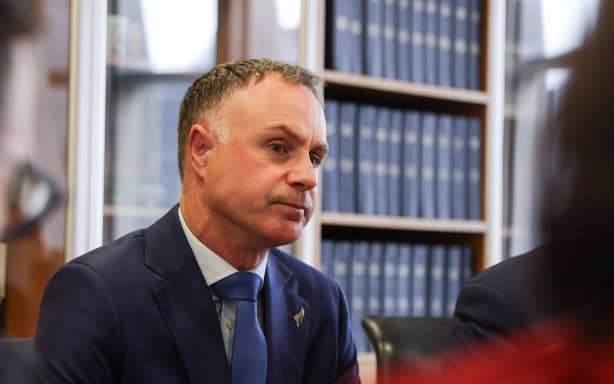
Climate Change Minister Simon Watts.
LDR / file
Climate Change Minister Simon Watts told RNZ last month that the government was not “head in the sand” about the potential costs, but it was the most complex and politically charged part of the adaptation challenge.
The commission said while the proposed requirements for local adpatation plans were positive, it was not clear how a high-priority location would be defined.
The report’s other recommendations are that the government:
Embed climate change into laws governing the natural and built environmentImprove national climate change data and make it accessible and usable for allEnsure iwi/Māori can plan for and carry out adaptationMake the next national adaptation plan a stronger driver of action
This year’s government Budget marked the end of funding for the Māori Climate Platform, which has helped to fund small-scale climate resilience projects at about 10 percent of the country’s nearly 800 marae.
The final $1.4 million was allocated last month to four projects, in addition to $10.8m that had already been spent.
Hendy said there needed to be dedicated, ongoing funding for that work.
“After many of the flooding events, it’s often the local marae that is providing support to the wider community,” she said.
“We all benefit from Māori-led action.”
There was also still work to do on the government’s resource management reforms, to ensure they did not work at cross-purposes with climate adaptation planning.
“What we really want is for all decisions that people are making about the future to be properly considering what is going to be happening to our climate and the risks we will face,” Hendy said.
“In that way, we build communities that are more resilient, rather than building the next climate disaster.”
In a written statement on Tuesday, Watts said recent severe weather events had highlighted the challehnges facing communities across the country.
The government recognised the importance of being better prepared for the future and would carefully consider the commission’s recommendations, he said.
“Our focus remains on practical action to help communities prepare for the impacts of climate change while protecting taxpayers’ money,” he said.
That included $200 million from the Regional Infrastructure Fund that had been invested in flood resilience, and $400 million allocated in this year’s Budget to make the road network more resilient.
The government was also funding New Zealand’s first national flood hazard map, which is due in its first iteration mid-next year.
“There is more to do, but New Zealand is better prepared today than it was three years ago because this government has moved from talking about adaptation to delivering it,” Watts said.