
“This activity was notified to CAA NZ by the Russian Air Traffic Management Corporation, resulting in the issuance of a Notam advising pilots of the hazard,” a spokeswoman said.
Speaking on Ryan Bridge TODAY, Mapp – who was the North Shore MP from 1996 to 2011 and the fifth National Government’s first Defence Minister – said the material was “bound to be either a re-entering satellite or space junk” originating from Russia’s space programme.
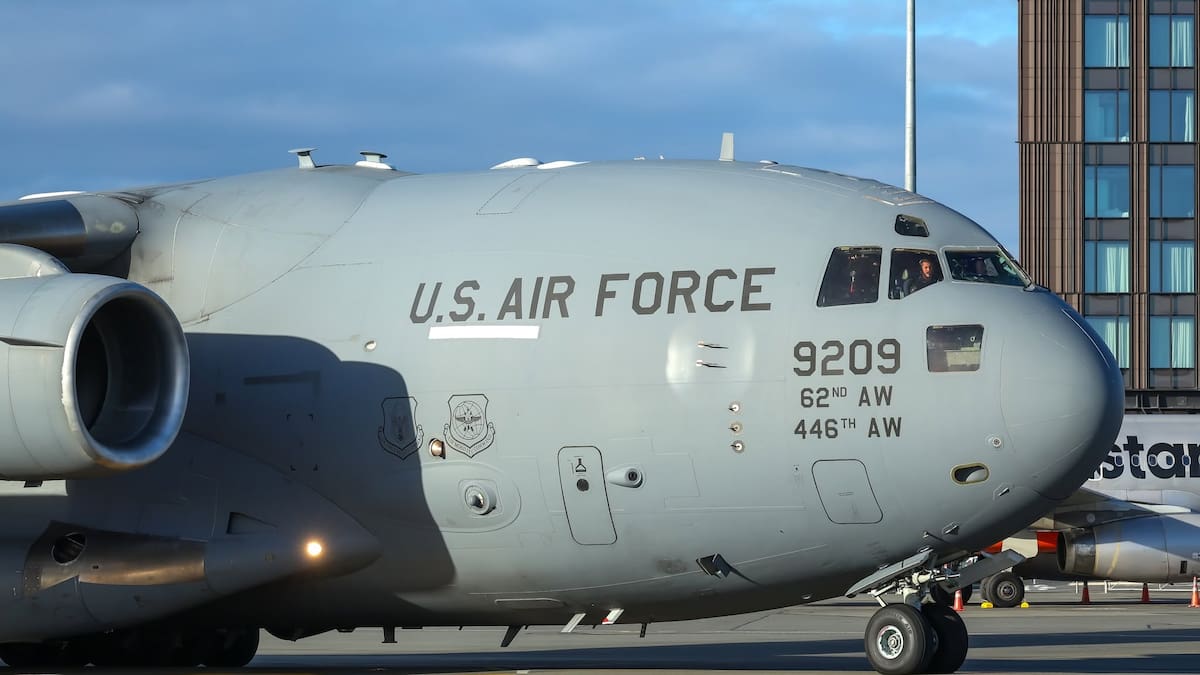
The C-17 Globemaster returned to Christchurch after receiving an official aviation notice warning Antarctic-bound aircraft of “potentially hazardous” space activity. Photo / Graham Sutherland
“The fact that the Russians contacted the CAA would indicate that it was their satellite, or perhaps just a bit of space junk that they were monitoring.
“The CAA issues their Notam and, obviously, the crew of the Globemaster decided not to take any risks, and that was pretty sensible, I would have thought.”
Mapp said countries typically direct their space debris into an isolated area of ocean in the deep South Pacific, colloquially known as the world’s “spacecraft cemetery”.
Point Nemo lies between New Zealand and South America, more than 2500km from land, making it an ideal dumping ground for defunct space equipment.
“That’s where they’ve targeted, but frankly, sometimes they overshoot, and that was the risk here, I guess, because the route from Christchurch to the Antarctic is pretty much on the edge of that zone,” Mapp said.
“It doesn’t always work. You know, space junk has been found in New Zealand, often of Russian origin, even as far west as Australia.
“So it’s not a guaranteed science; it’s an intent. Mostly it happens, but sometimes they overshoot.”
Sign up to The Daily H, a free newsletter curated by our editors and delivered straight to your inbox every weekday.