
“Everyone’s got it all the time. And you can kind of see it,” he said.
A University of Waikato spokesperson said it would not characterise scabies as widespread or “rampant” in its student accommodation, but the institution did not hold data allowing it to identify trends or compare prevalence year-to-year.
Battle for diagnosis
When the student first noticed his itching, he said he knew nothing about scabies and thought he had allergies or crabs.
He had put off seeking help, but as his condition got worse, he attended a sexual wellbeing clinic.
The student was told he had a fungal infection and given creams and ointments.
“I went and saw student health when it kept getting worse, and they doubled down on it being fungal, gave me more creams.”
After he saw the student health service again, they looked at scabies as the possible cause and gave him permethrin cream.
He said the cream did not work and scabies was ruled out.
The student then visited another sexual health provider who said he had psoriasis, and was eventually referred to a dermatologist, which cost him $600.
“It has taken a lot of self-advocacy to be seen for scabies”.
Throughout his journey to an accurate diagnosis, he also had to pay for multiple appointments, 15 prescriptions and blood tests.
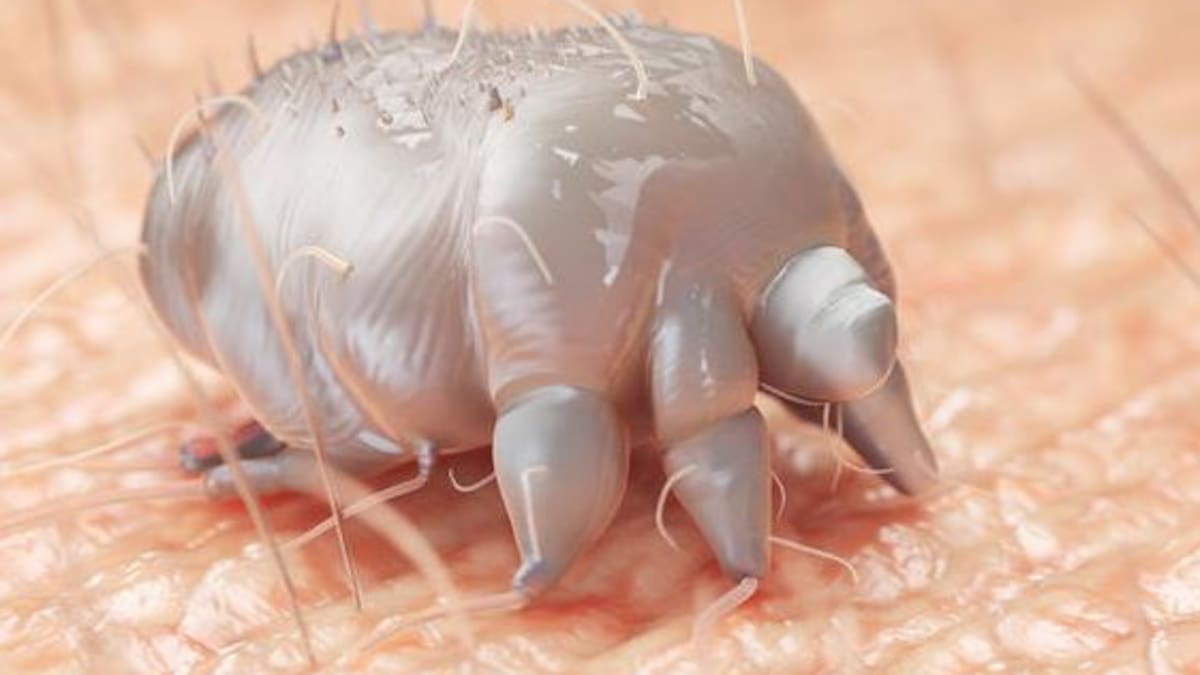
A university student who has had scabies six times says there were too many barriers to getting the treatment. Photo / 123RF
At the dermatologist appointment, he was “immediately” told his scabies was “super infected”.
He was given a “huge dose of ivermectin”, which cleared up his symptoms quickly.
“I‘m convinced ivermectin’s the only thing that works,” the student said.
During this period, he said the constant itching left him unable to sleep and affected his work.
He said after every university break he would be reinfected.
The condition also hit the student financially, saying he noticed the power bill “goes way up” when his flat had to hot wash and dry everything or use a laundromat.
“We’ve noticed our power bill went up at least $50 this month.”
Treatment barriers
When attempting to access effective treatment, he said he ran into “many barriers”.
This included dealing with medical professionals who were “very hesitant” to diagnose it.
The student said medical services often refused to give ivermectin despite it being the only treatment that worked for him.
“They get really cagey about giving you ivermectin because apparently it takes a toll on your liver.”
He said more needed to be done to improve how long it took to receive a diagnosis.
“I think there needs to be a public health approach to it all. There needs to be education around it or something, because the resources online are far and few between and not very good, pretty unclear,” he said.
Scabies difficult to diagnose – Health NZ
Health New Zealand’s national clinical director primary and community care Dr Sarah Clarke said scabies was not a notifiable disease, meaning national or regional case numbers were not collected.
However, “we are hearing that it is a concern in some communities”, she said.
Clarke said scabies could be difficult to diagnose because its symptoms could resemble other skin conditions.
“In some cases the diagnosis is straightforward, while in others it may require multiple consultations before the diagnosis becomes clear.”
Current clinical guidance recommended permethrin as the first-line treatment because it was effective for most people when used correctly, Clarke said.
Oral ivermectin could be used “when topical treatment has not been successful or where topical treatment is not suitable or practical”.
Clarke said recurrent scabies was often linked to reinfection from household members or other close contacts “rather than failure of medicine itself”.
“Successful treatment requires all household members and close contacts to be treated at the same time to help prevent the infestation returning.
“Ongoing itching can continue for several weeks after successful treatment, and a healthcare professional can assess whether symptoms are due to reinfection, ongoing infestation, or another skin condition.”
A university spokesperson said students with suspected scabies were assessed by a clinician and “provided with appropriate treatment and advice on managing symptoms and reducing transmission”.
Students concerned about a rash, persistent itching or other symptoms were encouraged to seek medical advice promptly.