
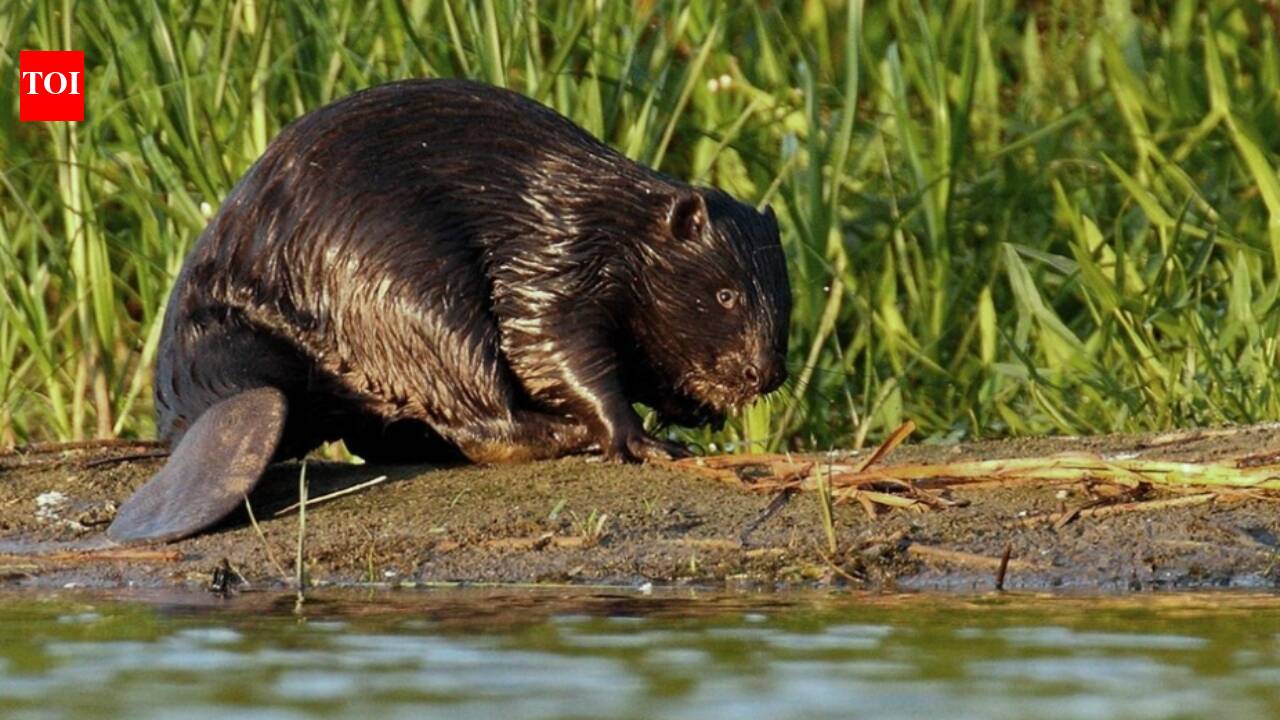
 A beaver feeding near the edge of a freshwater pond. Credits – Wikipedia Commons In the 1930s, Finland was trying to bring back a beaver that had disappeared from the country. The Eurasian beaver (Castor fibre) had been hunted to extinction in Finland by the late 19th century, with the last recorded animal killed in 1868. Reintroduction efforts began in 1935, when beavers from Norway were brought in. But when more Norwegian animals could not be supplied, Finland turned to North America. In 1937, seven North American beavers (Castor canadensis) arrived from New York, and officials released them at several sites. At the time, the two animals were generally considered members of the same species. It would take another 36 years for scientists to establish that they were not. A University of Helsinki review of the introduction records that seven North American beavers were released in Finland in 1937 as part of an effort to restore beavers after the native Eurasian species had disappeared from the country.The mistake was understandable because the two beavers look remarkably similar and have broadly similar ways of living. Both build dams and lodges, feed on woody vegetation and live around rivers and lakes. For decades, there was no clear agreement that the Old World and New World animals represented separate species. Then, in 1973, researchers compared their chromosomes and found a major difference: Eurasian beavers have 48 chromosomes, while North American beavers have 40. The discovery changed the status of the Finnish animals almost overnight. The beavers that had been introduced to help restore a native species were now recognised as a non-native one in their own right.How the wrong beaver took holdThe seven animals did more than survive. Two pairs reproduced, and their descendants were later moved to other parts of Finland, helping the introduced species expand beyond the original release sites. By the following decades, the introduced species had spread through much of eastern and central Finland and eventually crossed into neighbouring Russia. A 2021 study of Finnish beaver populations found that the North American beaver had expanded considerably farther from its original release sites than the native Eurasian beaver.The contrast between the two species became increasingly important. The Eurasian beaver had managed to recover in parts of western Finland, but its population remained smaller and more geographically limited. The North American beaver, meanwhile, expanded rapidly. Researchers have suggested that its slightly larger litters may have contributed to that difference, although habitat and dispersal also matter. By the late 1990s, the North American population in Finland was estimated at around 10,000 animals. Later studies continued to find the species across much of eastern and central Finland, with smaller populations farther north.The problem was not simply that Finland had two similar beavers. The species occupy almost identical ecological niches, so they compete for many of the same resources. This became especially concerning where their ranges started to overlap. The Eurasian beaver was the species Finland had originally intended to restore, yet in places where the two species were introduced together, the North American animal generally spread more quickly.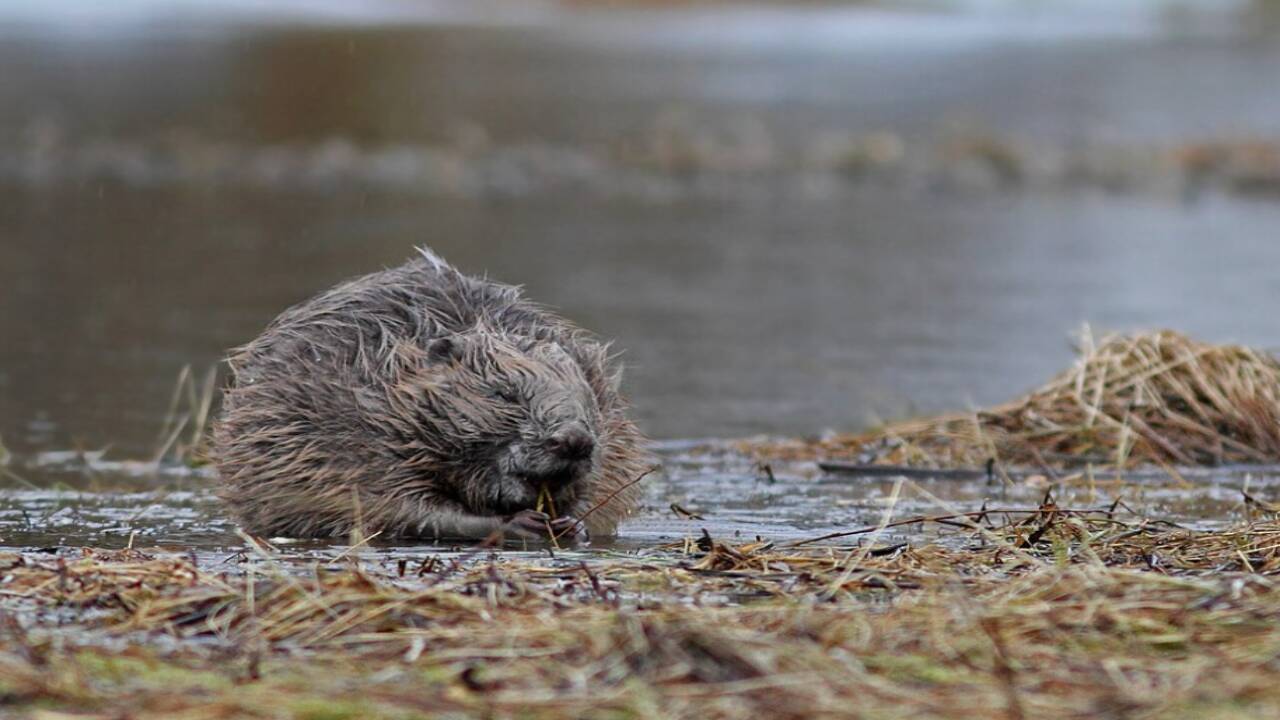
Beaver (Castor fibre) on the shore of Theisendammen Reservoir in Trondheim, Norway. Credits – Wikimedia Commons
A conservation mistake that lasted for decadesThe discovery of the species difference did not provide an easy solution. Removing an established beaver population from a country with thousands of lakes, rivers and wetlands would be difficult and expensive. The North American beaver had already been spreading for decades by the time scientists recognised it as a separate species. It had also been deliberately moved to new areas after its initial introduction, making the problem larger than the original seven animals.The issue became particularly serious because the Eurasian beaver remained much less widespread in Finland. A study on DNA-based identification notes that the native Eurasian beaver disappeared from places where both species had been introduced, while its stronger populations survived in areas where North American beavers were absent. Modern genetic testing has also made it much easier to distinguish the two species, something that was not possible when the original releases took place. A 2021 study estimated that Finland had roughly 3,700 to 5,000 Eurasian beavers and more than 10,000 North American beavers. The North American population was concentrated across much of eastern and central Finland and had also reached parts of Lapland. The study noted overlap between the two species in several regions, raising concern about competition for habitat and food.The story is an unusual example of how conservation decisions can change meaning as scientific knowledge improves. In 1937, Finnish officials believed they were helping rebuild a species that had disappeared from their country. They chose an animal that looked and behaved like the beaver they were trying to restore. Thirty-six years later, chromosome research showed that they had accidentally introduced a different species. The seven animals released in 1937 were few in number, but they were enough to establish a population that would eventually number in the thousands. What began as an attempt to repair an old ecological loss created a new conservation problem of its own: protecting the native Eurasian beaver while managing a closely related North American species that had been introduced by mistake.