
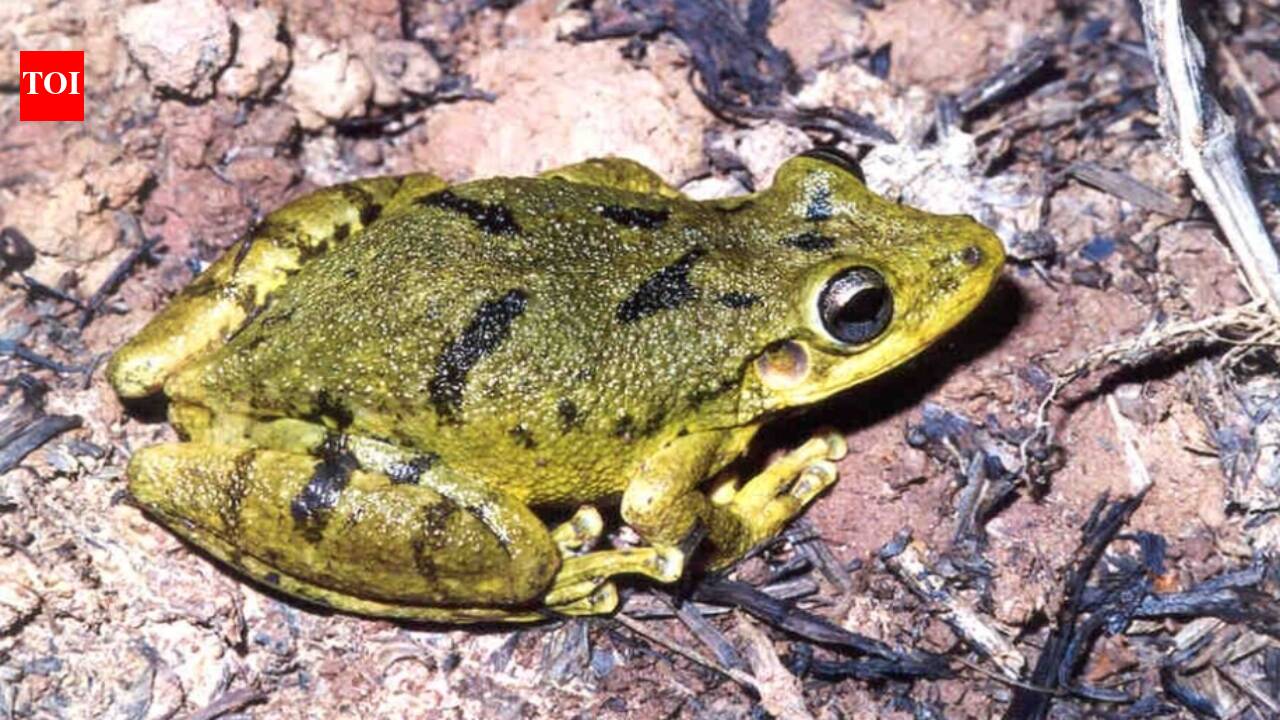
 A green tree frog resting on the forest floor. Credits – Wikimedia Commons In the late 1990s, a small Ecuadorian tree frog, Scinax quinquefasciatus, now known as Fowler’s snouted tree frog, appeared on the islands. Researchers believe it arrived accidentally, probably as a stowaway on cargo ships travelling from mainland Ecuador. The first confirmed record dates to 1998, when the species was detected on Isabela Island. The Charles Darwin Foundation says the frog later established populations on both Isabela and Santa Cruz, transforming an animal that had never been part of the islands’ natural fauna into an invasive species. The arrival mattered because the Galápagos had no native amphibians in their natural fauna. Its ability to survive harsh conditions helped it overcome the isolation that had kept amphibians out of the islands. It is only about 3 to 4 centimetres long, but it can tolerate salinity, drought and human-modified environments. Those characteristics allow it to survive around towns and farms as well as in natural pools inside protected areas.A stowaway established the first amphibian population The Galápagos Islands depend heavily on supplies brought from mainland Ecuador, creating many opportunities for small animals to move accidentally between the mainland and the archipelago. The Galápagos Species Checklist classifies the introduction as accidental and identifies the pathway as a stowaway hitchhiking on transport vehicles or cargo. The species was first recorded in 1998 and is now classified as naturalised and invasive in the Galápagos.Once established, the frog found suitable conditions for reproduction. Females laid their eggs in water. During the January-to-May breeding season, males gathered around ponds and other breeding sites and called for mates. The frogs spread through urban and agricultural areas on both Isabela and Santa Cruz, and researchers also recorded them inside Galápagos National Park. Their presence in protected habitats raised concern because the islands contain many species found nowhere else on Earth and had evolved without native amphibians. The frog’s feeding habits are one of those concerns. Researchers have found that Scinax quinquefasciatus eats a wide range of invertebrates, including butterflies, cockroaches, spiders and grasshoppers. The full ecological effect is still being investigated. The International Union for Conservation of Nature’s EICAT assessment therefore currently rates its documented ecological impact as minor, while noting that the available evidence is limited. That distinction is important because the species’ rapid spread is clear, but its long-term effect on the wider Galápagos ecosystem is still being studied.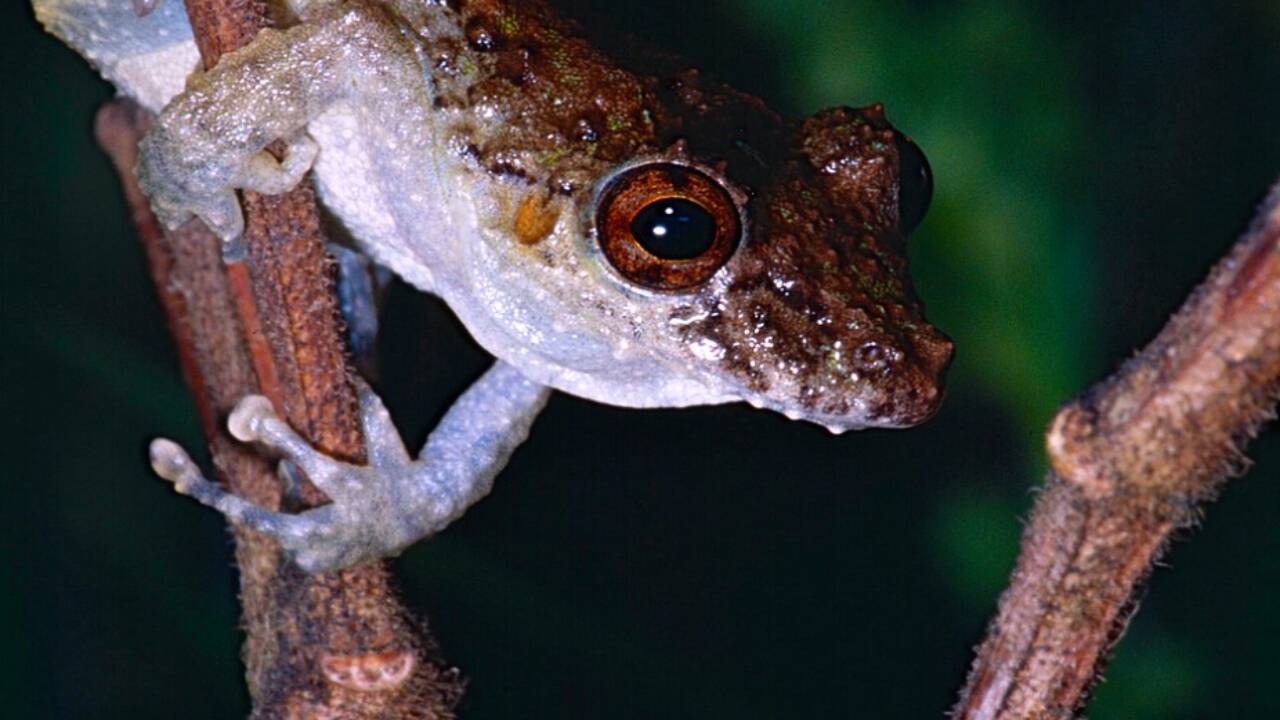
A tree frog perched on a branch in the Galápagos Islands. Credits – Wikimedia Commons
From one introduced frog to hundreds of thousandsThe population has grown dramatically since the first sightings. Researchers with the Charles Darwin Foundation have been studying the species’ distribution and abundance since 2017, using traps, visual surveys and acoustic recorders to locate frogs that are difficult to see. More recent estimates have placed the overall population at hundreds of thousands, showing how quickly the species can expand once established. Its abundance also makes eradication extremely difficult. Early efforts on Isabela included paying people to collect frogs and monitoring known breeding areas. Researchers have also tested approaches such as removing water, adding seawater and experimenting with substances intended to kill tadpoles. None has produced a reliable large-scale solution. Because the frogs occupy both human-dominated landscapes and protected natural areas, any control method also has to avoid damaging the endemic species conservationists are trying to protect.The frogs’ loud calls are a useful tool for tracking their spread. During the breeding season, males gather around water and call repeatedly, allowing researchers to detect populations even when vegetation makes visual searches difficult. Scientists are increasingly using automatic acoustic recorders and environmental DNA alongside traditional surveys to map where the frogs are present. These methods could help identify new populations earlier and determine whether the species is continuing to expand into additional habitats. The invasion is unusual not only because the frog arrived on an isolated island but also because it introduced a new class of vertebrate to the Galápagos. The islands evolved without native amphibians, and their plants and animals developed in isolation from frogs, salamanders and other amphibians. A small frog arriving unnoticed in cargo therefore crossed a biological boundary that had existed for thousands of years.What began with an apparently accidental journey from mainland Ecuador has produced large populations across islands that once had no native amphibians at all. The challenge now is not simply finding the frogs but understanding what their presence means for the unique insects, birds and other species that evolved without them—and determining whether the Galápagos can control an invader that arrived hidden inside the ordinary movement of cargo.