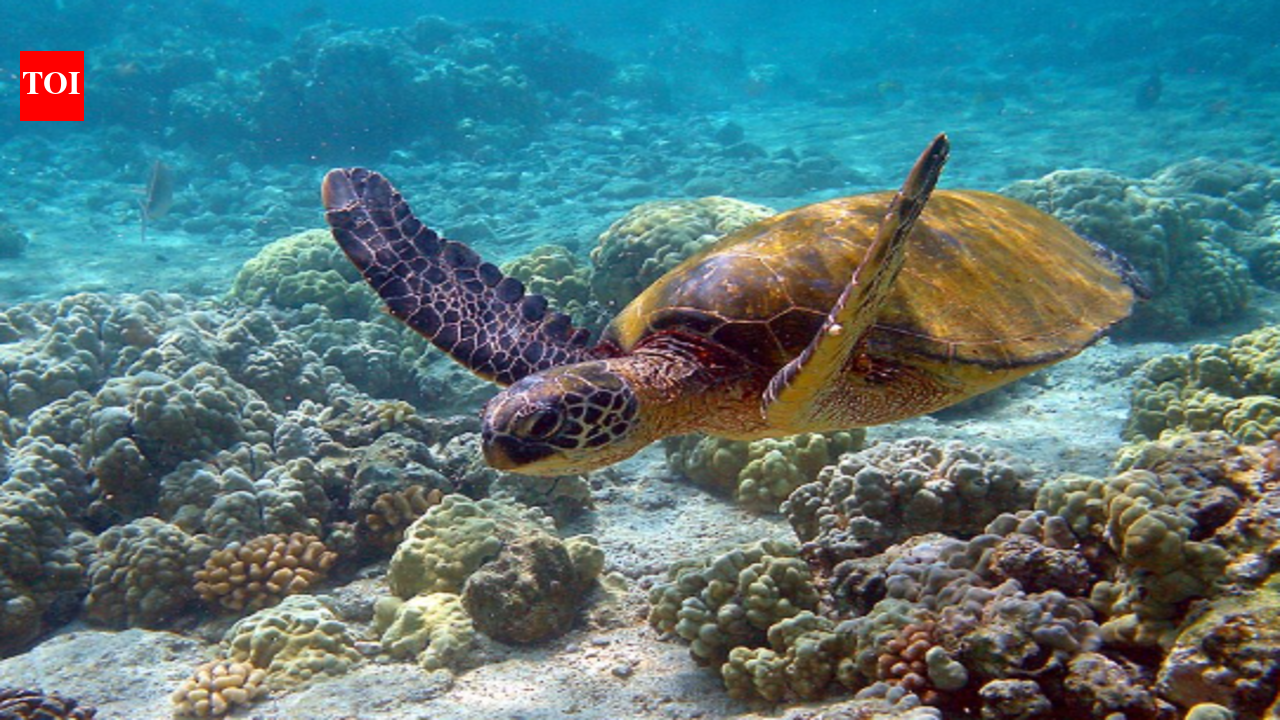
 Green turtle (Chelonia mydas), Hawai’i, USA. Image credits: Wikimedia Commons In the postwar decades, a small turtle native to much of the central and southern United States began arriving in Japan through the pet trade. Some accounts place the beginning of that pet-trade introduction in the 1950s, while Japan’s National Institute for Environmental Studies (NIES), which maintains the country’s invasive-species database, dates the introduction to the 1960s and identifies the pathway as deliberate importation as a pet. The red-eared slider (Trachemys scripta elegans) has since become established across much of the country. Sold as a novelty for children, a palm-sized hatchling with a bright red streak behind each eye, it became one of Japan’s most familiar pet turtles.From popular pets to an invasive speciesAccording to a study published in Humans and Nature, turtles depicted in Japanese tin toys made before the 1950s generally had muted colours characteristic of native Japanese turtles, while those produced after the 1950s featured brighter colours, including yellow, red and green, associated with red-eared sliders. The study documented a shift in the colours used to depict turtles in Japanese tin toys after the 1950s, but the researchers did not establish that the change was caused by the growing popularity of red-eared sliders as pets.The appeal was easy to understand. Young sliders became popular worldwide because of their bright colouration, which helped drive their export as pets. However, many pet owners did not realize how large these turtles could grow or how long they could live. Thus, red-eared sliders may grow from hatchlings with shells just a few centimetres long to adults with shell lengths of 20 to 30 centimetres, and they can live for several decades in captivity.Released sliders spread through Japan’s waters A similar pattern has occurred in many countries where the species became popular as a pet. Some owners eventually release turtles into ponds and rivers when they become too large for their tanks or difficult to keep. According to Japan’s Ministry of the Environment, red-eared sliders have been released into the wild after being kept as pets.Red-eared sliders are found throughout much of mainland Japan and in parts of the Ryukyu Islands, living in ponds, drainage ditches, rice paddies, and farm fields. Re-evaluating invasive species in degraded ecosystems: a case study of red-eared slider turtles as partial ecological analogs”, published in Discover Sustainability in 2022, reported that red-eared slider densities in Japan ranged from 89.6 to 299.6 turtles per hectare, with biomass ranging from 47.8 to 186 kilograms per hectare. These figures were higher than average values reported for the species in its native range, where densities averaged 41.8 to 61.6 turtles per hectare and biomass averaged 33.6 to 37.1 kilograms per hectare.
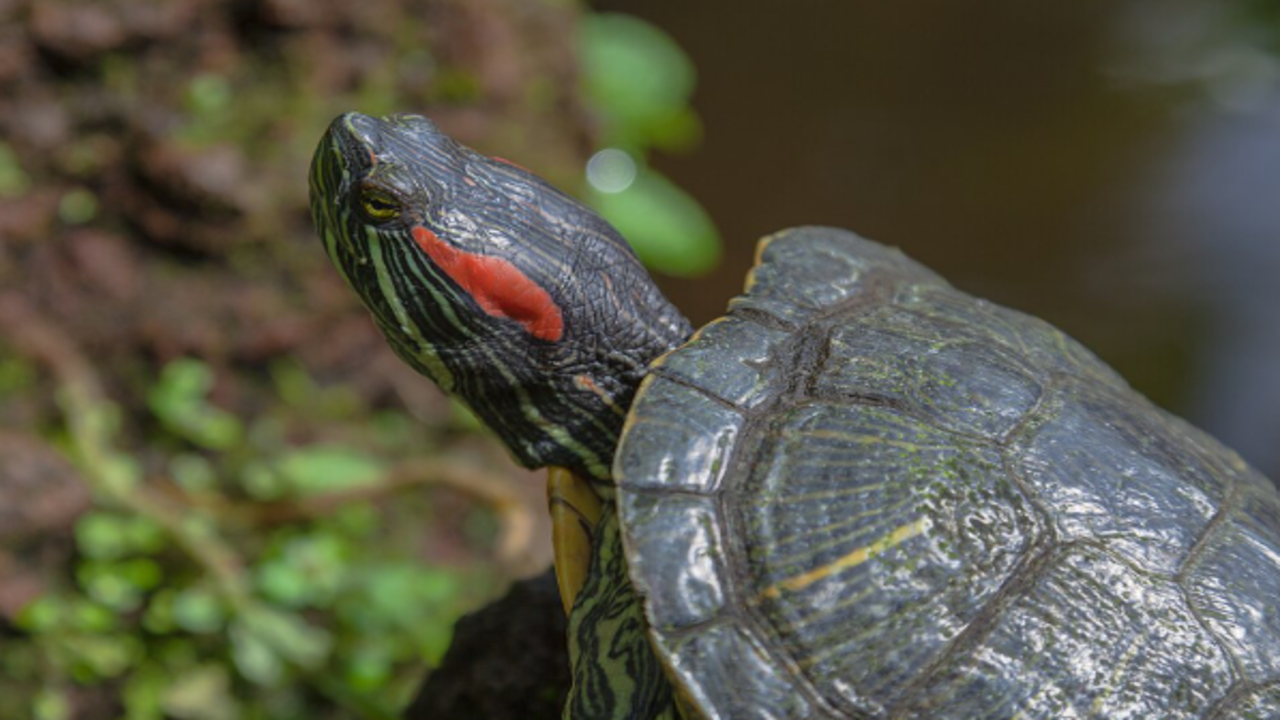 How red-eared sliders are displacing Japan’s native turtlesThe ecological impact has also affected native pond turtles in East Asia. The above-mentioned study also found that red-eared sliders may have a functional advantage over Reeves’ pond turtles (Mauremys reevesii) when obtaining food. Japan took decades to address this growing problem in law. In June 2023, Japan designated red-eared sliders and red swamp crayfish as “Conditionally Designated Invasive Alien Species” under its updated Invasive Alien Species Act. This means releasing them into the wild is banned, as are importation, sale, purchase, and commercial trade, although people may keep turtles they already owned and transfer them under certain conditions. Those who violate the law can face up to three years in prison or a fine of up to 3 million yen.