
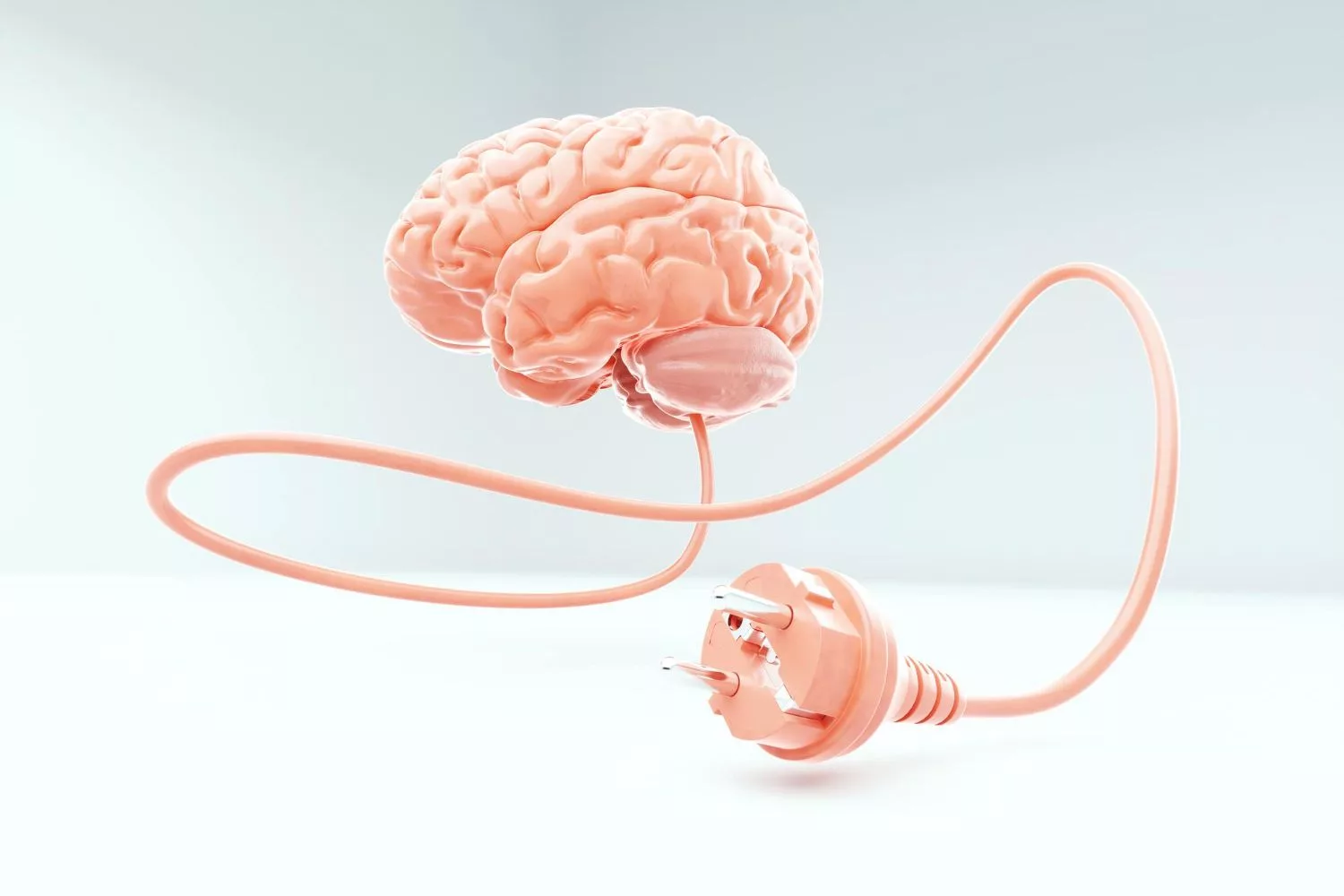
Complicated behaviors don’t just appear suddenly; instead, they form by combining simpler mental components. In artificial intelligence, neural networks can already mix and match specialized modules to handle difficult tasks.
But the major mystery is this: does the human brain work in the same way? Might it use a set of reusable “modules” that come together like Lego pieces to produce the rich, flexible behaviors we see every day?
In a new study with mice, MIT neuroscientists found the first evidence that the brain uses flexible “modules” much like artificial networks do. They discovered neurons in the prefrontal cortex that can store either a sensory input or an action plan in working memory.
As lead author Yuma Osako explains, “We found that the brain doesn’t dedicate a separate group of neurons for every type of information. Instead, it uses the same populations of neurons to perform the same computation on different kinds of information, which means the same subset of neurons can hold both an action and a sensory stimulus in working memory.”
This discovery supports the idea that the brain relies on reusable circuits, mixing and matching them to create the wide variety of behaviors we see.
Since his days as a grad student at MIT, Buschman has been fascinated by how the brain pulls off such a wide range of behaviors. One idea he explored is compositionality, the notion that the brain reuses small “pieces” of cognition, combining them like Lego blocks to build complex tasks. His lab at Princeton showed that when animals sort objects by shape or color, they assemble circuits that handle different parts of the job, snapping them together into new behaviors.
Osako, working in Sur’s lab at MIT, shared this interest in cognitive flexibility. Together with Buschman, he asked a deeper question: can individual neural circuits themselves be repurposed to do different things?
As Osako explains, “Our everyday life requires us to hold many different kinds of information temporarily. One big question is how the brain can represent an unlimited variability of information using only a finite number of neurons.”
To find out, the team trained mice on a task: listen to two tones- high- or low-pitched- and decide if they match.
To see how the brain reuses its circuits, researchers recorded electrical activity in mice while they performed a memory task. They focused on two regions: the parietal cortex, which processes sensory input, and the prefrontal cortex, which handles planning and decision‑making.
On hearing the first tone, the neurons in the parietal cortex remembered the sound. However, in the prefrontal cortex, a remarkable thing took place: the same group of neurons took on a new role. Initially, they retained a memory of the tone; later, when the mice had to make a decision, those same neurons stored the plan.
By repurposing the same neurons for different jobs, the brain can flexibly juggle multiple kinds of information, a clever way to stretch limited resources into a wide range of behaviors.
Mriganka Sur, the Newton Professor of Neuroscience at MIT’s Picower Institute for Learning and Memory, said, “When mice do tasks that test whether memory computations can be reused, the answer is they are. There are subspaces of functional activity in the prefrontal cortex that can be the substrate of mixing and matching toward flexible cognition.”
The new findings suggest the brain doesn’t need to build a brand‑new circuit every time it learns something new.
Buschman says, “The main result from this study is that there’s a circuit in the brain that maintains items in working memory, and you can put either sensory or motor information into it, and flexibly reuse it depending on what your current task is. This means you do not have to build an entire new circuit for holding information in mind every time you want to learn a new task.”
Next, the researchers plan to test what happens if they temporarily switch off these modules during different stages of a task. If behavior changes, it will provide even stronger evidence that these flexible circuits are key players in the brain’s ability to mix, match, and adapt its functions.
Journal Reference:
Osako, Y., Heller, G.R., Ährlund-Richter, S. et al. Reusable modular architecture enables flexible cognitive operations in the mouse brain and artificial recurrent networks. Nat Neurosci (2026). DOI: 10.1038/s41593-026-02410-0