
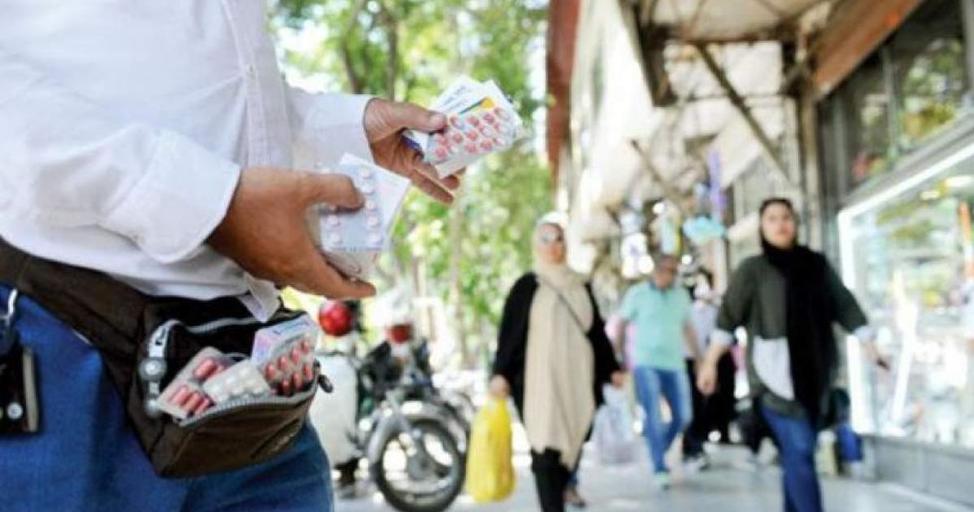
Amid ongoing pharmaceutical shortages in Iran, the illicit market for hard-to-find medications continues to flourish along Tehran’s Nasser Khosrow Street as well as across social media networks.
According to a report published by Avash, essential medications that patients fail to locate after searching numerous pharmacies are routinely offered by brokers on Nasser Khosrow at heavily inflated prices running into millions of tomans.
The report highlights specific examples of extreme markups. A 30-tablet pack of Ergotamine 30, a medication prescribed for severe migraine attacks, was quoted by one black-market vendor at four million tomans, while another vendor priced the same pack between seven and eight million tomans.
One seller explained that he would only contact the supplier holding the stock in a warehouse if a purchase was fully guaranteed. Vendors claim these imported medicines originate from Turkey and feature valid expiration dates and labels; however, neither the authenticity nor the storage conditions of the drugs can be independently verified.
Foreign-made generic versions of Sulfasalazine are similarly difficult to locate in licensed pharmacies, yet remain available through Nasser Khosrow’s underground network. Psychiatric drugs, chemotherapy treatments, and specialized medications for rare diseases are routinely bought and sold in this unregulated market.
Mehdi Sanei, an interrogator at Tehran’s Medical Crimes Court, noted that a portion of the country’s annual pharmaceutical needs consistently goes unmet, driving desperate patients toward illegal trade channels. He emphasized that as long as official supply shortages persist, patients unable to find their prescriptions at pharmacies will inevitably turn to brokers, middlemen, and Telegram channels, ensuring the survival of the smuggling ring.
In recent years, the pharmaceutical black market has expanded far beyond physical locations like Nasser Khosrow Street. Vendors now actively process orders through Telegram channels and Instagram pages, delivering rare and restricted medications directly to buyers via courier services.
In August 2026, the head of Iran’s Food and Drug Administration claimed that the number of critical and life-saving medications experiencing shortages had dropped from 341 items in 2022 to 65 items. However, the agency does not classify the absence of a foreign brand as a shortage if a domestic or generic alternative is available on the market.
Despite official assertions of improved supply, the thriving illicit trade demonstrates that many patients remain unable to obtain necessary treatments through official healthcare channels, forcing them to purchase unverified, unregulated medications from street dealers without any safety guarantees.