
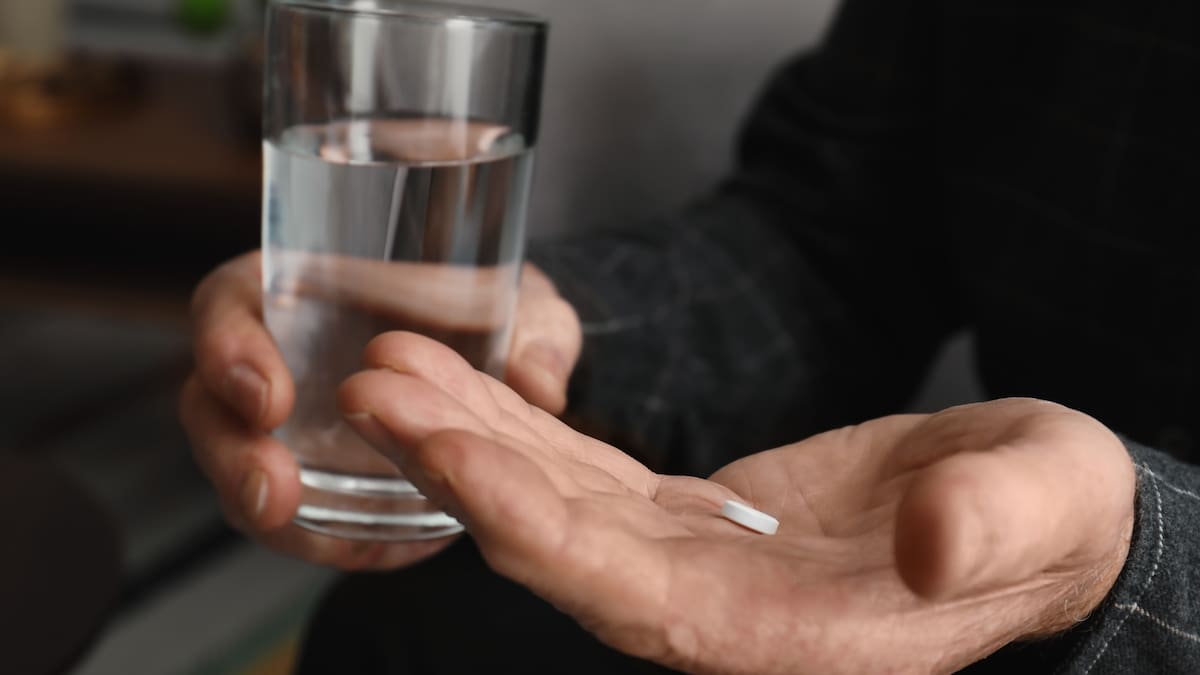
“I’m trying not to be stressed,” Speary said.
“I‘ve got enough painkillers to last me for a week, I’m just hoping and praying that it doesn’t hurt.”
He said a pharmacist recommended he take Paracetamol Osteo-Tab, another long-acting paracetamol product, instead. However, he was unable to find further supplies of that either.
After pharmacists told him the medication was unlikely to be back on shelves for several weeks, Speary contacted the supplier himself and said he was given a similar timeframe.
“I’m thinking of all the other people that buy these pills,” he said.
“I‘m careful, I only buy what I need. I have a couple of days in store and then I buy another packet.
“They cost me but I’m happy because they work.”
The Independent Pharmacists’ Association of New Zealand told the Herald that Panadol Osteo had been out of stock “for a while”.
Association president Jie Choong said regular users were often elderly people managing chronic pain who preferred the long-acting formulation because it required less frequent dosing.
“This will be an inconvenience for them,” she said.
David Speary relies on Panadol Osteo to manage a chronic spinal condition. Photo / Panadol
Speary said he had previously tried reducing his medication after his pain appeared to subside, but he described what followed as “crippling”.
“My entire neck and shoulders were frozen. I was in pain. I couldn’t do anything.”
Speary said he had to take a taxi to the doctors because he couldn’t drive or bend his head.
After returning to his usual dose, he said he was back to normal within about a week.
Speary said the medication allows him to maintain a “reasonably active” and independent lifestyle.
He still drives, goes to the gym and aquarobics classes, plays canasta, attends church, and has recently returned to helping with a reading recovery programme at a primary school.
‘Supply disruption’ across NZ
Haleon confirmed a “supply disruption” had caused limited availability of the pain medication at pharmacies across New Zealand.
A spokesperson said supply was now improving, with stock expected to progressively return to pharmacy shelves by the end of August.
“We expect supply to remain available provided products continue to be purchased in normal quantities.”
The company apologised for the disruption and advised people unable to find Panadol Osteo to speak to a pharmacist or healthcare professional about suitable alternatives.
AFT Pharmaceuticalssaid it had also briefly run out of stock of Paracetamol Osteo-Tab after demand increased when Panadol Osteo became unavailable.
Managing director Hartley Atkinson said the surge in demand had exhausted the company’s existing supplies.
AFT had since urgently airfreighted more of the medication into New Zealand with supplies sent to wholesalers for distribution to pharmacies, Atkinson said.
What is modified-release paracetamol?
Panadol Osteo and Paracetamol Osteo contain 665mg of paracetamol in a modified-release formulation, meaning the medicine is released into the body over a longer period.
Unlike standard paracetamol, which can be bought from supermarkets and pharmacies, modified-release paracetamol is classified as a restricted medicine.
It does not require a prescription but can only be supplied by a pharmacist following a consultation.
The restriction is partly aimed at preventing confusion with the dosing requirements for standard paracetamol and reducing the risk of accidental overdose, which can cause severe liver damage, according to Medsafe’s website.
Pharmac said Panadol Osteo 665mg and Paracetamol Osteo 665mg were not Pharmac-funded medicines, meaning the agency had no visibility of their supply.
The Pharmaceutical Society of New Zealand declined to comment.