
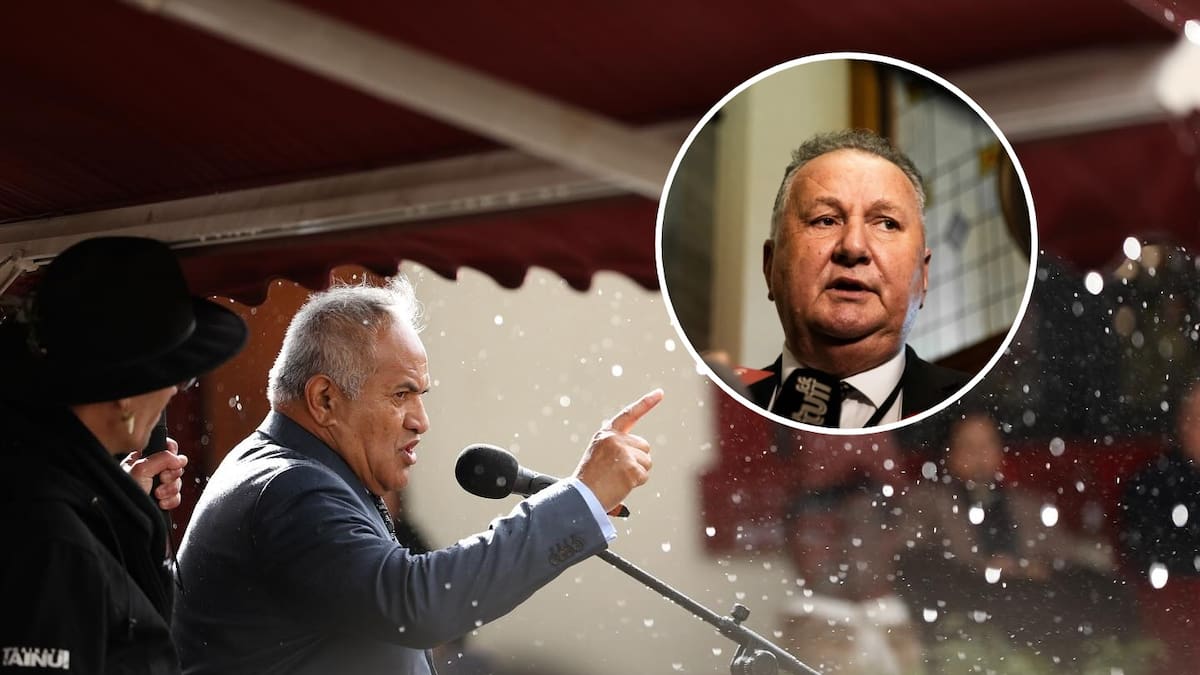
The Government acknowledged the significant work that went into developing PC1 and insisted that work wouldn’t be “wasted” as there were intentions to require the new environment plan to have “particular regard” to PC1.
The PC1 provisions needed to be paused because they were “costly, complex and duplicative.” Shane Jones, one of the ministers involved in the RMA reforms, said the “supreme law-making power” of Parliament superseded “any Treaty of Waitangi settlement”.
“I know Tainui iwi see Te Ture Whaimana as an important legal ingredient in the Waikato River mix. However, we cannot indulge appetites for expensive river regulations that worsen cost-of-living outcomes.”
Waikato River. Photo / Mike Scott.
Jones said he was concerned the PC1 provisions would add costs to farmers and growers which could be passed on to consumers.
“Excessive regulation that undermines production will reduce jobs, confidence and investment.
“With a new RMA, river management options will improve without handicapping productivity.”
But the chair of Tainui, Tuku Morgan, is not convinced – he said using the cost-of-living to justify halting the PC1 provisions was “bulls**t”. He said farmers had received strong profit returns recently – and many farmers and corporates like Fonterra had contributed to the development of PC1.
For Morgan – and the Tainui people – the Waikato River is everything. A paramount ancestor, a place of healing during times of hardship, a life source. There is no separation between a Tainui person and the river.
But he and his children can no longer swim in the river his grandparents once used to. It is no longer safe to take food from a place that was once considered their pataka kai [food pantry]. Morgan said they cannot afford another six years of fewer protections over their river.
That pause would lead to “uncontrollable levels of nitrate” and the “ongoing degradation” of the river, he said. (Jones says the biggest issue is the reproduction of koi carp in the river).
“After 14 years of work by iwi, farmers and growers, councils, industry, environmental and community groups, it is extraordinary that the Government would simply press pause now, when the process has reached its conclusion,” Morgan said.
“It is bad enough now; imagine six years of not doing anything. The thought is too horrific to think about.”
Mount Taupiri, rising above the Waikato River, is considered an ancestor of Waikato-Tainui iwi. Photo / Mike Scott
The Waikato Regional Council said PC1 was “one of the most significant and complex planning processes undertaken in Waikato” that had cost taxpayers $30 million.
“We hope this unexpected development in the PC1 journey will not add more costs to those expenses incurred to date by all parties.”
Morgan said scientists had tested the river and classified it as a “degraded body of water”.
“It is no wonder why we are deeply upset as we continue to watch the ongoing degradation by irresponsible, dirty farmers who don’t give a toss about improving their practices.”
That cohort of “dirty farmers” was small, Morgan said. Most local farmers did care about their impact on the local river, and many were involved in the development of PC1.
But those that did not respect the river needed a clear bottom line in the form of regulation to direct their farming practice.
In 1995, Waikato-Tainui became the first iwi to settle their grievances with the Crown, valued at $170 million under then National Prime Minister Jim Bolger. In 2010, the river settlement was signed with the purpose of restoring and protecting the health and wellbeing of the Waikato River for future generations.
“This is a complete and total betrayal of a Treaty settlement that was entered into on the basis of good faith. This deal was struck when words from people like Jim Bolger meant something,” Morgan said.
“This Government is not a government of principles; their word means nothing.”
Minister Chris Bishop, responsible for RMA reform, argued the Government’s actions were intended to prevent Waikato farmers from facing “duplicative consenting requirements”, given the legislation was set to be replaced.
Julia Gabel is a Wellington-based political reporter. She joined the Herald in 2020 and has most recently focused on data journalism.