
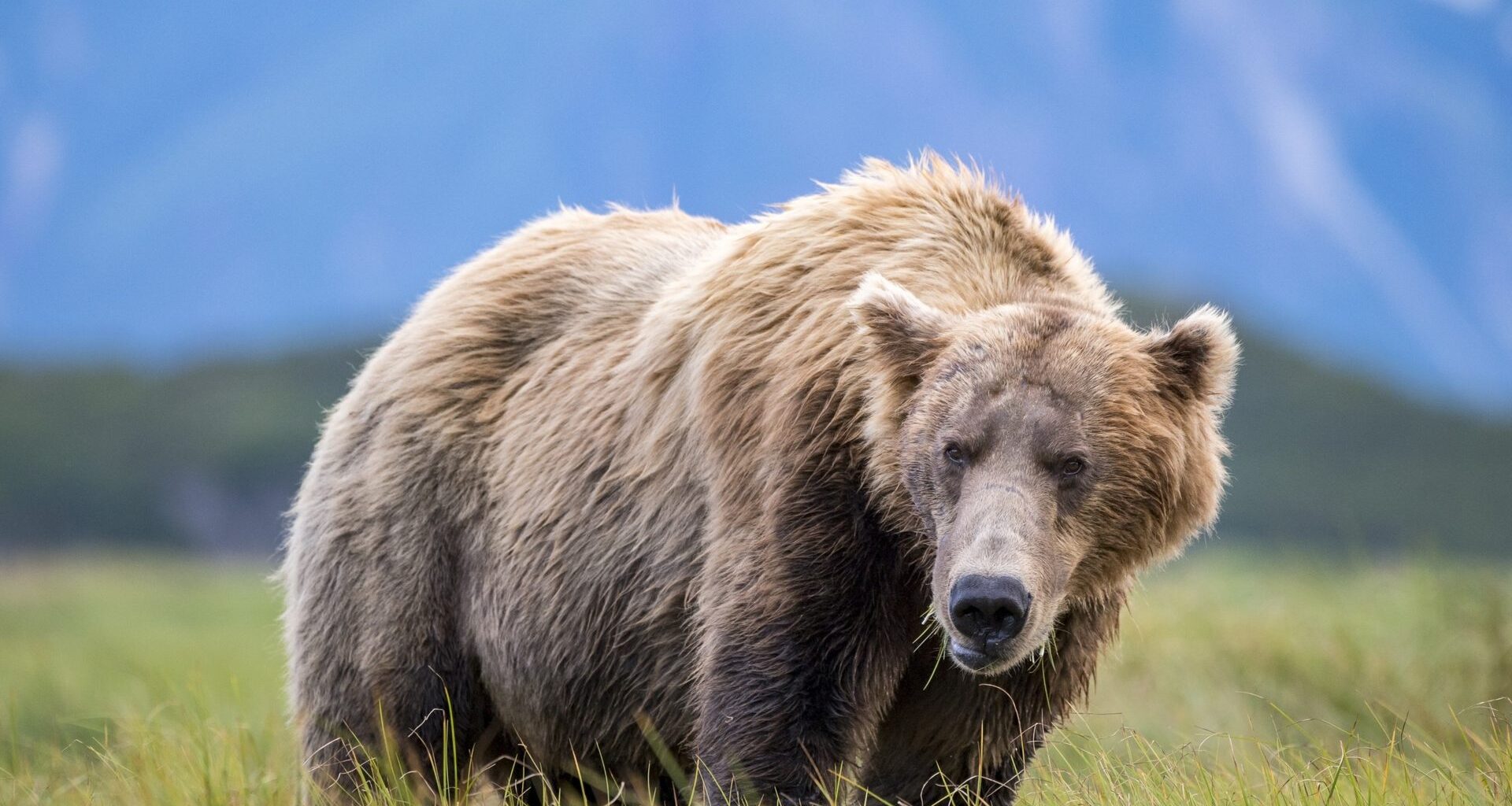
Traits that predicted mammal extinction for 130,000 years are changing, raising questions about how scientists identify species most at risk today.
For 130,000 years, certain traits reliably predicted which mammals would go extinct and which would survive.
A new study suggests that this rule may no longer apply.
Some of the very features that once spelled doom, like a large body or a slow reproductive rate, now seem to work in a species’ favor instead.
The findings come from an international team led by researchers at the Norwegian University of Life Sciences and Wageningen University & Research, working closely with Michigan State University.
A world losing species fast
Extinctions today are happening at least 100 times faster than natural background rates.
Roughly one in four of the world’s mammal species is threatened with extinction, according to the International Union for the Conservation of Nature (IUCN).
Figuring out which species are most at risk should, in theory, make it easier to protect them while there’s still time. But that’s harder than it sounds.
Nearly 15% of mammal species assessed by the IUCN, some 770 of them, are classified as “data deficient.”
Scientists simply don’t know enough about their numbers or whereabouts to say whether they’re in trouble.
That gap isn’t a minor bookkeeping issue. Conservation funding and policy decisions increasingly lean on models built to fill in these blanks, using traits like body size or diet as stand-ins for missing population data.
If those models are drawing the wrong lessons from history, the animals that most need help could be overlooked.
To fill the gaps, researchers often turn to long-term historical trends. The question this team set out to answer was simple: how well do those old patterns actually predict what’s happening to mammals right now?
Pairing wildlife cameras with fossils
The team combined images from automatic wildlife cameras with fossil records and species range data stretching back 130,000 years, covering the period before and after modern humans spread across the globe.
They tracked 210 species in total. Most, 199 of them, are still around today, everything from porcupines and anteaters to monkeys and bears.
Some, like Asian elephants and African leopards, have vanished from parts of their old range but are hanging on elsewhere.
Eleven species didn’t make it at all, among them giant pangolins that stretched nine feet long, half-ton saber-toothed cats, and mastodons.
The analysis covered 64 forest sites spread across Africa, Asia, and the Americas.
They were chosen specifically to capture tropical mammal communities that have faced very different histories of human contact, from long-settled regions to areas humans reached only in the last few thousand years.
What put mammals at risk over deep time
Looking across the full 130,000-year span, one pattern held steady. Species with large bodies, small brains, carnivorous diets, and slow reproduction were consistently the most likely to disappear.
That pattern showed up at local, regional, and global scales. Extinction risk factors don’t always hold together so cleanly across such different levels of analysis.
None of this surprised the researchers much on its own.
Other studies have linked similar traits to extinction risk before, and the consistency across scales offered a reassuring sign that the historical data was capturing something real.
What comparison with camera data revealed
The surprise came when the team compared those long-term patterns against more recent data pulled from camera traps.
Brain size told a different story than expected. Over the long run, bigger brains gave species an edge.
But some recent research has suggested that a large brain can actually be a liability for mammals today. This is possibly because species with more behavioral flexibility also tend to wander into more contact with humans and human-altered landscapes.
Body size and reproduction rate flipped too. Traits that once made a species more vulnerable, like being large-bodied or slow to reproduce, now seem tied to resilience instead.
One possible explanation: the camera traps were mostly stationed in protected areas, where animals face less pressure from human hunters.
Larger mammals with longer generation times may simply do better in those specific conditions. The same traits could still be a disadvantage in areas with heavier poaching or habitat loss.
“The traits associated with survival are different,” said Michigan State University professor Lydia Beaudrot, one of the study’s lead authors, describing what shifted between eras.
Extinction risk is changing
Whatever’s driving the shift, the implications matter for how conservationists prioritize their limited resources.
“We can’t just assume that large-scale patterns apply at smaller scales,” Beaudrot said. “We have to take the temporal dimension into account.”
The team hopes the work pushes researchers to be more careful about which timeframe they’re borrowing lessons from, and about where exactly a given dataset was collected.
A trait that doomed a species 50,000 years ago isn’t necessarily still a warning sign today.
Treating it as one could mean protection efforts land in the wrong place entirely, or worse, get funneled toward species that no longer need the help while data-deficient ones wait.
The study is published in the journal Science Advances.
—-
Like what you read? Subscribe to our newsletter for engaging articles, exclusive content, and the latest updates.
Check us out on EarthSnap, a free app brought to you by Eric Ralls and Earth.com.
——