
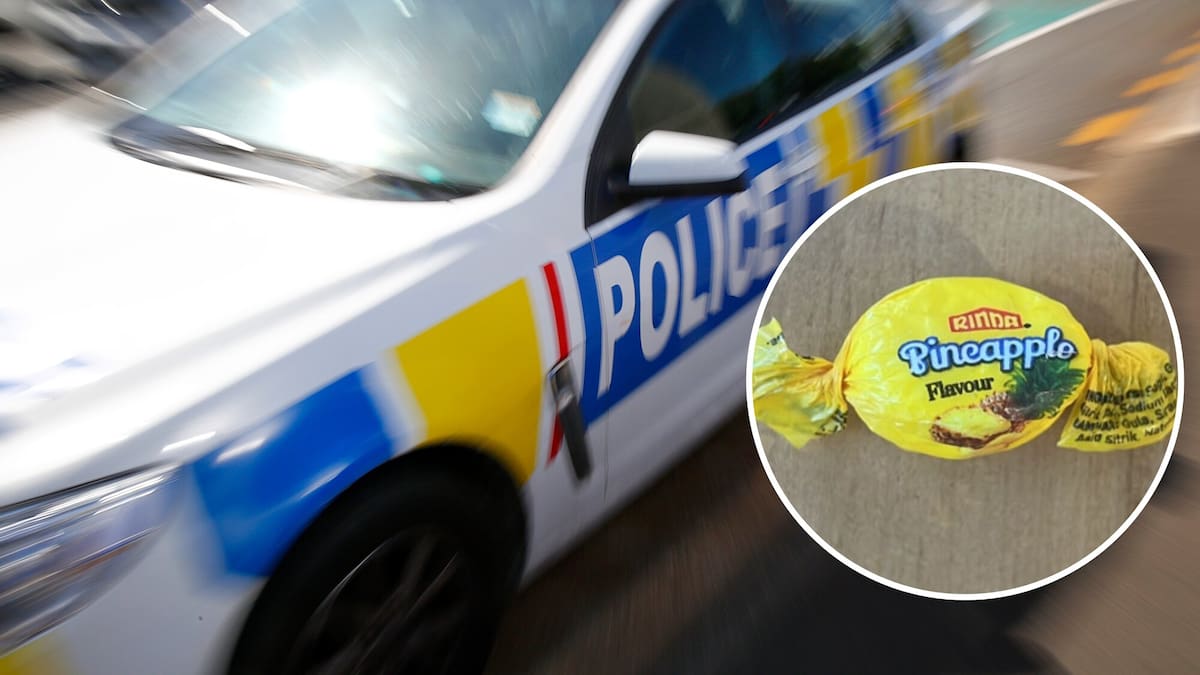
Deceptively innocuous-looking, each tiny package contained an estimated 300 doses of pure methamphetamine.
Among those inadvertently given the methamphetamine were a mother and 3-year-old daughter who spat out the drugs due to the bitter, acrid taste.
Despite the identical packaging in the two cases, the Auckland City Mission case remains unsolved, police have told the Herald.
There was insufficient evidence to link the two, a spokesperson said.
Two months before the Auckland City Mission incident, the police National Organised Crime Group had swooped on the Burswood, Auckland home of Chen Yee Cheah, and the Mt Wellington home of Yu Wang, with search warrants.
Cheah, who turns 29 next week, had arrived in New Zealand from Malaysia in November 2023. He was known by the code name “Black Pig”.
Wang, a 31-year-old Chinese citizen described in court documents as Cheah’s drug syndicate boss, arrived in April 2024.
The investigation, dubbed Operation Bravo, was launched that May and the search warrants executed a month later.
The discovery of pure meth blocks disguised as lollies, that were distributed in food parcels handed out by the Auckland City Mission, unleashed fears someone might die after consuming one. Image / NZ Herald
At Cheah’s home, which was paid for by Wang, police found about 81,000 pseudoephedrine tablets – enough to cook roughly 2.5kg of methamphetamine.
They also found equipment and bulk liquids commonly used in clandestine meth labs, as well as 1.5kg of methamphetamine and 246g of MDMA.
Over 60 mobile phone SIM cards were found at the house with shipping labels bearing various names and Auckland addresses.
It was clear the duo, working with other unidentified members of the syndicate, were “catching … significant commercial quantities” of drugs that had been sent from overseas to various addresses in New Zealand under fake names.
At Wang’s home that day, police found an operational clandestine laboratory for producing pseudoephedrine.
The drug, commonly used to suppress cold and flu symptoms, had only months earlier been made available for over-the-counter purchase at chemists after a 2011 ban in an effort to reduce methamphetamine production.
But pharmacist consultation was still required, making it difficult if not impossible to legally purchase in bulk.
Police also searched a Mt Wellington storage unit previously visited by both defendants. There, they located more manufacturing equipment and a 14-litre plastic storage container with methamphetamine residue.
Both of their fingerprints were on it.
“Put together, this equipment would create a P2P (Phenyl-2-Propanone) drug manufacturing laboratory,” court documents state.
“A PDF document of how to construct this laboratory was located within Mr Wang’s messages.
“These laboratories are being used for the manufacture of illegal drugs in overseas jurisdictions. Mr Wang and Mr Cheah planned to create one of these laboratories in New Zealand.”
P2P was more common in the 1970s but fell away in the 1980s after pseudoephedrine became the ingredient of choice among P cooks, according to a US study published in the academic journal Addictive Behaviors in 2011.
P2P has earned the nickname “super meth” because of its potency.
As restrictions on cold and flu medications spread across the world in recent decades, P2P production has increased again.
“This version of meth often leads to more severe addiction and faster physical and mental decline,” reports prominent US drug recovery non-profit the Hazelden Betty Ford Foundation, describing the drug as “harder to treat and more unpredictable in its effects”.
“Using P2P meth can lead to a rapid and frightening shift in both your mental and physical health,” the foundation states.
“This form of synthetic meth is especially notorious for triggering meth-induced psychosis more quickly and more severely than older versions.
“Withdrawal symptoms tend to last longer, and the risk of relapse is higher, making recovery even more challenging.”
While police had plenty of evidence to arrest Wang and Cheah after the search warrants, more charges were added after a thorough search of their phones showed the extent to which they were also receiving illicit shipments from overseas.
“The nature of the relationship between Mr Wang and Mr Cheah is that of an employer (Mr Wang) and employee (Mr Cheah),” court documents state.
“Mr Wang instructs Mr Cheah to monitor and pick up parcels from various locations around Auckland, as well as asks him to ‘edit’ names and addresses for future parcels and provide contact numbers for shipments.
“Mr Wang paid Mr Cheah’s rent and expenses while he was in New Zealand.”
The many SIM cards discovered in Cheah’s home were used in creating fake identities for the listed recipients of the packages.
Investigators found he had used search terms for specific chemicals used in drug production as well as “foreign name” and “New Zealand empty house”.
Many packages were intercepted by Customs at the border before members of the syndicate could collect them, or by overseas customs agencies at the country of departure.
New Zealand Customs found 2kg of ketamine in April 2024 hidden inside shoe boxes and a virtual reality headset.
Phone communications later showed Wang monitoring the shipment with other syndicate members.
There was no evidence Cheah was involved.
Wang was also charged with organising minions to track a 677g shipment of MDMA from Canada that was intercepted by Customs in May 2024.
Both men were charged with another failed scheme to import 10.3kg of pseudoephedrine hidden in tea cups. The shipment was intercepted in May 2024.
Police would later discover a video message on Wang’s phone in which a person speaking in the Chinese dialect Fuqing showed identical cups and appeared to explain how drugs could be concealed.
The defendants did not appear especially subtle in their communications with each other. Police charged Cheah with possessing just over 6kg of controlled drugs for supply and Wang with possessing almost 9.5kg based on their communications, which helpfully included photos of drugs sitting on scales.
On another occasion, an underling sent Wang a photo of New Zealand cash after what was believed by authorities to be a drug sale. It amounted to $102,650, Wang was told.
By far, methamphetamine appeared to be the syndicate’s import of choice. Investigators were able to trace eight Customs-intercepted imports containing a combined total of 12.7kg of meth to Cheah between April and July and attribute about 15.8kg to Wang during the same period.
The illicit shipments included 1.4kg found hidden in tubes sent from Malaysia that were supposed to contain sealant. Similar packaging addressed to the same fake name, with different tracking numbers, was later found during the search, suggesting other shipments had been successful.
Customs also stopped shipments from the United Kingdom, Singapore, Spain and Thailand in which the drugs were hidden inside ottomans, the lining of a backpack, pillows, Corflute packaging and aluminium tins.
The final package was intercepted by Customs just over a week after the search warrants were executed. It was the “lollies” – in reality, 697.5g worth of meth that had been sent from Malaysia, where the Rinda confectionery company is based.
Cheah and Wang had been sharing details of the shipment for weeks, deciding to send it to the fictitious recipient “Joe Wilson” at a property in Greenlane.
It arrived on July 3, 2024. Just 41 days later, police would launch a frantic investigation to track down the Auckland City Mission lollies.
While that investigation – dubbed Operation Tirade and conducted by the Auckland City Criminal Investigation Branch instead of the National Organised Crime Group – never netted an arrest, it wasn’t without success.
Aiden Sagala died in March 2023 after unknowingly drinking liquid methamphetamine disguised as “Honey Bear” beer.
The public outreach effort, including press conferences and media releases, helped prevent a repeat of what had happened a year earlier when 21-year-old Aiden Sagala overdosed after drinking a can misleadingly labelled “Honey Bear” beer.
Unknown to him, it contained liquid methamphetamine – another backfired importation attempt by another drug syndicate.
Wealthy South Auckland businessman Baltej Singh is serving a 22-year prison sentence for that import, while underling Himatjit Kahlon, a Fonterra manager who gave co-workers the beer, is serving a 21-year sentence for manslaughter and other charges.
Like them, Wang and Cheah will face sentences of up to life imprisonment when they are sentenced in Auckland District Court in October.
Craig Kapitan is an Auckland-based journalist covering courts and justice. He joined the Herald in 2021 and has reported on courts since 2002 in three newsrooms in the US and New Zealand.