
Intermediate students build homes for Kororā penguins
Schoolchildren are setting up nesting boxes for little blue penguins along Wellington’s South Coast.
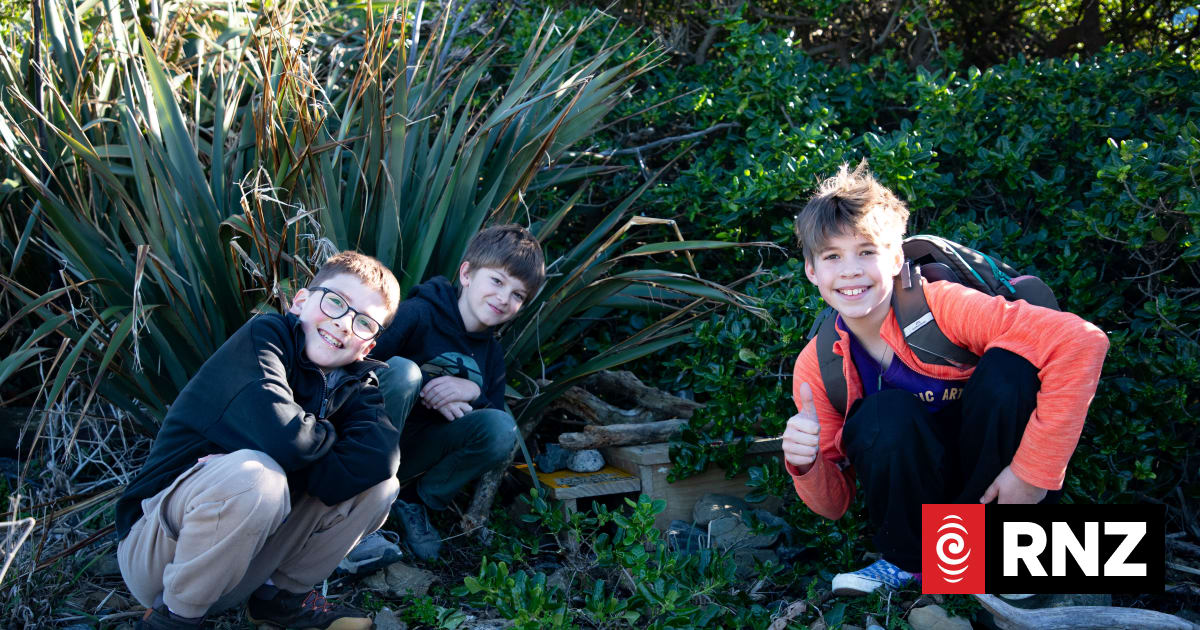
Year 7 and 8 students from Ridgway School gathered at Ōwhiro Bay this morning to install houses for kororā.
Pupils Xander, Elio and Asher said they were “really excited” about penguins using the shelter they had made.
“I’d like to see the chicks,” said Elio
“I had lots of fun making these and I was pretty proud with the final product and now I’m kind of happy to see that penguins can explore and maybe enjoy it,” said Xander.
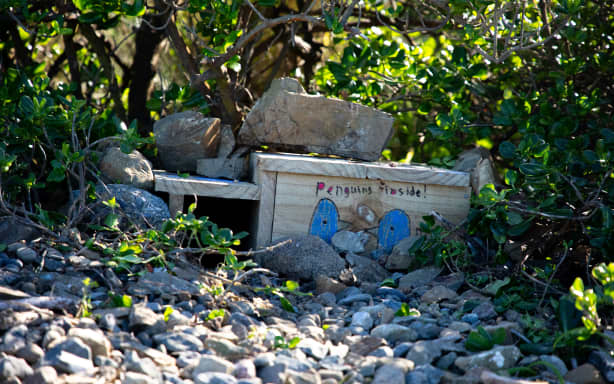
One of Tawatawa-Ridgway School’s houses for Kororā installed in Ōwhiro Bay.
RNZ / Baz Macdonald
They told RNZ they picked a spot for their box that was far enough away from other boxes, as penguins can be territorial.
“Because if a penguin finds a penguin house, they’re going to want to have their own eggs, so they don’t want any other penguins nearby,” said Asher.
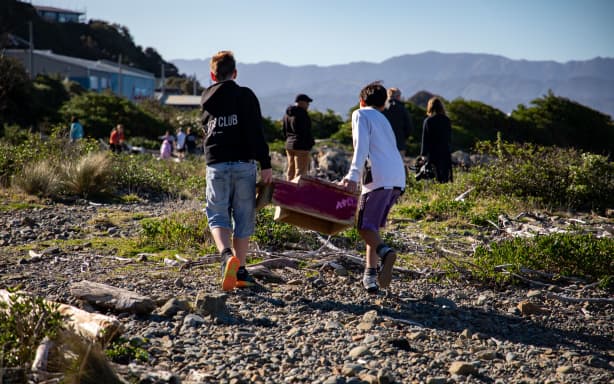
Tawatawa-Ridgway School students installing their Kororā houses in Ōwhiro Bay.
RNZ / Baz Macdonald
The boys said the project taught them about penguins’ natural habitats and the threats they faced.
“Climate change, like more pets coming in, like dogs and cats. Also like the loss of bushes and stuff, so they don’t have that much like cover anymore,” Elio explained.
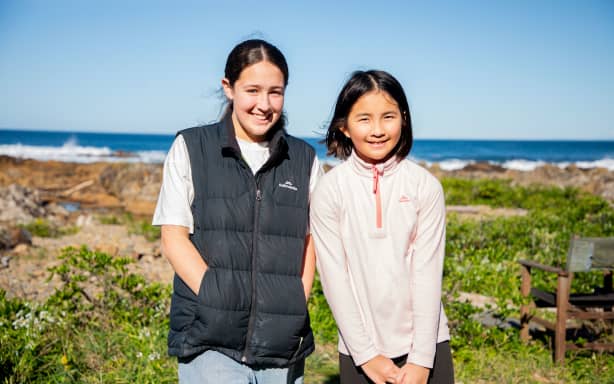
Tawatawa-Ridgway School students Nikkita and Natalie at the bay to install houses for kororā.
RNZ / Baz Macdonald
Fellow student Natalie also said she had learned about penguins: “I learned that they are very smelly.”
She said she had been pretty excited about today – until she had to lift the heavy nesting box.
She said she picked her spot because it was closest to where the boxes had been unloaded from the truck.
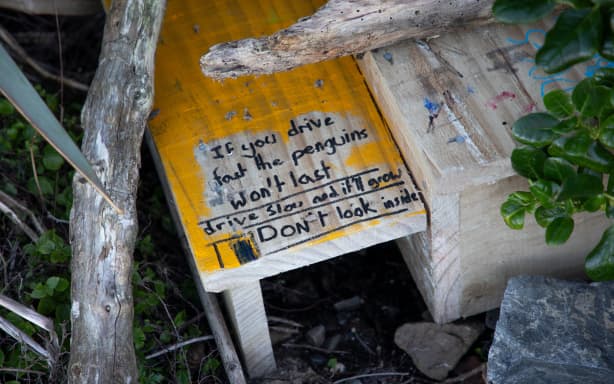
One of Tawatawa-Ridgway School’s houses for Kororā installed in Ōwhiro Bay
RNZ / Baz Macdonald
Ridgway School teacher Nathan Crocker said the project taught the children about caring for the environment in their own backyard.
“It’s just been a joy to work with the kids on this project.”
As well as gaining practical skills such as woodworking, he said the students were also building character.
“Because my job in education is to create cool humans, good humans that contribute positively to society and to the environment.”
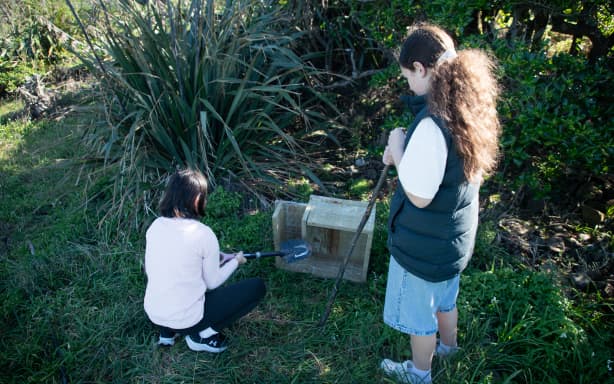
Tawatawa-Ridgway School students Nikkita and Natalie install their Kororā houses in Ōwhiro Bay.
RNZ / Baz Macdonald
Crocker said the hands-on experience would stay with them.
“You don’t remember the reading, writing, and the maths. You remember the projects and the days where you did something special.”
He said the project had been a collaboration with conservation charity Places for Penguins and education programme Enviroschools.
Joshua Forrest, a volunteer at Places for Penguins, said the project helped make conservation accessible and enjoyable to the next generation.
“When our bodies are slowly giving up, these guys will be out here doing all the mahi. This is the reason we’re out here doing this.”
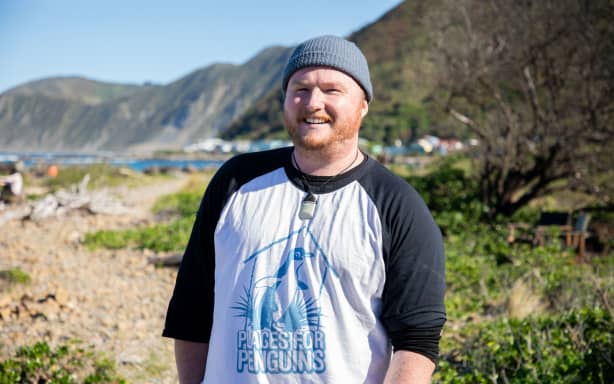
Places for Penguins volunteer Joshua Forrest.
RNZ / Baz Macdonald
He said days like today were a “highlight in the calendar”.
Forrest said he admired the kororā for their resilience.
“They’re such a feisty, little species. They’re pretty stubborn. They defend themselves against a great deal in terms of natural predators and everything,” he explained.
Unfortunately, he said, they needed help after their habitat had been fragmented and disturbed by human activity.
“When these guys are coming and going at night, when everybody’s driving around the south coast – unfortunately you’re not going to spot a small 30 centimetre penguin if you’re driving around here at night going a little bit too fast.
“A lot of people don’t realise that we have penguins everywhere (in Wellington) and so they take their dogs to places that are really, really nice for their dogs. But unfortunately it’s those additional things that just really put a lot of pressure on these guys.”
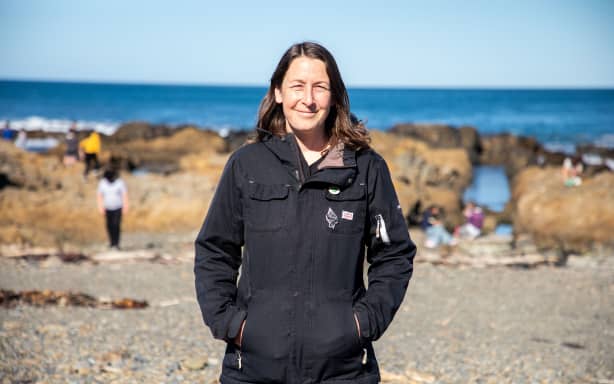
Enviroschools community facilitator Chloe Bisley-Wright.
RNZ / Baz Macdonald
Enviroschools’ Chloe Bisley-Wright had just experienced having to suggest a dog owner leash their animal that morning, as it wandered free near where kororā were known to be.
She said the project let children take on work in the community.
“Tamariki do care about our wildlife for sure, and it’s just giving them opportunities to put that care into practical use.”