
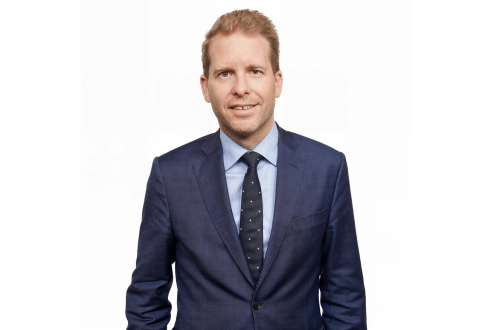
SEB is bringing a distinctly Nordic proposition to Asia. Part of a banking group whose origins stretch back 170 years, the investment business today manages almost 150 funds across fixed income, equities, alternatives and private markets, with particular depth in the Nordic region and a longstanding institutional client base.
For Marcus Lindholm, Director at SEB, that heritage provides a foundation rather than a reason to compete everywhere. As the firm builds its asset management presence in Asia, the objective is to focus on areas where SEB believes it can offer something differentiated: Nordic equities and fixed income, European Additional Tier 1 (AT1) bonds, private markets and selected thematic strategies. Against a backdrop of changing global allocations and continued consolidation across the asset management industry, Lindholm sees room for specialists capable of complementing investors’ core exposures.
Key Takeaways
SEB is positioning itself as a Nordic specialist in Asia: Rather than compete across every global asset class, the firm wants to lead with areas where its heritage, investment teams and track records provide a differentiated proposition.
Asia represents an extension of an established regional presence: SEB has operated as a bank in Asia since 1979, but the expansion of its asset management business in the region is much more recent.
Nordic exposure sits at the centre of the proposition: Lindholm points to the region’s stable economies, innovative corporate base and history of producing internationally successful companies as part of the investment case.
AT1 bonds provide another potential point of differentiation: SEB has invested in the European AT1 market since its inception and sees the asset class as a potential yield-enhancing component within diversified fixed income portfolios.
Global allocation patterns are becoming less US-centric: Lindholm is seeing Nordic investors reduce some longstanding US overweight positions while directing more capital towards Asia, emerging markets and Europe.
Passive growth can strengthen the case for specialists: As low-cost index exposures occupy more of the portfolio core, Lindholm expects investors to continue seeking differentiated active strategies around them.
European defence and security is viewed as a structural theme: European governments are preparing for significantly higher defence expenditure after decades of relying heavily on the United States for security and defence capabilities.
Building relationships is the immediate priority in Asia: SEB remains relatively new to regional distribution and is concentrating on establishing relationships with institutions, multi-family offices and wealth managers.
Industry consolidation should still leave room for specialists: Lindholm expects the largest global managers to continue gaining scale while differentiated niche firms retain an important role in portfolios.
Finding a Nordic Niche
SEB’s roots extend back to 1856, when André Oscar Wallenberg founded Stockholms Enskilda Bank. Today, SEB offers a broad range of products across asset classes such as fixed income, equities, alternatives and private markets.
Within that platform, Lindholm is clear about where the firm has its strongest edge.
“We have a full-range platform, but what we do really well is everything that has to do with the Nordics,” he says. “We have great strategies within fixed income, equities and private markets.”
That position is particularly established among institutional investors. SEB ranked first in Kantar Sifo Prospera’s Nordic External Asset Management survey for five consecutive years through 2026.
Asia presents a different challenge. SEB itself has operated in the region since 1979, but the active expansion of its asset management proposition is much newer.
For Lindholm, the timing reflects changing portfolio preferences. After years of substantial US exposure, investors are looking more closely at other regions, including Asia itself and Europe.
SEB does not intend to respond by distributing every strategy it manages.
“We are a niche manager when it comes to a global basis,” Lindholm says. “We are not here to sell everything. We will try to find our niche in the market.”
Making the Case for Northern Europe
For Asian investors, Nordic allocations are unlikely to rival broader US, European or Asian exposures in size. Lindholm nevertheless believes the region can provide a useful specialist allocation.
“If I were an investor in this part of the world, the key thing for us is of course the Nordic exposure,” he says. “It is a niche market, but there is a strong case for it: high innovation, stable economies, and we have been able to create alpha there for a long period of time.”
Part of that case lies in the structure of the Nordic corporate market. With relatively small domestic markets, successful companies often need to look beyond their home markets from an early stage.
“You are not building a company just for the Nordic market,” Lindholm says.
IKEA, Spotify, H&M, EQT & Novo Nordisk are among the better-known examples of companies originating in the region but building global businesses.
“The region looks small on the map,” he says, “but there are a lot of very well-known names that investors can get exposure to.”
The region also benefits from developed capital markets. Sweden was particularly active in European initial public offerings (IPOs) in 2025, accounting for 27 of the 39 IPOs recorded across the Nordic region with four of Europe’s ten largest transactions taking place in Sweden.
For Lindholm, that activity reflects a broader ecosystem supported by sizeable institutional investors and a well-established savings and investment culture.
Beyond Nordic Equities: The AT1 Opportunity
SEB’s proposition in Asia extends beyond Nordic equities.
Lindholm also sees potential demand for European Additional Tier 1 bonds. AT1 bonds form part of banks’ regulatory capital structures and are designed to absorb losses under specified conditions. In exchange for that additional risk and complexity, they can offer higher yields than more senior areas of fixed income.
SEB has invested in the European AT1 market since its early stages, giving its investment team experience across multiple market cycles.
For Lindholm, that history is relevant in an Asian market where income remains important to many investors.
“AT1s can be a good yield-enhancement exposure within a fixed income portfolio,” he says. “For discretionary mandates or larger portfolios where you have a real fixed income allocation, I think there is a case for it.”
He views the asset class as a measured component within diversified fixed income portfolios rather than a dominant allocation, and another example of the specialist exposures SEB wants to bring to the region.
Allocation Begins to Broaden
Among SEB’s Nordic clients, Lindholm is seeing a reassessment of longstanding US overweight positions.
“People have been overweight the US for a very long period of time,” he says. “They are taking away some of that exposure at the moment.”
Some of that capital is moving towards Asia and emerging markets, while Europe is also returning to consideration after struggling for investor attention against stronger US markets.
At the same time, passive investment continues to gain market share.
Lindholm does not see that as incompatible with active management. Instead, he expects portfolios increasingly to combine inexpensive index exposure with more differentiated strategies intended to generate alpha.
“If you are a discretionary portfolio manager or a large asset allocator, of course you can have index exposure or ETFs as a base in your portfolio,” he says. “But you seek something else on top to create some alpha.”
That raises the bar for active managers, but can also create opportunities for firms with genuinely specialist capabilities.
Sustainability, Security and a Changing European Debate
European defence illustrates how quickly investment priorities can change.
Nordic institutions have traditionally been the leaders in incorporating sustainability criteria into investment policies, with many historically placing significant restrictions on defence exposure.
Russia’s invasion of Ukraine changed that debate. Lindholm says SEB has worked with institutional investors reviewing policies that had previously prevented them from allocating to parts of the sector.
At the same time, European governments are preparing for significantly higher defence expenditure after decades of relying heavily on the United States for security and defence capabilities.
European defence and security is viewed as a structural theme and SEB launched SEB European Defence & Security Fund on August 14, 2025. The actively managed strategy spans defence, cybersecurity, energy, technology, raw materials and infrastructure.
“Defence these days is not just buying weapons,” Lindholm says. “It is tech, it is AI, and it is everything from cybersecurity to energy security.”
The fund also has an advisory board of senior figures with defence and security expertise, providing industry perspective alongside the investment team’s fundamental research.
Lindholm views the underlying theme as structural rather than tactical.
“This is not a short-term theme,” he says. “There are going to be significant investments in that industry for the next 10 or 15 years.”
For investors seeking exposure to the shift in European security priorities, public spending and industrial policy, he believes that creates a long-duration investment case.
Private Markets and the Nordic Ecosystem
Private markets are another area where SEB sees potential to leverage its Nordic capabilities.
Globally, higher interest rates and more difficult exit conditions have complicated distributions across parts of private equity. Lindholm says the Nordic market has proved relatively resilient, with SEB-backed strategies continuing to complete successful exits.
The firm also has capabilities across infrastructure, including direct investment in Nordic renewable-energy assets, with a particular focus on hydropower. The strategy has attracted strong interest from institutional investors seeking exposure to the energy transition and resilient real assets.
For Lindholm, these opportunities are supported by a mature regional capital ecosystem combining large institutional investors, developed public markets and established private capital networks.
That breadth allows SEB to offer Nordic exposure across more than equities and fixed income, while reinforcing the firm’s argument that a relatively small region can still provide a broad investment opportunity set.
Key Priorities
SEB’s immediate priority in Asia is to establish the network required to build a durable regional business.
SEB, as a bank, has operated locally for decades, but Lindholm emphasises that the asset management expansion remains at an early stage.
“Our aim is to work with institutions, multi-family offices and wealth managers in the region,” he says.
Since the end of 2025, much of the effort has therefore centred on meeting allocators, explaining SEB’s capabilities and identifying where its strategies can fit within existing portfolios.
In the Nordics, SEB’s relationships with institutional investors often extend beyond product distribution into market perspectives and portfolio construction. Lindholm wants to develop a similarly consultative position in Asia.
For the near term, Singapore and Hong Kong remain the principal focus.
Into the Future
Looking across asset management more broadly, Lindholm expects consolidation to remain one of the industry’s defining structural forces.
The largest managers benefit from enormous distribution platforms, investment in technology, broad product ranges and the continued migration of assets towards passive strategies. That puts particular pressure on firms occupying the middle ground.
“We are seeing a market increasingly dominated by both large-scale providers and highly specialised managers,” Lindholm says. “For firms in between, differentiation is becoming more important. The larger players will most likely continue to gain market share.”
Yet he does not expect scale to eliminate the role of specialist managers.
Large houses may increasingly provide the core building blocks of portfolios, while specialist firms compete around areas where distinctive geographic, asset-class or investment expertise can still add value.
“If I were a portfolio manager, I would use the large players for a big part of my portfolio,” he says. “But you also need to find additional alpha somewhere your competitors do not have.”
For SEB, the opportunity is to occupy that specialist position around the Nordics and selected European strategies.
“We are a niche player when it comes to European and Nordic exposure,” Lindholm says. “I think we have a place in the game when it comes to that.”
Getting Personal with Marcus Lindholm
Lindholm has spent approximately 22 years with SEB, gaining experience across several parts of the organisation, including asset management and seven years on a trading floor.
The contrast between those environments helped clarify where he feels most at home.
“My time on the trading floor for seven years was fantastic,” he says. “It was very energetic. Things were happening the whole time.”
Returning to asset management offered something different.
“When I came back to asset management, I felt this is where I belong,” Lindholm says. “Asset management is not a 100-metre sprint; it is a marathon.”
What appeals to him most is the ability to build relationships over long periods rather than focus solely on individual transactions.
“Creating long-term, relationship-based client interactions – that is what we are doing, and that is also what SEB is about.”
His move to Asia was something he actively sought. When he became aware that SEB Asset Management was considering expanding its regional presence, Lindholm put his hand up.
Asia was already familiar personally. He had travelled extensively in the region, while his wife is originally from mainland China and moved to Sweden around 20 years ago.
The couple relocated with their four-year-old son, giving him considerably greater exposure to Mandarin alongside Swedish and English.
“He is fluent in Swedish and Mandarin, and now he understands English and speaks it with his friends,” Lindholm says. “He is four years old, so I am impressed – and happy.”
Lindholm’s own Mandarin remains more limited. He jokes that he has learned enough for some basic essentials, but not yet enough to sustain a serious conversation.
For now, he is content to continue learning while building SEB’s asset management presence in a region he had already come to enjoy long before relocating.
“Since I came here, I’m just happy,” he says. “It has been a ride, and I hope it will continue for many years to come.”