
Key Takeaways
Social Security covers nearly half of annual retirement costs in some low-cost states, but barely more than a third in California and Hawaii.
Neither a bigger Social Security check nor lower living costs alone determines where benefits go furthest.
Connecticut ranks mid-pack despite the highest average benefit, while Mississippi’s low costs are offset by the lowest average benefit.
For many Americans nearing retirement, Social Security is both the income source they expect to rely on and the one they fear may fail them.
Four in 10 middle-class Americans in their 60s expect Social Security to be their primary income source after they stop working, according to a Transamerica Center for Retirement Studies survey, and just under half count benefit cuts among their greatest retirement fears.
For those retirees, where they live can make a meaningful difference in how far their benefits stretch. An Investopedia analysis found that the states where Social Security goes furthest aren’t the ones with the biggest checks—or the cheapest bills.
Why This Matters to You
If you have little in retirement savings, your Social Security check may cover much more of your budget in some states than others. Local retiree costs can meaningfully change the standard of living the same benefit supports.
Where Social Security Covers More of a Retiree’s Budget
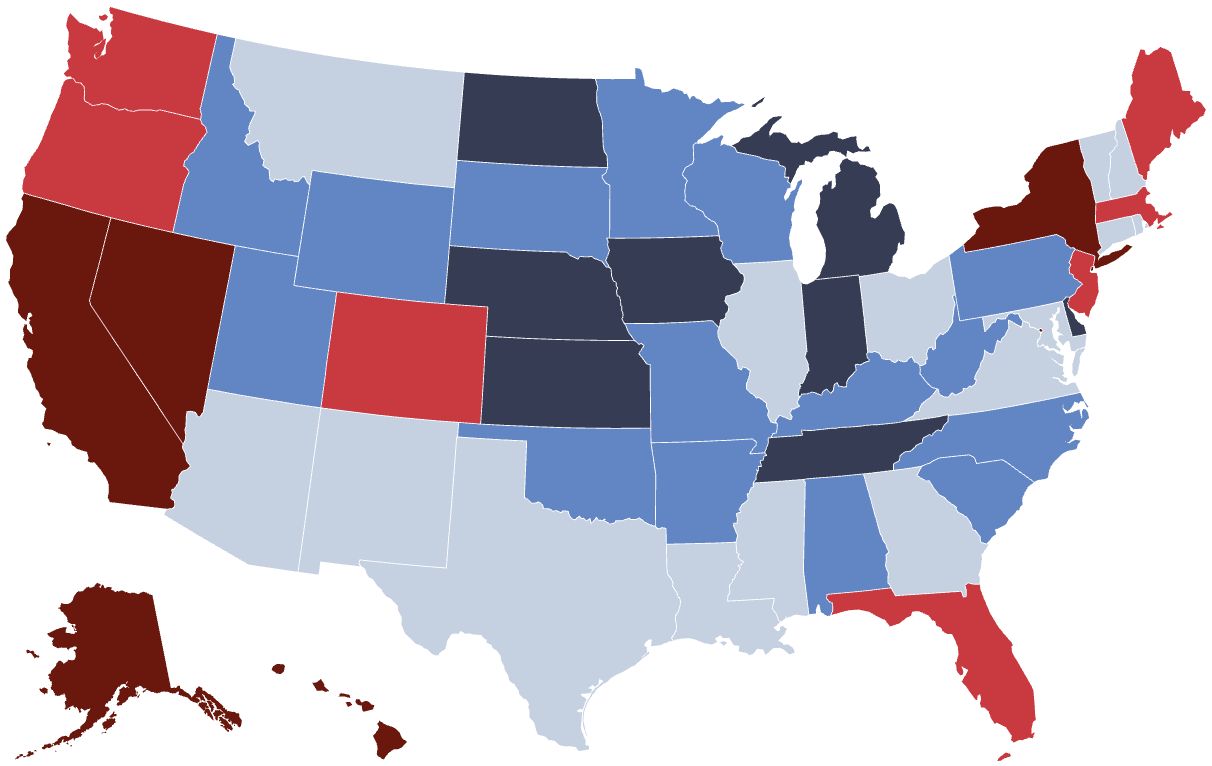
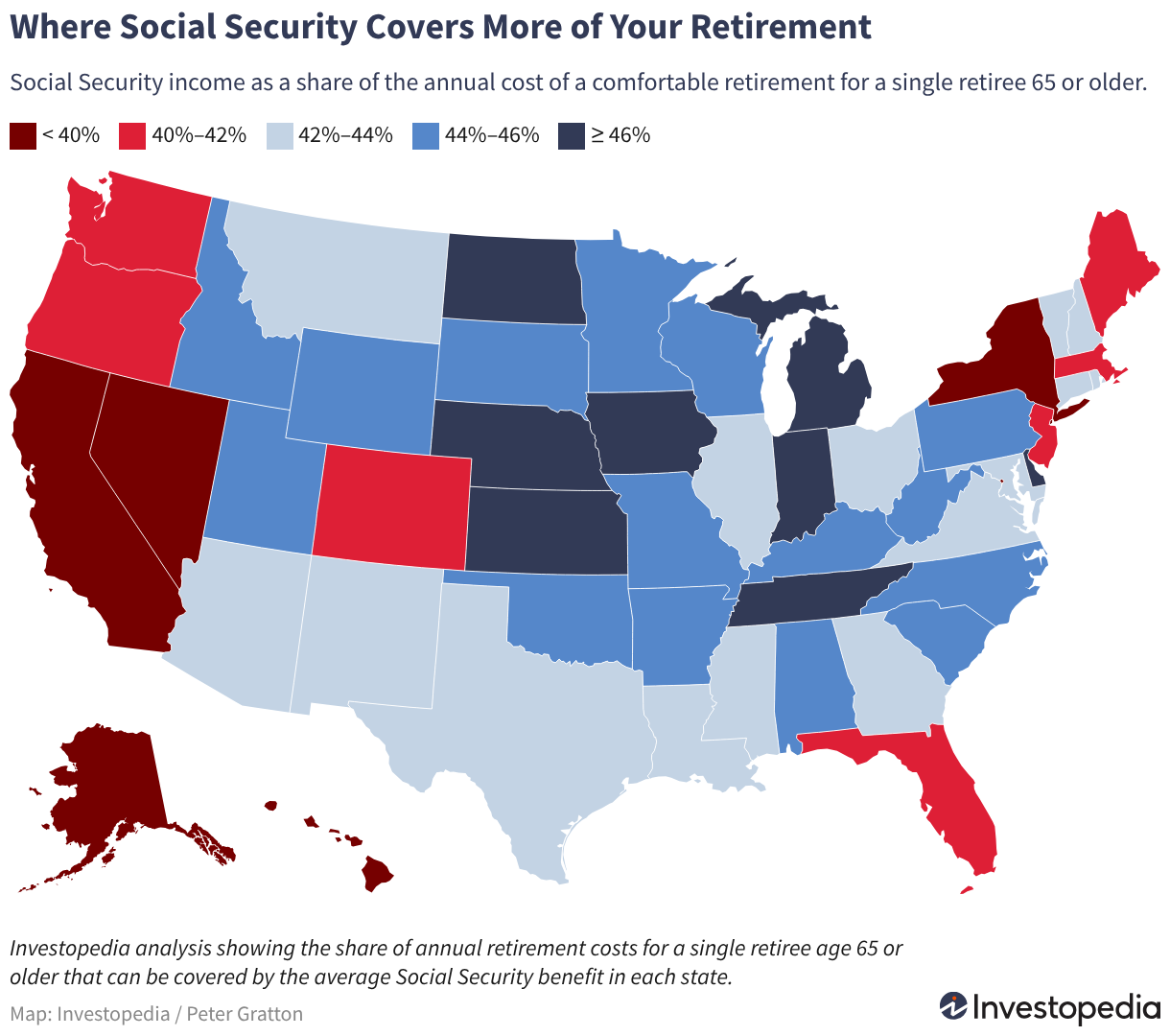
Average benefits cover nearly half of a single retiree’s estimated annual expenses in several lower-cost states, but little more than a third in the most expensive states. The states where Social Security goes the furthest generally have benefits near the national average while living costs fall well below average.
Social Security is credited with lifting more Americans out of poverty than any other program. But it wasn’t meant to fund a comfortable retirement. The modern formula dates to the 1970s, when Congress raised benefits 20 percent in a stroke, tied them to inflation, and then linked benefits to workers’ wage histories—producing checks that replace a little more than 40 percent of a middle earner’s pay.
What those checks buy, though, still depends largely on where they’re spent. Kansas leads our ranking: its retirees’ average benefit covers 48% of the roughly $51,800 annual cost of a comfortable retirement for a single person, per Investopedia’s analysis. Iowa, North Dakota, and Indiana follow at about 47%, with Delaware rounding out the top five at 46%.
Seven of the top 10 states are in the Midwest and Plains, where lower retiree costs help Social Security cover a larger share of the typical retirement budget. Tennessee and West Virginia also make the top 10 largely because of low costs.
 Where Social Security Covers the Least
California ranks last with Social Security covering only about 36% of the annual expenses for a comfortable retirement. Its below-average $1,935 monthly benefit is paired with the country’s third-highest estimated annual costs of about $64,300. Hawaii (37%), the District of Columbia (38%), and New York (39%) fill out the bottom four.
But a bigger Social Security check in some states doesn’t necessarily mean retirees there need a smaller nest egg. New Jersey has the nation’s second-largest average benefit yet ranks 43rd in the share of expenses covered. Connecticut’s average benefit, meanwhile, is the nation’s highest, but covers just 43% of expenses, leaving it mid-pack.
How We Measured Where Social Security Goes Furthest
We measured how much of a comfortable retirement for a single person each state’s average Social Security benefit covers, using 2024 federal data, the most recent year with every source available.
The expense side combines housing costs from the Census Bureau’s American Community Survey with nonhousing spending from the Bureau of Labor Statistics’ Consumer Expenditure Survey. We adjusted those costs using the Bureau of Economic Analysis’ Regional Price Parities and defined “comfortable” as the average spending of Americans 65 and older, including travel, restaurants, and entertainment—not a bare-bones or median budget.
The benefit side is each state’s average monthly check for retired workers for December 2024. Averages differ by state because benefits reflect lifetime earnings, not addresses. If you relocate, your Social Security benefit moves with you, while your living costs may change. Dividing annual benefits by annual costs gives the share Social Security covers.
Keep in mind, these are benchmarks, not personalized budgets, and they exclude state income taxes you may owe, potential long-term care costs, and senior property-tax exemptions you may qualify for.
Read the original article on Investopedia