
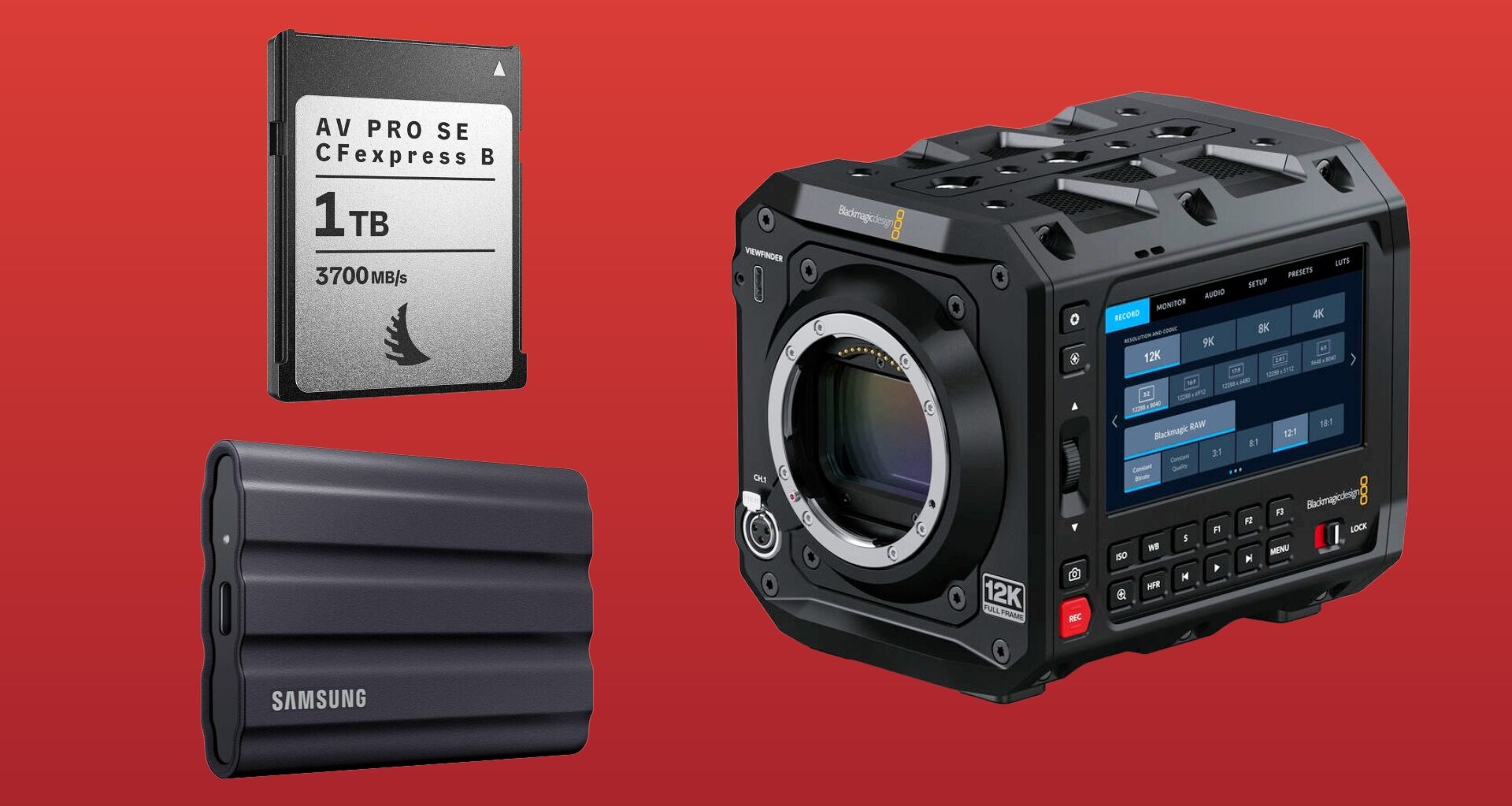
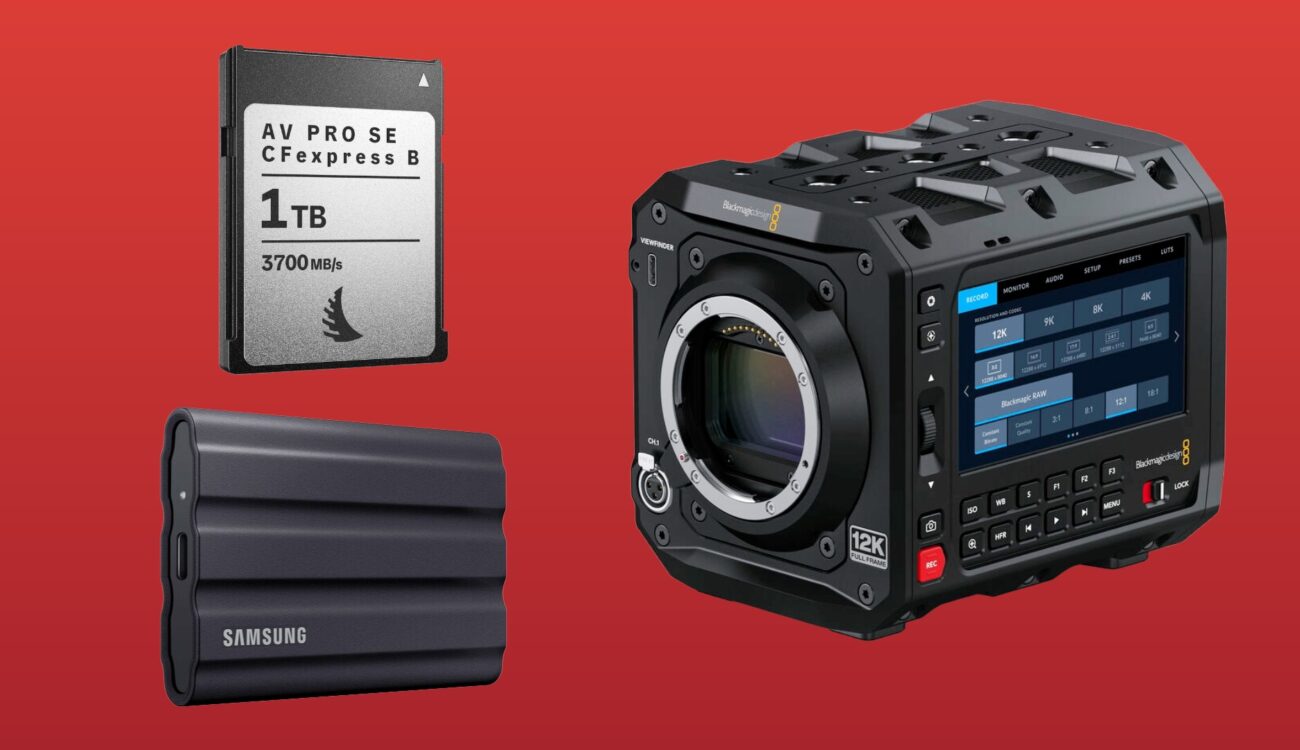
Blackmagic Design has expanded its official recommended media list for the PYXIS 12K, and it now goes well beyond CFexpress cards. The support note covers 35 approved cards from nine manufacturers, and for the first time it also names five USB-C SSDs qualified for external recording. If you are feeding a 12K open gate sensor with Blackmagic RAW, this is the shopping list to check before your next job.
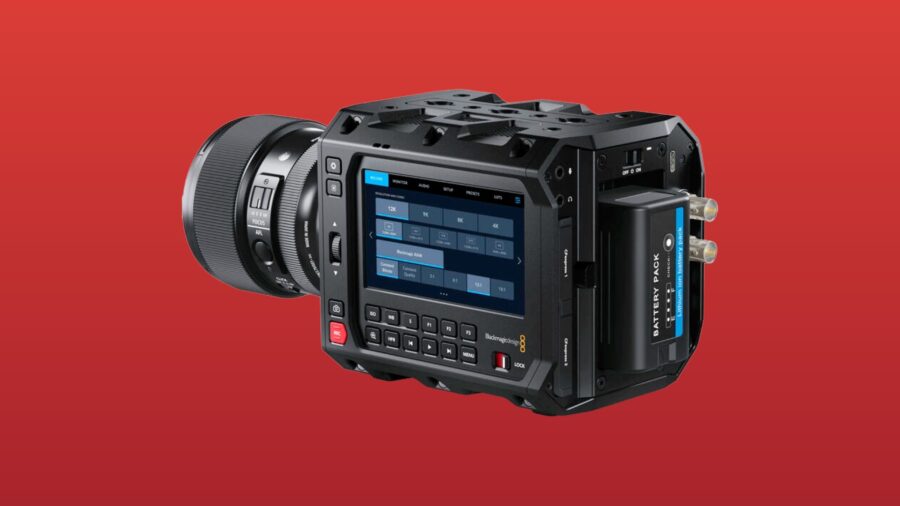
As a quick recap: the Blackmagic PYXIS 12K was introduced at NAB 2025 and pairs the full-frame 36 x 24mm RGBW sensor from the URSA Cine 12K LF with the compact PYXIS body. The 12,288 x 8,040 sensor records internally to dual CFexpress Type B slots, while a rear USB-C port handles external drives. The camera reaches 40 fps in 12K 3:2 open gate and 60 fps in 12K 2.4:1, which translates into serious sustained data rates, so media qualification matters more here than on most cameras in this price class. Blackmagic publishes its approved media in a support FAQ, and the current version of that list is noticeably longer than the one we covered when it first appeared.
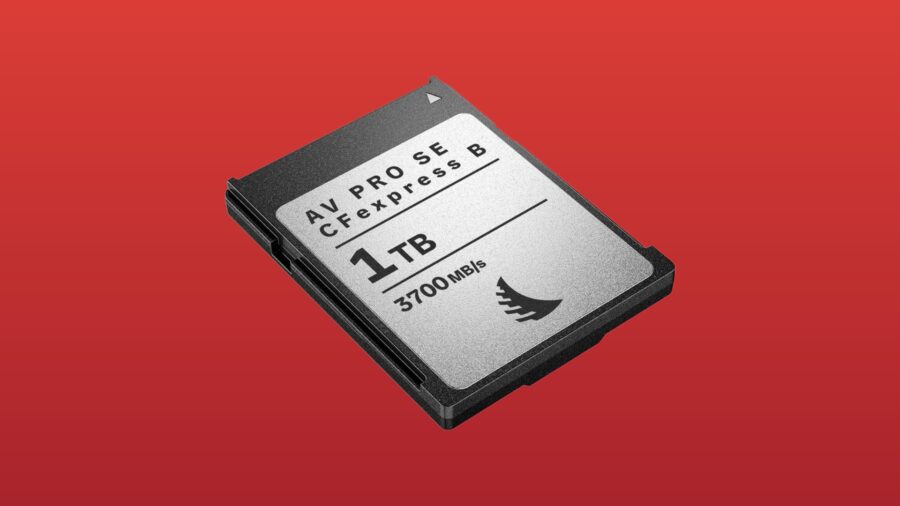 Angelbird 1TB AV PRO SE CFexpress v4 Type B Memory Card. Credit: B&HThe card list spans nine brands
According to Blackmagic, the recommended CFexpress cards are qualified for 12K 3:2 open gate Blackmagic RAW 12:1 up to 24 fps, 12K 16:9 Blackmagic RAW 8:1 up to 45 fps, and 8K 3:2 open gate Blackmagic RAW 5:1 up to 60 fps.
Angelbird has the largest presence with eight entries: the AV PRO SE MK2 CFexpress 4.0 Type B in 512GB, 1TB, 2TB, and 4TB capacities, the AV PRO SX CFexpress 2.0 in 160GB and 330GB, and the AV PRO MK2 CFexpress 2.0 in 1TB and 4TB. Delkin Devices follows with the Black VPG-400 CFexpress 4.0 in 512GB, 1TB, and 2TB, plus the Power G4 CFexpress 4.0 in 512GB.
Lexar contributes seven cards: the Professional Diamond Series CFexpress 4.0 in 512GB and 1TB, the Professional Gold Series CFexpress 4.0 in 512GB, 1TB, 2TB, and 4TB, and the older Professional Diamond Series VPG-400 CFexpress 2.0 in 512GB. Wise is listed with four CFexpress 4.0 cards (the PRO CFX4-B1024PM3 1TB, PRO CFX4-B660PM2 660GB, CFX4-B512 512GB, and CFX4-B1024 1TB), and OWC also lands four entries: the Atlas Ultra CFexpress 4.0 1TB, the Atlas Pro CFexpress 4.0 in 256GB and 512GB, and the Atlas Ultra CFexpress 2.0 325GB.
Rounding out the list are Silicon Power with the CreatePro (formerly StudioPro) CFexpress 4.0 in 512GB, 1TB, and 2TB, Nextorage with the NX-B2PRO CFexpress 4.0 1.33TB and the B3 AE CFexpress 4.0 1TB, ProGrade Digital with the Gold CFexpress 4.0 1TB and the Cobalt CFexpress 2.0 650GB, and ExAscend with the Element Pro CFexpress 4.0 1TB.
A generation count tells its own story: 28 of the 35 cards are CFexpress 4.0 models, but seven CFexpress 2.0 cards still make the cut, among them the ProGrade Cobalt and Angelbird’s SX and MK2 lines. In other words, the qualified recording modes do not strictly require Gen4 media, and owners with proven CFexpress 2.0 stock are not automatically forced into new cards.
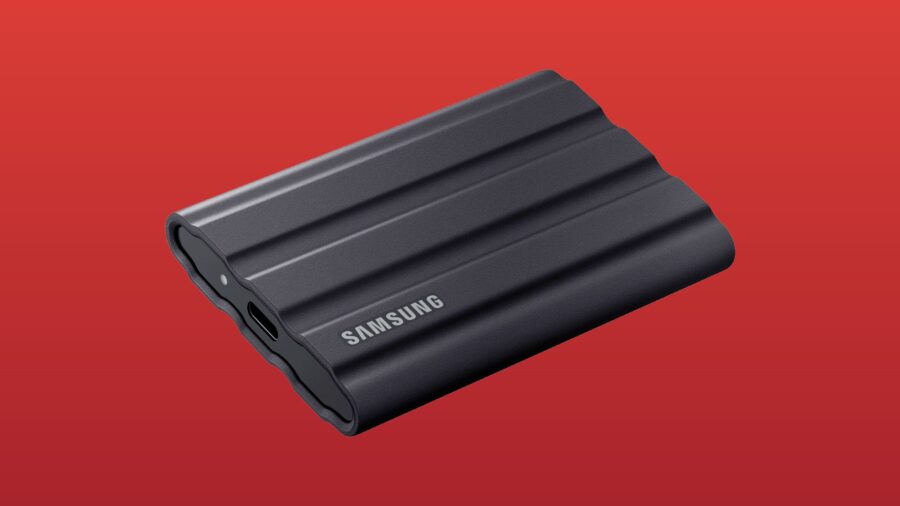 Samsung 1TB T7 Shield Portable SSD. Credit: B&HUSB-C SSDs make the list for the first time
The bigger news is on the external recording side. The FAQ now names five USB-C drives, a category that was absent from the card list we reported on last year. The qualified drives are the Oyen Digital Helix Dura 4TB, the Samsung T9 Portable SSD 4TB, the Samsung T7 Shield Portable SSD in 1TB and 4TB, and the SanDisk Extreme Pro Portable SSD V2 in 1TB (model SDSSDE81-1T00).
Blackmagic lists these drives as recommended for 12K 3:2 open gate Blackmagic RAW 8:1 up to 24 fps, 12K 16:9 Blackmagic RAW 8:1 up to 45 fps, and 8K 3:2 open gate Blackmagic RAW 5:1 up to 60 fps. Read that first mode carefully: for open gate recording, the USB-C drives are qualified at 8:1 compression, while the CFexpress list is stated at 12:1. Since 8:1 produces larger files than 12:1 at the same resolution and frame rate, the external drives are qualified for a heavier open gate data stream than the card list specifies. Anyone planning to run open gate at lower compression ratios should establish how their specific media behaves before a paid shoot, since the FAQ only covers the modes it names.
 Why qualified media matters on this camera
The PYXIS 12K has had an eventful first year, including a voluntary recall with a free sensor board upgrade for early units and, more recently, approval for Netflix 4K Originals. That Netflix clearance is exactly the kind of production context where dropped frames from marginal media are not an option, and where a manufacturer-qualified list becomes part of the paperwork. If you are still weighing the camera itself, our lab test measured 12.8 stops of dynamic range at SNR = 2 (14.2 stops at SNR = 1) at ISO 800, close to the URSA Cine 12K LF that shares the same sensor.
Prices for the listed cards and drives vary widely by brand and capacity, from compact 160GB CFexpress 2.0 cards up to 4TB CFexpress 4.0 and SSD options, so it pays to compare current retailer pricing against the capacities your typical shooting day actually needs.
Are you recording to CFexpress or straight to USB-C on your PYXIS 12K, and which media has held up for you at 12K data rates? Don’t hesitate to let us know in the comments below!