

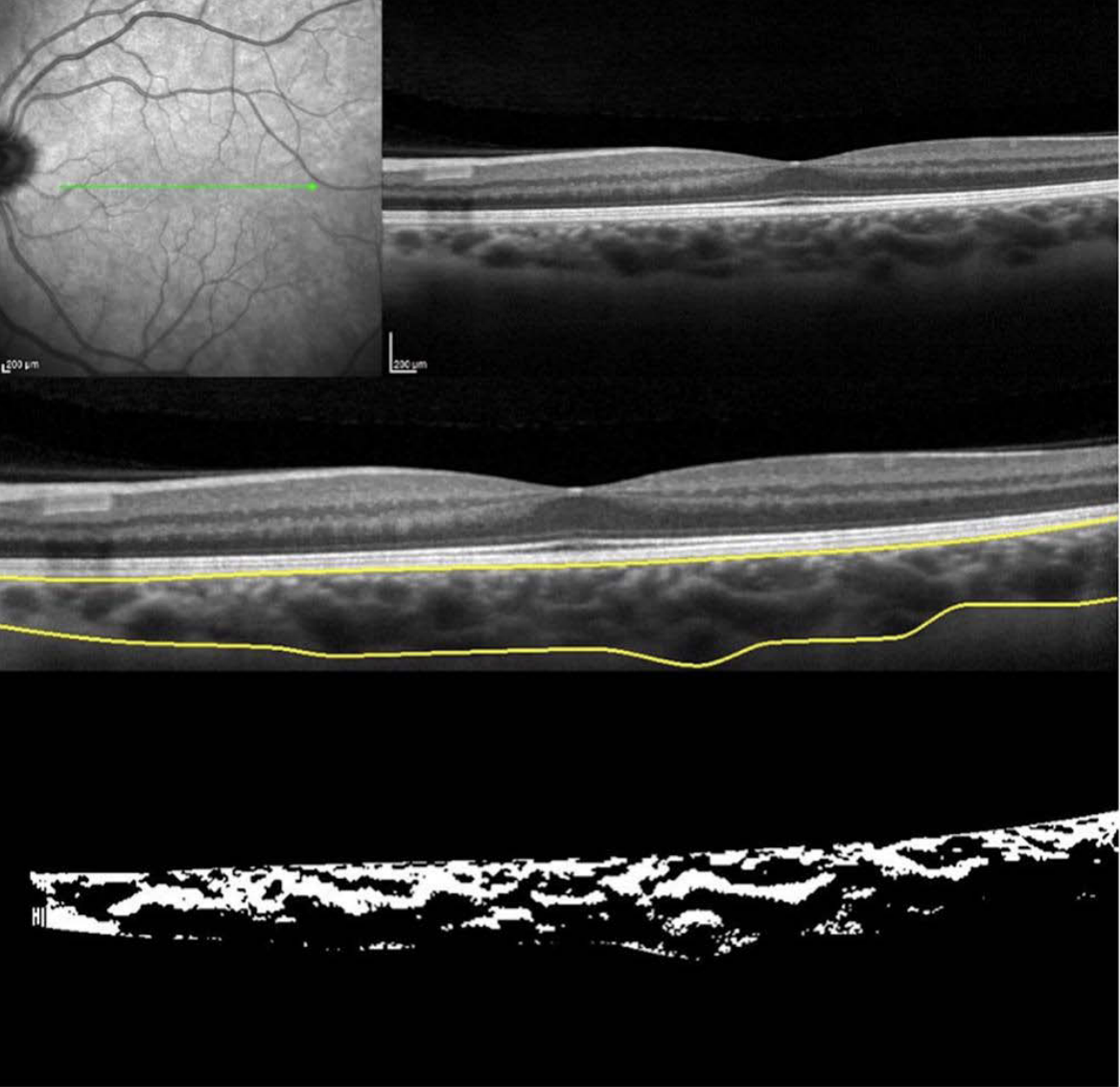
A review of 41 studies highlighted an association between greater early choroidal thickening and reduced axial elongation at one year in patients being treated for myopia. Among the interventions studied, choroidal responses were most pronounced in patients receiving repeated low-level red-light therapy. Photo: Iovino C, et al. Clin Ophthalmol. August 13, 2026. Click image to enlarge.
A systematic review published in Clinical Ophthalmology found that the choroid may provide an early glimpse into how effectively treatment is slowing ocular growth. Its authors assessed 41 human studies examining choroidal structural and vascular changes associated with myopia development and treatment, focusing primarily on choroidal thickness (CT) and choroidal vascularity index. Specifically, they evaluated pharmacological, optical and light-based forms of myopia control.
Across each study, myopic eyes consistently demonstrated thinner choroids, with thinning associated with axial elongation and refractive progression. Some studies also found reduced choroidal vascularity index in children with myopia, suggesting that vascular remodeling may either occur at the same time as or precede structural changes.
The response to treatment, however, varied based on the intervention used. Atropine, for example, produced “dose-dependent and variable” changes in CT, whereas optical strategies like orthokeratology were more consistently associated with choroidal thickening. Ortho-K increased subfoveal CT “by approximately 16µm within one month of ortho-K wear” in one study, as reported by the authors in their paper, with the change remaining stable over one year and correlating with reduced axial elongation.
The most pronounced choroidal responses occurred after repeated low-level red-light therapy. In one randomized trial, macular CT increased by approximately 14.8µm, while central macular CT increased by 18.0µm after one month. Higher early thickening was associated with less axial elongation at one year.
These combined findings indicate that early choroidal thickening or preservation may serve as a potential biomarker of treatment response. However, the authors cautioned that the evidence “should be interpreted as associations rather than proven causal mechanisms” due to the observational study design, which prevented them from directly observing patients in real time.
Click here for the journal source.
This article was developed by the editorial staff in conjunction with experts in the field. In the process, AI may have been among the editorial tools used to meet the goals of human editors, who approved all content.