
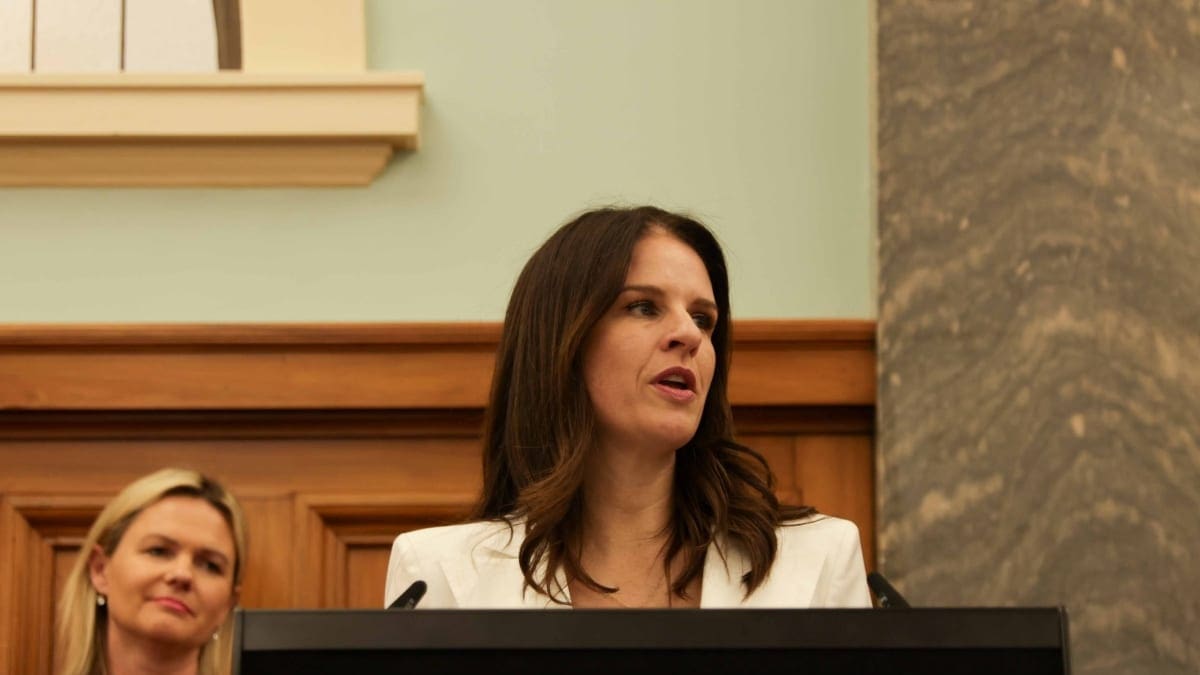
The ministry said it commissioned consultants to prepare a discussion document covering “domestic and international evidence on effective initial teacher education and teacher readiness, and identifying areas for further consideration”.
Claire McLachlan, Waikato University pro vice-chancellor, education, said it was not exactly clear what the minister wanted to change.
“We’ve got students on campus, we’ve got them online throughout the country, and we’ve got them on site in schools. So I have heard her say on radio recently that teacher education is woeful. Which bits are woeful? That’s the bit that’s unclear to us,” she said.
“The universities provide 85% of the secondary teacher education programmes, so there’s only a small handful of stuff being done by other people. We’re doing the bulk of it, so if we’re not doing it well enough, then that would be good to know.”
McLachlan said Australia went through a similar review over the past five years and she expected similar results – requiring core content on subjects including the science of learning, understanding the role of the brain in learning and knowing how to teach children with diverse backgrounds.
Auckland Primary Principals Association president Lucy Naylor said schools wanted to see more consistency between providers.
“Depending on where your student teacher comes from, the quality of those teachers is very, very varied, extremely varied,” she said.
“What they’re actually being taught is in some cases, not all cases, inadequate to meet the demands of the new curriculum. So that puts a strain on schools because we are having to do a lot of the training ourselves.”
She said some new teachers were graduating with too little classroom experience and welcomed the Government’s boost to school-based training.
“Teaching is such a relational profession that the biggest, the most positive outcomes we see are from the student teachers who have spent the most amount of time in the classroom during their practicums,” she said.
“There are some programmes at the moment where student teachers spend maybe six to eight weeks in a classroom and then off they go. And that’s just not good enough.”
Howick College principal Dale Burden said the Government’s criticism of universities’ programmes was unfair and misplaced.
“Otago University run an absolutely outstanding programme,” he said.
“It’s a great programme, they’re great students, and they make an instant contribution when they come into school.”
Burden said the real issue was whether the very best graduates were choosing to become teachers.
“It’s about the quality of the students in the programmes. I think that’s the thing that really makes or breaks the graduate,” he said.
Burden said a bonding scheme succeeded in attracting excellent people to teaching about 40 years ago, many of whom recently retired or were about to.
“That was an outstanding programme, and it captured the best in a generation,” he said.
Victoria University’s director of teacher education, Ben Egerton, said it looked like ITE providers were at the start of a period of significant change.
He said they had already altered their programmes to match new teacher standards developed by the Teaching Council and the next target was likely to be greater consistency between the various courses on offer.
“I think it makes sense. We have I don’t know how many players in this space nationally, probably 25, 26 tertiary institutions, private providers, polytechnics all offering ITE,” he said.
“Having rationalised the teaching standards over the last couple of years for the teaching profession, it makes sense to do this in initial teacher education too.”
Otago University’s dean of education Vivienne Anderson said she was worried the Government wanted to make system-level changes without good evidence.
“At the moment there’s an increase in funding going into schools-based or SOTP [school onsite training programme] programmes and it’s being represented as almost as a kind of silver bullet that’s going to fix workforce problems and I’m just not convinced that is the case,” she said.