
The man’s decomposing body was found by a friend who was let onto the property by the father’s young daughter, who told him, “‘Daddy’ was not waking up”.
‘Likely to have a seizure or die’
Judge Bell said the woman gave birth prematurely in mid-2024 and the child was unable to maintain his own body temperature or feed properly.
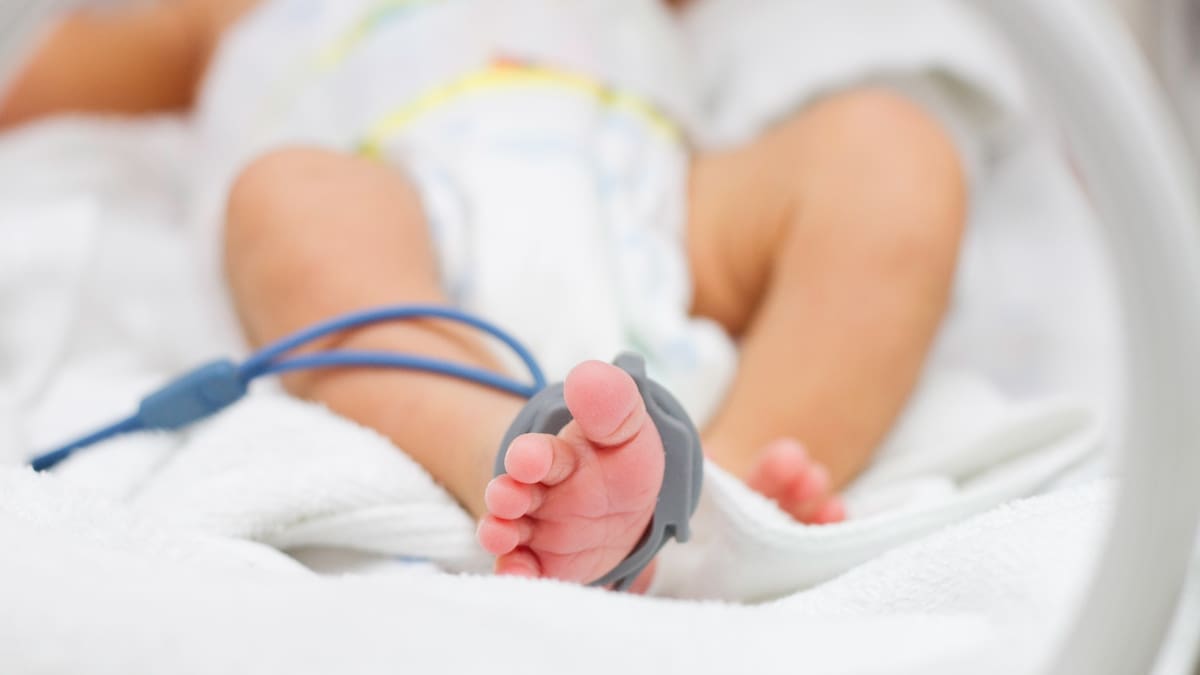
He was placed in a temperature-monitored bed and required a nasogastric tube at Middlemore Hospital.
In the week or so after the birth, he remained in hospital under constant care, and his parents visited him “sporadically”.
On the ninth day of the child’s life, the parents visited the hospital with their 4-year-old, which contravened the neonatal unit’s visiting policy.
“Needless to say, that posed a serious safety risk to [the baby],” Judge Bell said.
Middlemore Hospital. Photo / Jason Dorday
When hospital staff reminded the couple about the visiting policy, the mother became “enraged”.
“Despite hospital staff trying to calm her down, she demanded the nurse remove the nasal gastric tube from [his] nose.
“They were told that he would likely suffer lifelong brain damage if he was removed.”
The pair did not listen and took the premature baby from the hospital.
Judge Bell said police were then called and were accompanied by an ambulance as they looked for the child.
The mother expressed anger on a phone call to hospital staff over police being alerted.
“A doctor reiterated to her that due to the limited amount of food [the baby] was consuming, he was likely to have a seizure or die if medical attention was not continued. She became angry and hung up the phone.”
Later that evening police found the couple at an Auckland address, but the pair refused to let ambulance staff transport the baby and advised they would return him themselves.
Judge Bell said the mother and father returned the baby and stayed at the hospital overnight but did not return to see the baby for two weeks.
The child did not suffer any significant injuries as a result of being taken from the hospital.
No apparent remorse
The second set of offending the woman was sentenced over related to one representative charge of assault on one of her older children.
A representative charge means the offending relates to multiple incidents.
On one occasion, the woman became “enraged” at her child when he could not find something that belonged to her, and she hit him on the back of the head.
This resulted in him falling on the ground, and she continued slapping him on the face and chest.
Judge Bell said between July and November 2021 the woman would regularly assault the child.
On another occasion she punched him in the face, dragged him into the bathroom by the back of his T-shirt and forced his head under the bath water.
While the woman had two common assault charges from 10 years ago, Judge Bell said there was no recent similar offending.
“Her [other criminal] history is indicative of her unwillingness to follow any orders or any court-imposed orders.”
The woman was sentenced in Auckland District Court. Photo / Nick Reed
Of significance to the judge was a comment the mother made to a probation reporter about taking the premature baby from the hospital.
“She said that if she knew she would go to jail she would not have done it. She did not appear to show any genuine remorse or concern for her actions and the impact they may have had on her child who was only a few days’ old at the time.
“Her remorse seemed to centre around the impact her decision had on her own personal circumstances and the fact that her actions caused her to be remanded in custody.”
A report relating to the other offending said the mother’s self-entitlement and use of violence to problem solve were contributing factors to the abuse she perpetrated.
Judge Bell said the woman had completed some programmes while in custody, including a nine-step addiction programme.
“She says … she has now become clean, which is the first time in a long time, and she is ready to fix herself by addressing her drug addiction.”
Judge Bell pointed to a cultural report that indicated the woman had a difficult upbringing and had been exposed to methamphetamine and violence as a teenager.
“Her lawyer submits that the violence that she experienced through that relationship is a trigger and a causal link in the offending that is currently before the court,” Judge Bell said.
While the woman had submitted a letter of remorse to the court, there was “no empathy” in it towards her children, the judge said.
“There is no apology as to what she has done to her children and the long-lasting effect that will have on them. She has never once in that letter indicated the effect of her incarceration on her children.”
The Herald has sought comment from the woman via her lawyer.
In a victim impact statement, the older child said he had been “constantly frightened” of his mother and started hurting himself.
“Hopefully with the support he is now getting he can start to heal and see that it was through no fault of his that the offending occurred,” Judge Bell said.
She set a 30-month sentencing starting point for the ill treatment or neglect of a child charge and imposed a 12-month uplift for the violent offending, bringing the total sentence to 42 months’ imprisonment.
The judge granted a 20% discount for the woman’s guilty plea, 5% for rehabilitative steps and a 10% discount for her cultural and background factors.
“It will be of no surprise to you that I am not prepared to provide any discount for remorse.”
After the discounts were added, Judge Bell sentenced the woman to 27 months in prison.
“You need to make some very large changes and start to think of your children rather than yourself.”
Katie Harris is an Auckland-based journalist who covers issues such as sexual assault, workplace misconduct, media, crime and justice. She joined the Herald in 2020.
Sign up to The Daily H, a free newsletter curated by our editors and delivered straight to your inbox every weekday.