
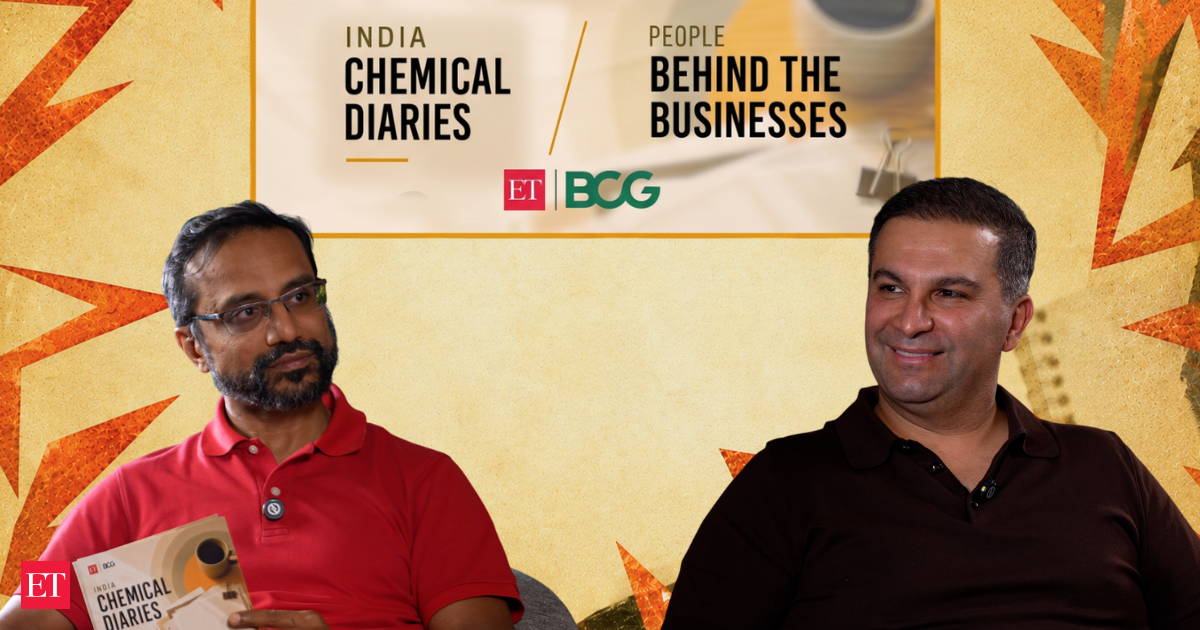
Conversation between Amit Gandhi (Managing Director & Senior Partner, India Lead – Chemical, BCG) and Vikram Handa (Managing Director – Epsilon Carbon Pvt Ltd.)
Amit Gandhi
What does it take in your late 20s to decide to build a battery business in India from scratch? That’s exactly what our guest today did. Vikram Handa founded Epsilon Carbon in 2010 and has now built it into a humongous anode, cathode and graphite manufacturer, powering a lot of the EVs that we see today. Vikram, welcome to the podcast today. Thank you for being here. Today’s intent is very different from all the other discussions that you typically do. You’re very articulate on the industry. You speak a lot about batteries, India, and honestly, every conversation I have with you, I learn more than I give you. It’s always been an interesting one. Today, we actually want to discuss your journey getting there rather than the company and the sector itself, because that I know you know very well. Actually, I don’t know enough about just your journey getting here. And I’m sure our audience is very interested to hear how you actually build a chemicals industry in India. How do you go through the whole cycle of it? Because building is tough, entrepreneurship is tough, so I want to really hear the story behind this. We’re going to go back right to the beginning, take us back to 2010. You’re in your late 20s, you’ve got a hundred options in front of you, you’ve got the world in front of you. You come back and you decide I’m going to build a chemicals plant in Karnataka. Walk us through how the decision came through. How did you decide to do this?
Inside the making of a carbon plant: Vikram Handa of Epsilon Carbon on mind, matter, and money
Vikram Handa, Managing Director of Epsilon Carbon, did the unglamorous work most founders avoid. He built a chemicals plant, survived a failed first build, learned to sell to the biggest smelters, and then pivoted into anode and graphite production that supplies to EV makers. Amit Gandhi parses the story through the lenses of entrepreneurial grit, the tactical learning, and the mindset shifts that turned a risky late‑20s bet into a strategic industrial platform.
Vikram Handa
Yeah, so thanks a lot, Amit. I’m very happy to be here. So I think it’s important to know that I never lived in India, actually. I grew up in Abu Dhabi my whole life. I studied in Boston. I worked in Boston for a bit. I moved back to Abu Dhabi and I started an aerospace company back then with someone from New York. This is like, I don’t know, 2006, I would say, 2010 is actually when I got married. My wife is from Bombay and then we were living back and forth, back and forth and I had my aerospace business and I was thinking of what to do in India. I think one of the main reasons was that we were clear that we were going to live in India after that. And I explored the aerospace business in India for maybe a year and figured I just don’t understand it. I just don’t know where it’s going, policy and other areas. And I said, I don’t know what to do. I think I was a totally blank slate, which is sometimes an advantage also. I came with no baggage. My dad had worked for the government, so he also had no like, say, business legacy to look at. My wife’s family is in steelmaking and I think that’s where a lot of the ideas came from. I got a chance to travel around China and Japan. I had never seen a manufacturing plant in my life till 2010. So the opportunity to go see plants, I was very intrigued, very interested. Then I decided that, you know, something called coal tar maybe is my space and thought I build this plant. I actually started off in Maharashtra, later on moved to Karnataka. But when I started the business, my initial feeling was, look, I’ll be based in India and I will build this factory in India and the business will be housed out of India. But a lot of my customers will be in the Middle East. And part of my thought was, I’ll keep one foot here, one foot there, and I’ll kind of balance life that way. Obviously, life doesn’t work out the way you want it to. And now I completely live in India, sold my businesses back in the UAE and have now grown epsilon to what it is today. Live EventsAmit Gandhi
Fantastic. And coal tar and chemicals, of course, there’s a linkage back into steel, but it’s not a natural course of action for anyone to take. Did you have doubts about taking it on? Did you have other options in mind? Because it’s such a specific and also honestly for a late 20s, early 30s person, not really the most exciting sector as you would think about it. So what drove this from the personal point of view, was it exciting at that point of time or saying, look, let me try it out and figure out what happens?
Vikram Handa
So I think one inherent advantage I got in this space was I got security of raw material. And that was maybe the fundamental basis of me saying, okay, look, this is something where I have some advantage. I’m not just doing something random like pharma or other areas. I was inclined towards manufacturing as well. And I said, okay, this does sound interesting. To be honest, when I started the business, I never thought it would go where it went. I had an ambition that, look, if I can do a hundred crore turnover, I made it in life. As I went on my journey, I think I also realized that I started the game late. Like you said, I started in my late 20s, early 30s. Most people start an entrepreneurial journey or business in their early 20s. So I always considered myself already a decade late in the race. And maybe that’s why I’ve been on a treadmill rather than just walking a slow race, saying I need to catch up.
Amit Gandhi
That’s interesting. We’re actually going to hold on to that thought about treadmill and where you’re starting off later on, because we’re going to come back to that. I really want to understand a little bit more around that. But tell me, you said mid-20s, you started an aerospace business in the Middle East. Was it clear that you were always going to be an entrepreneur? What drove you?
Vikram Handa
So my dad had always worked for the government. And I think life back in Abu Dhabi was quite easy. You worked five hours a day. You had lots of time to nap and be with family. But I found it exciting. I lived in the US for seven, eight years. And I liked the entrepreneurial journey. I don’t know if I was inclined to manufacturing so much then. But as I got into it, I got super intrigued on just design, building plants, what they do, how to make them, say, more well-designed. And I was very open to learning what’s outside, both in Europe and Japan. And I think I get a lot of ideas when I travel. And then I want to come quickly and implement them as well and build something out of those ideas.
Amit Gandhi
I can attest to the fact of the manufacturing part. Every time I had a discussion with you, your level of technical knowledge and then company of business is very uncommon, to say the least. So I can relate to that. OK. It naturally segues to my next question. Tell me about your first big customer. Was it terror saying, look, hey, this is getting suddenly very large. Am I sure I want to do this? Tell us where you were, what you felt like.
Vikram Handa
Yeah, so I think when I started Epsilon Carbon back in 2010, I built a plant in Maharashtra. It had a lot of challenges. Long story short, basically 2017, I started the business and I moved to Karnataka by then. But in the meantime, in the six years, I had designed the plant, built one, overspent money, broken it down, moved it from Maharashtra to Karnataka and rebuilt it. And in that process, I think I learned a lot. But while I was doing that, I started understanding the industry more. And I would always go visit customers, aluminum smelters in India, even when I did not have a plant to produce a product for them. So I would always go talk to them saying, look, I am coming. I am going to be ready soon. What are your requirements? What do you need? And in that process, what I did is I took over some, say, I started doing contract manufacturing. So my first order, I remember very well, was actually with Vedanta for 100 tons a month, which would be in today’s day and age, maybe like a crore a year kind of sale. But it was the most amazing feeling that we had actually broken in and gotten a customer. And we actually could produce a product as an Epsilon company and supply someone. So I think the ability to just believe that we can service a customer, whether it’s 100 tons or 1,000 tons, but the customer also accepting us. You know, I’ll give you guys a try. I used to really visit the customer a lot. And I got a very good pulse of what they expect out of that.
Amit Gandhi
So when you got the Vedanta order, the first big order for the site, when you were at that point of time, where were you? Just describe the scene. Like, when did you hear that it’s come?
Vikram Handa
Yeah, so I was in Bombay in my office. We had an office in Churchgate, that’s where we started. And I think my sales guy had gone to visit Vedanta also in Bombay. And then he said, sir, they finally gave us an order. We got 100 tons. Now we have to make it, you know, because we didn’t have our own manufacturing plant, but we had signed up with some contract manufacturing. So we said, okay, we’ll make it somehow, you know, and ship it. And the question was not how much money we’ll make of it. But the idea was that, look, we’ve broken in.
Amit Gandhi
And we can make something now. Was there a significant no before that? Yes. Was there any customer who flatly rejected you saying, nope, that’s not going to happen? I’m sure it happens in every journey. Any learning from that as you were going through the journey?
Vikram Handa
Yeah, lots of nos along the journey. I think before 2017, lots of nos. And even today, we get lots of nos. And that’s fine. I think every no is a reason to learn how to get a yes. Right. And I think it’s important to understand why someone says no also. Is it price? Is it volume? Is it quality? Is it logistics? Is it something else? So it’s always a learning because a no by someone can become a yes for someone else. Like we service obviously Indian smelters. We service a lot of Middle East smelters. So maybe I’ve come full circle where I thought I’d have a footprint in the Middle East, but today we do service Middle East customers a lot. I would say we’re the biggest supplier in China to Middle East aluminium smelters. Is it? And we’ve been exporting a lot for the last three or four years out of dedicated tanks in Mangalore. And the ability to finally break into them has been a big yes for our company.
Amit Gandhi
A lot of nos typically is disheartening. And also, it’s just as you’re building the company, kind of trying to hold it together. How did your team react when they got a lot of nos? How did you motivate them to continue along? Because founders typically have their own fire, but teams have a different mentality. Exactly what you’re saying, right? Every no is an opportunity to turn into a yes for someone else by learning something. But that’s a very positive mindset, maybe looking backwards. At that point of time, it’s stressful to just hear nos, right?
Vikram Handa
Yeah. So I think because the company was smaller then and I was in front of customers a lot more, almost every no I got. More than my team, I heard the nos, right? And I’m very picky on my quality of presentations that I take into meetings. I say I won’t be able to tell the story correctly. And I would pitch myself, not the sales team, right? And I’ll get a no and I’ll be like, okay, no problem. Let’s see what happens. But I think over time, I just made sure that I really know more than the guy sitting across the desk for me. I know his pain point. I know what I have to do to break into him. So he sees me more than a supplier, he sees me really as a partner. And I think that, not just me, the company has matured, the people have matured. And today, a lot of the team in the sales team or manufacturing team or business heads think like that.
Amit Gandhi
How many customer conversations do you still have like this? How many customer conversations do you friend-foot?
Vikram Handa
I think I meet almost every customer once a year. Oh, okay. Still, globally, either at a conference or in India. Yeah, I think I meet everyone or everyone knows me. So they can reach out to me or I can drop an email and they’ll be like, yeah, okay, let’s do a call. I think I’ve been here around long enough now.
Amit Gandhi
Through the journey, did you ever, I’m sure there were moments which were down moments, like everyone’s journey. Was there ever a time when you said, I’m not sure this is for me. I’ve taken on stuff, but hey, this is looking a little dicey. I’m not sure this is going to work out. Explain the moment which you went through. Maybe it’s early in the journey. How do you get over it? Who did you talk to at that point of time?
Vikram Handa
Yeah, so I think one of my toughest times were back in 2015-16 when I had the plant in Maharashtra. And like I couldn’t run it. I couldn’t get consent to operate. The banks were coming down my neck saying, look, you built this plant. How do you plan to service it? And actually, that is when we took up this contract manufacturing to earn just enough to be continue servicing interest to the banks. But that was, I think, my biggest low, I would say back in 2015, Feb-March time when the plant couldn’t start. Very, very, very tough. You see, also when I started, I’m a bit of a dreamer, right? So when I dreamt of building this plant, I also like I had a beautiful site in Maharashtra and the hills, it was nice and green. And I said, look, I’ll do this and I’ll do that. And I’ll do CSR and I’ll build a township. And I kind of dreamt five years ahead of what I’m going to create. So then having built it and not seeing it running was even more challenging. And then it’s basically you are saying, okay, look, I gave up on my dream, right? And that was the, say, the crossroads I was on and said, do I give up on my dream? Again, I had lots of advice, but not many people knew my pain to say that, okay, Vikram, this sounds like the right thing to do. On the outside, it’s easier to say, okay, give up or no, Vikram, stick with it. So that was, I think, the real challenging time.
Amit Gandhi
Who did you talk to? Who was one person who kind of helped you through this saying, look, just stick with it? And honestly, as you’re saying, the move from Maharashtra to Karnataka, it’s a pretty large move mentally for you, right? There’s obviously the work, but just mentally changing it. So who helped you during this? Who was the one person you talked to saying, hey, I just need help?
Vikram Handa
I think I was too deep into it. I had a good CEO with me. I think if I look at my wife or my parents or my in-laws, they were all very supportive. But I don’t think anyone could have taken the decision on my behalf, right? I had lots of advice, lots of advice, lots of opinions. But at the end, it was me who took the decision, right? I had to make peace with myself because I had to give up on my dream. So for me to say, I give up on this dream and let’s see what comes out in the next dream, it was a tough, tough decision, but I took it on my own. In hindsight, I think the biggest blessing for the business. I don’t think I’d be where I am today if I had not given up on that dream.
Amit Gandhi
So giving up on the dream is the toughest one because you spent your bet on building it and you built a team saying, I’m building this, and it’s kind of your dream, which everyone is helping build.
Vikram Handa
We went from 300 employees to 30. The banks were very supportive at that time, but I did have to pledge a large share of the company to get some more money to move. But again, I believed that I could do it and I believed it actually in the business. So then that journey started.
Amit Gandhi
Fascinating. Which then links to the second question or just a follow-on question. When did this stop feeling like this is a bet or this is my team I’m building to, now I can breathe. Now this is a company which is going to run. It’s going to be a long-term company. It’s going to scale. Is there a specific moment? Is there something which changed in either Epsilon or within you? You said, okay, the switch has happened. Now, now I can breathe. Now I can breathe a sigh of relief.
Vikram Handa
So that still hasn’t happened. Because as a true entrepreneur, I always say that, okay, this is the last thing we’re building, then for three years, we’re not doing any CAPEX and we’re sitting back. And then in that journey, you get more ideas. I think I debate this most with my kids where I say, okay, look, they’re like, why are you building this factory? You already have this one. I said, no, no, we’re building. What’s the need? I said, but why not? Why not? I have an opportunity I want to create. I enjoy creating. I think financially, it doesn’t matter so much anymore, but the opportunity to create in a country like India and as a business, I think is what I enjoy the most. I like building 10 crore projects to 100 crore projects to 1000 crore projects given the opportunity. I think everything is unique and that journey is what’s exciting of making a business.
Amit Gandhi
And if I was to ask about the company itself, as you said, initially, it’s your dream. You’re kind of pulling everything. It’s almost you are the fulcrum holding everything together, right? It’s basically Vikram’s dream. We’ve got a team around, we’ve got finance around. Everything is coming together for Vikram’s dream. Say something is now different. I’m a little bit more comfortable that this is not me holding everything together. The company is there, and now this is the vehicle from which I can keep pushing forward.
Vikram Handa
Yeah, so we really started the business in 2017-18, when we started scaling up production and all that. And it was really me pushing the wagon and that to uphill, right? Not that there’s force coming the other way, but it’s a heavy wagon and I’m trying to push it and I don’t have many people around me to do it. I have another friend who’s into manufacturing and has a large business in India. And he told me, look, you’re doing so many things and you seem like you’re working really hard. Maybe you should go take a break and study a little bit and kind of refresh yourself in your thinking. Yes, you’re doing a good job, all that is great, but maybe you need to refresh a little bit. So he made me sign up for this course at Harvard Business School, which I went in 2019. And he told me that, look, when you go there, don’t worry about it. There’s lots of time to work, so you can balance work and studying as well. But that was my biggest fear, that I was too engrossed in the work to even skip any meeting or any Zoom call. So I go there and I realize I can’t work at all. I need to disconnect. And for three weeks, I need to immerse myself in this. So I actually came back from that course three weeks later and the first thing I did is I asked my CEO to go. And I became a much more people-centric person. And I started thinking very, very differently because we looked at case studies around manufacturing, service, Disney, Apple. So you look at so many different things in either very old-school businesses or new-age businesses. And not maybe everything relates to you as a business, but the way a business has grown and the journey you can relate. So even if you have three takeaways, you’ve really learned a lot. I came back and I really realized, on the HR side, I was not doing a good job. I was not building out my teams. I didn’t really have that matrix to scale the business. And I started thinking a little bit more, okay, let me work on two, three foundational things now. Let me set up my IT backbone. If I need to triple, quadruple, are we ready? On the people front, am I building depth? Am I getting stronger leaders? What is my compensation structure? Am I coaching people? Am I coaching myself? So I got into a lot of these things that I was just not exposed to ever. And then in 2020, I went back before COVID. And then I think by then the team had become more cohesive. I was getting more involved in the company, the people, the culture. I realized there were more people next to me as we pushed the wagon up. It wasn’t just me pushing it up. Not everybody believed in what I was doing, which is also fine. But I’m a type of guy who really gets into something. So if I’m saying, oh, let’s do this, I’m not just like, you know, just winging it. I’ve gotten deep into it. And I think my team realized that. So a lot of businesses that we get into, actually I pitch it to my management team rather than my CEO or my CFO pitching, hey, we should do this. I kind of studied for six, eight months with one or two people. And if it really makes sense and I say, look, this I really want to do. I will make a financial model. I will put the technology together and I will call everybody in the room and I’ll pitch it. And then they were like, sir wants to do it, but I don’t know what it is and all. But slowly, slowly, I’ll convince people and then kind of take it to the board and try to get it through.
Amit Gandhi
That’s interesting. And that also, I guess, solves the problem of you believing in the business because if you spend enough time doing it, you’re pitching it yourself, right? So interesting. This is all-consuming for you. And most entrepreneurs live an all-consuming life. It’s basically the business. Yeah, there is always a fork in the road at which point of time you decide to do this. Let’s imagine an alternate universe. What is Vikram doing if it’s not Epsilon? What did you almost do? A job you almost did, a city you almost moved to. What did you almost do which didn’t happen?
Vikram Handa
I don’t know. I think I would have continued living in the US. I wouldn’t have come back. And if I lived in the US, I think manufacturing definitely would have been a distant future. I don’t know. I did computer engineering and math in college. So I think I would have still stayed in an engineering realm of things. But I think I would have stayed in the US. I never lived in India. So I didn’t know the good or the bad, the challenges and all. I just came to India for a holiday or to visit family. So I think I would have stayed there. I don’t know what I would have done. I think I would have gotten a job somewhere.
Amit Gandhi
West Coast AI would have been the answer.
Vikram Handa
Yeah. So my dad was always keen. He’s a mechanical engineer himself. But he wanted me to go into IT and all that. And when I went to college, yes, it was a hot topic. Computers, computer science. People were getting $100,000 jobs in the US and stock options. But by the time I came out of college, that whole thing had burst. And there were no jobs. So I entered in 1997 thinking this is going to be the best sector to get a job. And when I came out, there was no job market. So it’s a cycle. But it was interesting to be there.
Amit Gandhi
So I guess we have the dot-com boom and bust to thank for Epsilon getting run in India. Good. In 2018 when you moved to Karnataka or 2017-18 when you moved to Karnataka, you decided that you’re going to do beyond coal tar. You’re going to start anodes, graphite, EVs. I mean, there was a lot of talk around EVs already. But it still felt far away from the boost that we’ve seen over the last four or five years. How sure were you at that point of time of investing in anodes? Of course, you had feedstock. There was a natural connection there. But it is still a substantial investment to make. And you had already made one big move. You had six, seven years of stress with just the plant not coming up, et cetera. And you just moved there. How sure were you at that point of time that you’re going to be the anode bet?
Vikram Handa
Yeah, so I took two bets at the same time, actually. 2017, we started this business. We were a 150,000 ton plant. We’d be bottlenecked to 200,000. So before COVID, we were running at about 200,000. I think we were doing like a 80 crore bidder or something like that then. And I could see like steel growing, but aluminum not growing. And I was like, okay, what else can I do? And that time in 2019, I studied two businesses, Needlecook, because it had really boomed. And it was like, oh, this is where the money is. Look how much money everyone’s making in Needlecook. And I looked at Carbon Black. And I went to Japan a lot to study Needlecook because I needed technology. And it was obvious that the Japanese Needlecook is much better than the Chinese Needlecook at the technology front. And when I went to Japan, I started also looking at, oh, you know, they also make out of Needlecook graphite. They make lots of other things. So this colta value stream goes from pitch to Needlecook. But also some players are diverting this to graphite for lithium and battery. So I was studying both. And I signed up actually for Needlecook technology. And when I did that, the guy who signed up with me, he told me, he said, look, I’m signing it, but I don’t think you should do it. And I don’t think we should do it. By the time you build this plant, the cycle will have turned. And we lose money for years before we make money. So I took his advice and I said, you know what? I think I’m going to go for Carbon Black. It’s more commodity-based, less risk. And I wasn’t, as a company, so technologically mature. We were still a commodity company. So I didn’t believe that we can get into this very niche space of Needlecook, which is very specialized. Also, when I met them, there were like five Japanese guys, all more than 70 years old. And only those five guys knew what happens in the Delayed Coker. So I said, this looks like a big risk. Who’s going to teach me and my team on what’s happening in that Delayed Coker? So we went on the Carbon Black route and we built that plant. But in the process, I really got exposed to the Japanese value stream. And they were obviously 50 years ahead of us. The steel was much older. These industries had been developed. So it’s almost like looking into a crystal ball and seeing, where should you be in 10, 20 years if you do a good job and you scale up? You can kind of see that already on the ground in Japan on the technology front. So I saw them doing it. And I saw that at that time, Japan was still the leader. China hadn’t just come from nowhere. But I could see I used to go to China a lot. Maybe like every three, four months, I used to go for my coal tar plant or some other Carbon Black. So I was seeing them also really boom. And I said, look, this space sounds interesting. And I partnered. I mean, I took a strategy guy in my office with me and I said, okay, let’s go down this path. Again, no technology. But you know, a lot of the businesses are all about luck. Being at the right place at the right time. And I had the opportunity to meet someone in Japan, someone in India. And that’s how this business of Epsilon Advanced Materials started. You know, it’s a lot of luck. Absolutely.
Amit Gandhi
A lot of luck. Absolutely. It’s a lot of events coinciding at one point of time. And then, of course, you have to be the right person for the right time, I guess. Technology reminds me of the LFP technology acquisition in Germany. It’s a pretty gutsy one to do because it’s a completely new field. You obviously want to open up the cathode side as well here. There’s obviously the rationale of how we did it. But the night before the acquisition, the night before you were going to sign, what was on your mind? What were you worried about? And what were you convinced about? Just tell us where you were. What were you thinking? What were you stressing about before you were going to sign the cheque the next day?
Vikram Handa
That’s a funny story. I’ve not told anyone this story, but how I went about getting that business as well. So I had a lot of people visiting me to see my anode plant. Chinese guys, Japanese guys. And when they would come, they would say, you know, what you’ve built, I don’t know if you know, but you’re about half the stuff of a cathode company. The cathode manufacturing process. So I would say, okay, but I’ve never looked at cathode. I don’t even know how a cathode is made. So I read about it, I kind of researched, saw lots of YouTube videos, spoke to some of the guys I know. And because I was going to China a lot, and I just focused on, I would literally go in a scooter showroom and say, okay, you have 20 scooters. What’s the price? And they would say, okay, this one is 30,000 rupees. This is 50,000 rupees. I said, what’s the difference? He goes, oh, this is LFP. And this is NMC. I said, okay, what’s LFP? He says, this is cheaper. I was like, okay. And like the product appealed to me from the Indian market. Like I could see that product in India selling on the road. And as I went around, I realized like, oh, LFP is really booming. Why isn’t it anywhere else? From a product point of view, it’s great. So I kind of decided, look, I’m going to do LFP. I have no synergy to get NMC cathode business. And I went out, so I put a consultant on the job. I went looking for technology. I visited two, three large Chinese LFP companies. And when I went, they were ready to do a joint venture with me. But I felt it might be a stigma on my anode business. Because my anode business, I was targeting the US and Europe market. And I was perceived as completely non-Chinese. My tech, my ownership, all that. So I said, you know, I put a lot of effort here. What if this rubs the wrong way? So I said, okay, look, I’m not going to do a joint venture. So I said, now I need tech. Either I start from scratch, I hire a guy and start building it. Where can I acquire it? So this is where I came across Johnson & Mathey was selling the business. So when they were selling the business, Goldman Sachs was given the mandate and seven days to sell it. There was a fire sale. They put 10% of the data in a data room and said, who wants to bid, bid. So I looked at it and I said, you know what, let’s just bid a million dollars. So we put in a bid of a million dollars. With lots of conditions. Like there’s not a single HR document in there. So you don’t know what’s behind people and salaries and everything. I said, let’s just see what happens. So we lost. It went to other people. Interesting, right? And some of the others, I don’t know how they bid or how they looked at it. But anyways, they won. And they paid some money to Johnson & Mathey and they took it over. But at that time, there was a lot of SPACs happening. People were raising money in this space. So people said, look, now I have something. I bought it for X and let me see if I can raise money and do that. So it didn’t go anywhere. The transaction with the other company and yeah, it didn’t go through. And then I found out it didn’t go through, right? So I had actually gone on a mountain climb to Argentina, right? And I got a call saying that, oh, you know, this deal didn’t go through. What do you think? I say, yeah, let’s try again. Okay. So I sent a message to the CFO. Johnson & Mathey saying, you know, blah, blah, blah. We’d like to have a discussion. So a week later, he replied saying, okay, let’s do a Zoom call, all that. So we had a few discussions and then they were like, okay, what are you going to do? How are you going to do it? So I flew down to London. I met them once or twice, tried to say, look, I have a lot of synergy here. And I will also do justice to what I take over. I’m not like I’m here as a builder and what I’m getting is IP and people and all. And how do I kind of scale it from here? So they were very picky on, okay, what will you pay? How will you do it? How soon can you close the transaction? So we just wanted to offer books. How soon can you do it? So I was having lunch with him and he says, okay, so what will your offer look like? I literally wrote the number on a napkin and I gave it to him. And he looked at it and he said, yeah, okay. I said, yeah, done. I called my CFO back here in India and I said, why did this happen? And now somehow we’ve got to figure it out. Now you get into the details, read the contract, whatever it says. But we’ve agreed on a number and now just go ahead. There was no scope for due diligence. I can say I can do this. He can say this can happen. But again, I had enough knowledge about LFP. And I understood that this is the space I want to be in. And this is the easiest way for me to get it.
Amit Gandhi
And take a leap. We’ll figure it out. That’s fantastic. The napkin part I knew. The Argentina part I didn’t. Best place to do a deal is on top of an Argentinian mountain, I’m sure. We’re going to go even further back in history now from the company itself. Take me back to childhood. One scene that stands out for you, one memory that stands out for you, which you still recall now after so many years. Describe it to me. What stands out for you? Just one memory from childhood.
Vikram Handa
Yeah, so like I said, I never lived in India. My parents are originally from Dehradun. Arranged marriage. My dad worked in oil and gas in Abu Dhabi. Worked in the power department then. So our childhood was very, very simple growing up in Abu Dhabi. And I think my biggest childhood memory is just how simple life was. I think all my friends lived on one road. Because the city was so small. You know, we played cricket, we played football and that was life. And in the summers, we came to see our cousins and my granddad. So I think my best childhood memory is like this life was simple, life was easy. And we were very, very grounded because Abu Dhabi was a simple place. Of course. So very simple. So like again, Dubai changed a lot. Even Abu Dhabi changed a lot today. I still have a lot of friends there. And I had friends in lots of different nationalities also. A lot of Arabs, a lot of Europeans. So that was, I think, a good experience to be a little bit more exposed.
Amit Gandhi
You get more cosmopolitan enough. But all played cricket and football.
Vikram Handa
Yeah, so tons of Indians, tons of Pakistani friends. And we still are friends. Some of us went to college together. And still, some of my closest friends live in Bombay now. We grew up in Abu Dhabi, but somehow they also ended up in Bombay. So that’s good. A lot of good memories. It’s a two and a half hour flight.
Amit Gandhi
A lot of them can end up here.
Vikram Handa
Yeah.
Amit Gandhi
On that note, I’m going back to a previous conversation which you brought up. Just building a business is really, really, really hard work, right? And requires a significant amount of drive. What drives you? Why do you do this? And when we ask founders this, you get like a whole range of responses, right? There’s stuff around this. Some people feel purpose. Some people feel the need to prove themselves. Some people feel like if I didn’t do this, I would not feel good about myself. What is your mix? What really drives you?
Vikram Handa
I think I really enjoy creating. You know, creating businesses, creating ideas. I think I’ve learned the hard way of how to build a factory, right? I have really gone through the pain what it takes to build a factory in India. And I feel bad because it is a very painful journey. You know, and today we talk about is there investment coming into India? Are global players coming to India? But the fact is like as a first-time entrepreneur who built a business, manufacturing business in India, it’s tough. It’s tough, right? But that said, if you can do it and as an organization move ahead, then you should really leverage it also. So my experience has really taught me like how to be very, say, meticulous on your planning, on your capital allocation, how to be conservative, right? Today we do raise debt. We are growing super fast. But still, again, how to stay within your bounds and what you can do. India has a lot to offer as opportunities, but that doesn’t mean it’s for everyone to grab and everyone to succeed. That said, today we are in multiple businesses, you know, Specialty Carbon, Carbon Black, Anode, Cathode, Recycling, Tire Recycling. But I think I have another 20 ideas I have not done, right? I’ve looked at and I’ve said this is not the time for it. Or I also say no because I don’t have the bandwidth for it. Or I don’t have someone to head a business. So today when I look at new things, like I have two, three great ideas. I just have no one to start it. I can be there. I can help. I can guide. My team is very supportive, but like I can’t build another business solely, right? I’m not so thinking that if something is not 5000 crores, I’m not doing it. But I like building businesses in an area where I believe the growth is there in that space. And also not very service oriented. I can’t do a hospital. I can’t do a mall. I can’t, like this is not my DNA. I just don’t get it. I think we are hardcore manufacturing. Where I do want to go, I think if I look down, I want to be manufacturing from a B2C place. I’m a very B2B company still.
Amit Gandhi
So learn a new skill. But just as a follow up, if creation really drives you, do you also get bored after some time in a business? Let’s say it’s whatever, it’s carbon black, it’s coal tar, it’s X, it’s Y. If you like to create something, you have 20 new ideas of businesses there. Do you also get easily bored?
Vikram Handa
No, I think because all my spaces are still moving. I think are exciting. Technology is evolving. So our businesses are very separate. If you look at our battery materials business, we are highly innovative, investing so much in technology. But our other businesses are really about building scale and products. Now, I have been in the middle and really been exposed to this side for three, four years. I’m trying to bring that here. Can we really create products, applications, both on carbon black and specialty, set up innovation centers, set up application centers? So I want to take the business there. And that takes me closer to the customer again. Right now, we’ve not been so close to the customer from a product development point of view. So I think it still excites me. That said, I think in the next two, three years, I keep saying that our chance is really inorganic as a company. There’s only so much we can build at one time.
Amit Gandhi
Got it.
Vikram Handa
So how do we leapfrog? How do we move ahead? And how do we kind of get into more adjacent businesses?
Amit Gandhi
So more creativity. Actually, that’s great. You’ve had a journey hiring people. You had, as you were saying, back when you came in also, you made a CEO change as well after you came back from Harvard, etc. Just talk to us about one senior hire which has been, which didn’t work out, no names required, of course. What was the last conversation with that person? How did you land the message? How did it feel to you to do your first big senior hire where it didn’t work out and you had to let them go?
Vikram Handa
Yeah, so what I’ve seen in our company, people last two years very well. And then there are people who last five to eight years. And there are also people who last more than ten years. We’re still a young company. But really, two years is like a gateway in our company. The reason being, we’re moving very fast. Right? And if you’re coming, and you’re coming from, say, much larger companies or certain processes and certain things, but if you’re not on the bus, in two years, you yourself will fall through the cracks. And it will be apparent to you and it will be apparent to HR and it will be apparent to me. Because my style of working is, I’ll go three, four levels down. I’ll pick up the phone and call the gate guy at the plant and say, truck Nikla here. I have no clue about it, right? And I’ll walk around the plant alone saying hi to everyone. It’s not very, at least my style is not very hierarchical. So I think I’ve seen that I’ve made lots of wrong hires. Lots, lots, right? And every time there’s a learning to that. Where I made the mistake in the wrong hires, maybe they came with the right thought process. But as we moved ahead, they didn’t believe in the business like I did. And if they’re just doing what I’m telling them to do, then it’s really not going to go anywhere. Right? And there are a few people in the company who have been here long enough who really come to me and say, that’s a really bad idea. Interesting. You might want to do it. But I think these are the three reasons it’s a bad idea. I’ll be like, okay, yeah, let’s not do it.
Amit Gandhi
Do you have enough people like that who come and tell you that?
Vikram Handa
I think I need more. I need more. But you have a few? I have a few good ones. That’s fantastic. Who will call a spade a spade and tell me not to do it. And there are lots of people I say, okay, let’s go here. And they’ll start going here. I’ll say, let’s go here. Now they’ll start, the sir said that let’s go here. And after a while, I’ll be like, you know, I need thinkers. I need doers also, but I need thinkers. So for me, a lot of the businesses, a lot of the growth has come because I’ve really worked hard to push it within the company. That buy-in isn’t always there. But I keep working on it, convincing people why we think we can do it. Because at the end, they have to do it. And if there is no owner for a business, I won’t do it. I just won’t do it. I’ll first get that guy, whether internally or externally. I’ll be like, I’ll hire him six months early maybe and convince him. It’s okay. Now we move in this direction. Otherwise, we can wait.
Amit Gandhi
And is there a specific, for want of a better word, farewell conversation that sticks in your mind where it was complex, where it was painful to have that or where you were not sure where to land the message itself? Because as you say, just building a company, you go through all of these phases of learning as well, right? Is there something that sticks out in your mind saying, hey, that was actually a painful one and this is what I learned from that? Beyond, of course, just the fact that some people might not believe in the process.
Vikram Handa
So look, out of the senior people that left, a lot of the people I have a conversation with are going, or HR, I have that conversation saying, look, you’re a great guy. Everything is great. It’s just not the right fit here. And it’s better for both of us because if he’s not enjoying working here, better not to work here, right? And if I am, you’re feeling pushed either by me or by someone else. And I actually make it a point to be very nice to everyone when they leave, because I don’t know when they’ll come back or we won’t want them back. So, you know, yeah, no, no, it’s actually a good way. And I meet people who left. I have senior guys who left me a few years ago and I’ll say, okay, if you’re free, let’s catch up for coffee. Oh, this is happening in the company now. What are you up to? You’re doing that. Okay, great. Also, like the chemical industry is small. We’ll meet at a conference. I meet tons of ex-Epsilon employees either at the customer side or a conference anywhere. And it’s like, okay, good. How’s life? How’s your family doing? So, look, if it didn’t work out, it didn’t work out. It’s better for both of us. Why be miserable or why make the other person miserable? It’s okay. Life is like that. Said there are some people who leave and are very upset.
Amit Gandhi
I’m going to switch gears on one question, which is the typical stereotypical question, which is what is a 3 a.m. question, right? So, over the last six months, has there been a 3 a.m. night where you just tossed and turned, stayed awake, worried? Whether it’s a big strategic worry, whether it’s a small worry, what is sticking in your mind? Walk us through one of those over the last six months. What is one night where you were just concerned and sleep was just not coming?
Vikram Handa
I sleep, I don’t sleep a lot, but I sleep very well. I sleep maybe like five, six hours a night. But when I sleep, I sleep well. I sleep well on flights. So, as such, I don’t have anything that really gives me sleepless nights on the business fund. I think, as a company, the one thing that I would say that really plays on my mind is discipline around cash flow. Because we come up with a plan, we’re spending X, we need to make Y. And if Y doesn’t come, what do you do with X? So, I think that’s something that makes me a little… Just where’s cash? Yeah, where’s the cash? Because you need to fund this growth.
Amit Gandhi
Was this true even in the 2010 to 2017 period? Did you still have saying, yes, the business is challenging right now. There’s lots of worries on the business side. But when I get to sleep, I can actually…
Vikram Handa
I was much more stressed then. I had no visibility. I had a big responsibility on employees and their families. And I think there was absolutely no visibility on when actually we would start, right? And I at least believed, oh, it’s next week. It’s next week. I’m sitting in Mantralay, it’s next week. I’m going to this committee meeting, it’s next week. So, you… And then you go, you come back this heart and something happened. Okay, then it gets pushed back. So, that was much, much more stressful because things weren’t in your control. Today, I look at cash flow very closely because that’s in my control. I can stop spending, I can start spending. So, that discipline I look at. And I look at my projects very closely.
Amit Gandhi
So, cash and where the projects are building out, yeah. Actually, that’s interesting because every promoter that I speak to actually speaks first about cash. It’s balance sheet and pay and all come next. Just say cash position if you control. Half the job is done on this one. It’s very interesting. Vikram, they’re going to switch gears. Now, it’s all rapid fire. No long answers. First thing that comes to mind, we’re going to do two sets of things. So, first is just quick responses and questions. First, one thing about work that people overcomplicate. I think review meetings. Review meetings, okay. One non-negotiable leadership trait in your mind. Honesty. Your polite way of saying this is a bad idea.
Vikram Handa
I’ll say, okay, if you want to do it, you do it.
Amit Gandhi
I love it. I’m going to steal that one. If you could have one superpower at work. I think I definitely need two of me. Two of you. Multiply yourself. If your team had to imitate you behind your back, what’s the phrase that they would say that this is Vikram? Totally.
Vikram Handa
That’s a good question. I need to ask that actually.
Amit Gandhi
I’m sure there is a phrase which you know. There is some phrase which you repeat often. Or maybe at a company offsite. I’m sure they say when maybe there’s like a play on something where they say, let’s mimic Vikram. What do they say? Or what do you think they would say? I can’t think of anything. I’m going to ask them. This is homework then. Improved or worsened with time? Patience? Improved. Risk appetite? Worsened.
Vikram Handa
Sleep? Improved. Of course. Delegation? In the middle. I think I can improve further. Optimism? Highly improved.
Amit Gandhi
Highly improved. Fantastic. In closing, in 10 words of your, describe Vikram in 2035. What are you doing? Who you are in 2035. I think… Work out 10 words.
Vikram Handa
I think chilling. Hanging with my kids. And building another business.
Amit Gandhi
Oh, fantastic. Vikram, this has been a real conversation. Thank you so much for this. I cannot wait to see what the next five years will create for you. Thank you so much for doing this. Thanks for having me. Thanks.
Add  as a Reliable and Trusted News Source