
A perfectly formed sandbar at low tide guides the way onto the craggy penguin colony, and after much rock hopping, I find my postcard view.
Since the resident 400 little penguins arrive and leave by darkness, they’re no doubt unaware it’s an impeccable breakfast spot.
Growing up on the beach in the Northeast of England, I’ve always been drawn to Antipodean coastal locales. I’ll happily swap 11th-century castles for sunshine and fewer people.
And in a world of chaos, the tranquil seaside town is nearly always the right tonic. A place we threaten to sell up and move to. Wide streets and manicured parks. Smiles at the post office and surfboards strapped to cars.
Bicheno is a family seaside holiday town with lots to see and do, good accommodation, excellent fishing and close to wildlife. Photo / Kathryn Leahy
Perhaps it’s the nostalgia of holidays past and a time before algorithms. From Cornwall to California, the hallmarks are recognisable – but is this a conversation Tasmania can be a part of?
Bicheno’s east coast location and near-equidistance from Launceston and Hobart place it in a pretty distinctive part of the world. It’s remote but accessible, with an agreeable, sun-splashed, year-round climate devoid of extremes.
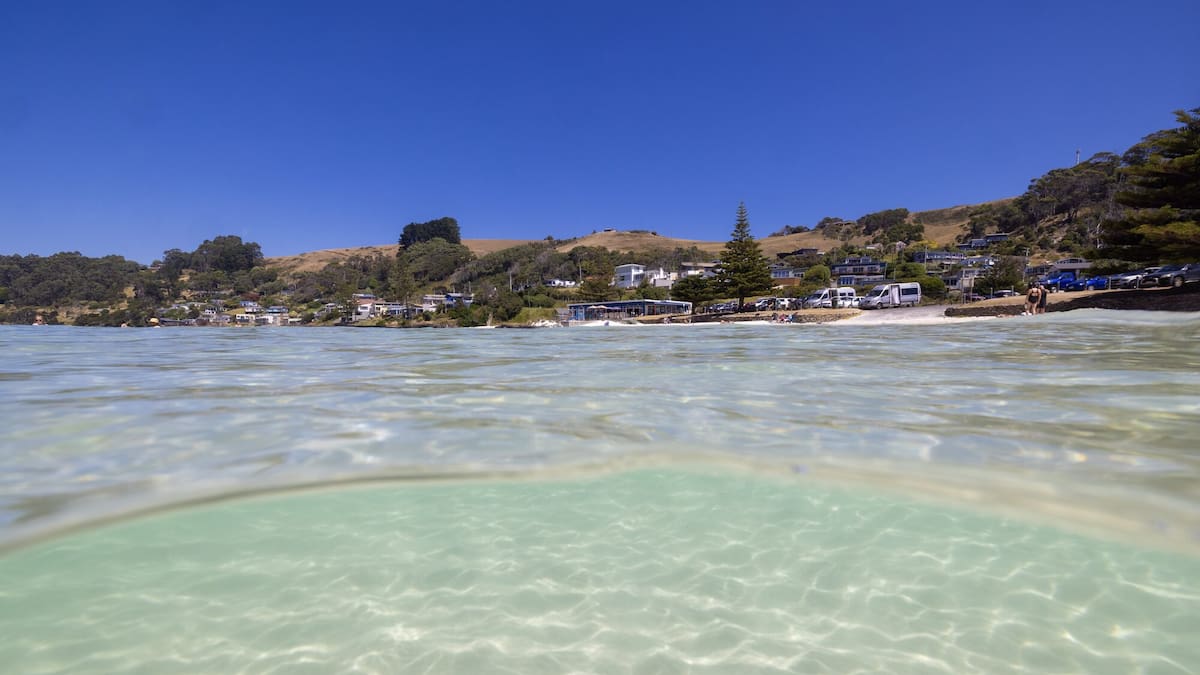
Waubs Bay Beach. Photo / Sean Scott Photography
On the balcony of my Sea Stack on Waubs Bay, even in mid-winter, today’s blue skies mean a glass of wine outside requires only a cardigan.
Architecturally impressive and almost at one with the small outcrop they find themselves on, the 12 standalone two-storey cabins prudently fuse design, the environment and incredible finishes with spades of quality touches.
Located north of the Freycinet Peninsula, Bicheno sits on Tasmania’s beautiful East Coast. Photo / Pete Harmsen
Earlier, I’d lost an hour on one of two Eames leather lounge chairs and ottomans with a pair of binoculars spotting crested terns diving for baitfish. Now, as I sip a local chardonnay, I make out what appears to be a local swimming group bracing the water as long shadows cut across the bay. Maybe it isn’t really that cold after all.
A Swedish-inspired breakfast menu is a wonder to barely awake eyes the following morning at Governors. So too are the gentle cross-table conversations between young and old, you so rarely see in cafes.
My partner, Andrea, and I might be the only non-locals on this occasion, but that doesn’t seem to matter. A flawless cup of coffee lands and before long my Skagen – a very Scandinavian dish of prawns and fish roe on toast – appears.
“That’s one of their best dishes – I get it myself”, says the lady at a table over from us. “Are you here often?” I enquire. “Most mornings, it’s like an unofficial community meet-up in here sometimes,” she chuckles.
We amble our way further into town and fall into a haze of vintage clothing at Society of the Lost and Found. Old vinyl records catch my eye, and a pair of cowboy boots devastatingly a size too small for Andrea cause momentary excitement.
Our wandering takes us further to Islander, a clothing and homewares store proudly selling Tasmanian goods. This time, I buy a locally crafted candle named after Butlers Point on Moulting Lagoon; it pays tribute to Tasmania’s pastoral heritage with a fragrance inspired by farmhouse kitchens and country life. It’s unique. It’s also one of the rare times when my partner’s and my tastes align.
Finding a good place to eat out on a midweek evening in a quiet town often proves difficult in rural Australia. So when we arrive for our 7pm booking at Le Coq, I’m taken aback to see a lively restaurant floor and a buzzing open kitchen.
The story goes, chef and owner Tristan Punelle, a Parisian, found his way to the East Coast in his twenties and never left. This is a homage to his native country’s cuisine – minus starched white tablecloths and with a pinch of unseriousness – where house-made butter, pork terrine, and beef bourguignon nod to tradition and are packed with flavour.
Afterwards, I catch Tristan for a chat and ask him why he chose to cook in Bicheno. “It’s the produce. We have the best of both worlds – brilliant seafood and great pasture products.”
Wellness venues can sometimes come across as cold and over-stylistic. I’ve experienced enough whale music and essential oil diffusers to realise my idea of rejuvenation starts with feeling comfortable: in a genuine space devoid of urgency.
Selkie Wellness offers a unique blend of evidence-based Remedial Massage, Bodywork, and restorative wellness rituals including Sauna and Ice Bath therapy. Photo / Fiona Vail Photography
A beautiful mid-century beach shack where the floorboards creak and a sense of age clings to the air is more my speed. At Selkie Massage Studio and Wellness Garden, a few months of surfing and a couple of days behind the wheel are gently and methodically expunged with one of the best massages I’ve ever had. Even lacking bravery, their sauna and cold plunge look appealing. There’s no hurry to leave afterwards, as Sam, my therapist, begins to tell me about the annual whale migration as we take in the shimmering ocean from the garden.
It seems the locals really do know each other well here.
The writer was supported by Tourism Tasmania