
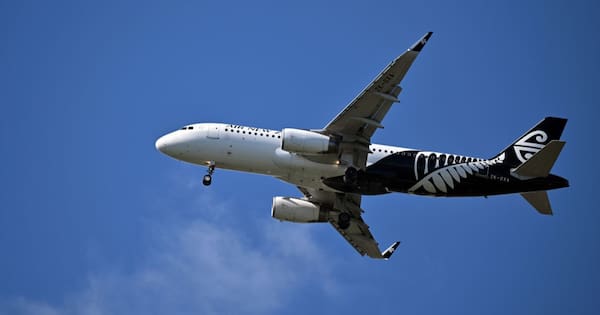
Air New Zealand has posted a pre-tax loss of $336 million, driven by jet fuel prices, engine availability, aviation systems costs and maintenance.
The 2026 financial year results were a big drop compared to 2025’s earnings before taxation of $164 million. No dividend has been declared.
The airline reported a net loss after tax of $242 million and total revenue of $7 billion.
Passenger revenue was $6.1 billion, up 4.8% on the 2025 financial year. Cargo revenue dropped 0.6% to $484 million.
Operating cash flow was $819 million, compared with $940 million in 2025. Operating costs increased 11.8%, while non-fuel operating costs increased 10%, or $438 million.
“It’s been a very challenging year for aviation, and our financial result reflects these challenges,” chief executive Nikhil Ravishankar said.
“Given the price sensitivity of air travel, airlines globally have not been able to recover the full increase in fuel costs. We took quick and decisive action through fare adjustments and capacity reductions to balance affordability for customers and maximise recovery and will continue to do so.”
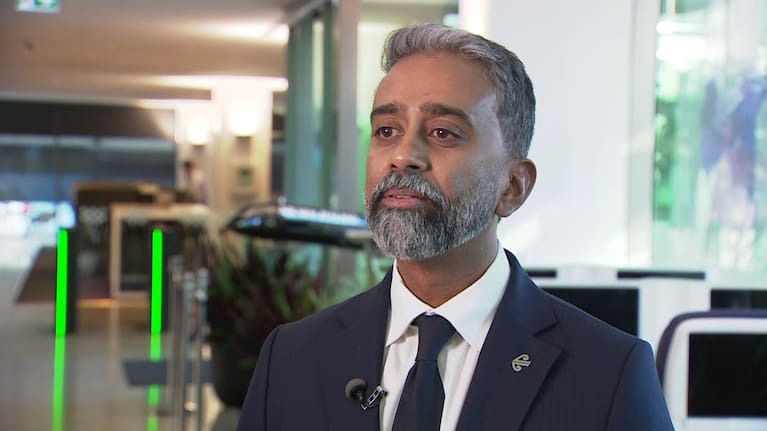
The war in the Middle East has sent jet fuel prices skyrocketing. Air NZ said fuel costs had risen $328 million compared to what it had expected going into the second half of the financial year. It said this had an estimated $135 million impact on the pre-tax result after fare adjustments and capacity reductions.
Ongoing issues with the Rolls-Royce Trent 1000 and Pratt & Whitney PW1100 engines impacted the results by an estimated $190 million through “lost capacity, additional lease and engine costs, lower fleet utilisation and operating inefficiencies”.
However, Ravishankar said the engine challenges were now “substantially behind us”.
“There are still residual risks and costs to work through, but we enter 2027 in a considerably more reliable fleet position.”
Avation system costs accounted for $720 million in this year’s results – an increase of $83 million compared to 2025.
The airline said 2026 was a “peak aircraft maintenance year”, with an increase of $139 million, excluding foreign exchange, compared to 2025. This was driven by lifecycle maintenance costs and additional maintenance costs on leased engines.
Ravishankar said the airline had been “making real progress” on what it could control.
On-time performance had improved from 77.5% in 2025 to 84% in the second half of FY26.
“These are very significant improvements and have been the result of a detailed operational and resilience-driven review of our schedule that included a focused programme of initiatives across our team, and the rollout of new digital tooling in support of operational communication and decision-making.”
It had also been working to simplify parts of the organisation through restructuring.
Air NZ also retrofitted nine of its 14 Boeing 787s with new interiors, with work on the full fleet expected to be completed by November.
The airline said it had delivered $94 million in incremental transformation improvements. An additional $135 million in annualised savings was also identified and is expected to accrue from the 2027 financial year.
Looking foward, the organisation could not provide earnings guidance for the 2027 financial year.
“The airline expects the 2027 financial year to be both a transition and recovery year, with operational performance continuing to improve even as elevated fuel prices weigh on profitability,” it said.
“We also expect the range of initiatives we have implemented in response to the currently elevated fuel cost will contribute to offsetting a larger portion of the elevated cost of fuel compared to the prior year.”
Ravishankar said Air New Zealand was seeing “encouraging inbound demand” with foward bookings into New Zealand.
“This is a positive signal for tourism and for the country more broadly. New Zealand remains a highly desirable destination, and our investment in our onboard product and unique Kiwi hospitality puts Air New Zealand in a strong position to bring more international visitors to our shores.
“We remain focused on executing our strategic priorities, improving financial performance and positioning the airline for long-term sustainable returns.”
The morning’s headlines in 90 seconds, including the investigation into an Auckland double homicide, and why Donald Trump’s trying to rename a lake. (Source: 1News)