

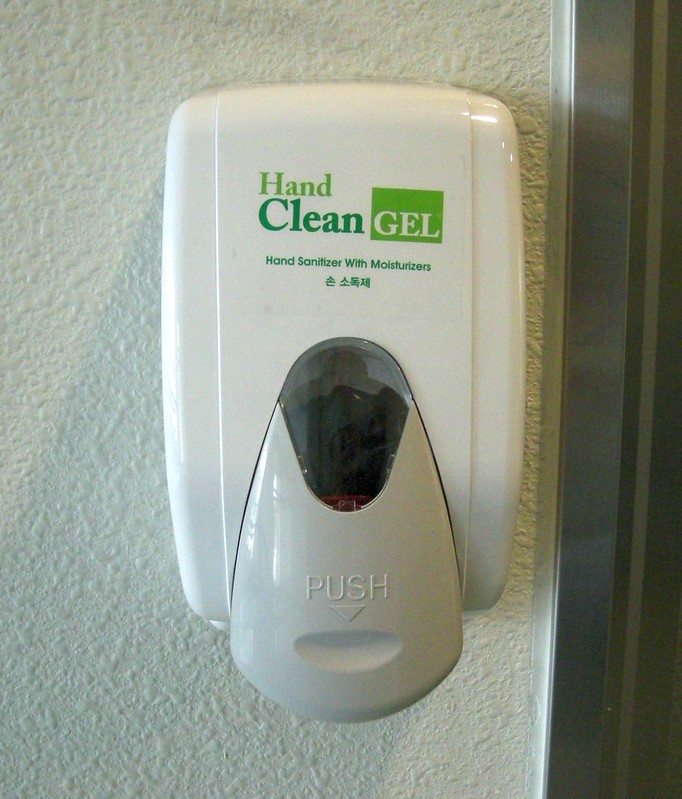
Yoo Chung / Flickr cc
A study conducted at four hospitals in Atlanta found that improved hand hygiene had no impact on detection of multidrug-resistant organisms (MDROs), researchers reported today in Infection Control & Hospital Epidemiology.
For the study, a team led by researchers at Emory University School of Medicine analyzed correlations between monthly unit-level hand hygiene adherence and rates of hospital-onset MDROs and other pathogens of epidemiologic significance (MDRO+) that can cause healthcare-associated infections (HAIs). Hand hygiene adherence was determined by an electronic monitoring system in patients’ rooms that records whether a healthcare worker dispensed hand hygiene product after entering the room.
The study authors note that while it’s widely accepted that high hand hygiene adherence reduces HAI incidence, many of the studies looking at the relationship between the two often rely on direct observation of hand hygiene adherence, which can be prone to overestimates.
“The limitations of direct observation have generated interest in alternative methods for hand hygiene monitoring,” they wrote. “Automated hand hygiene monitoring systems (AHHMS) are an appealing solution to overcome the pitfalls of direct observation.”
Complex interplay between hand hygiene, MDRO acquisition
More than 22.7 million hand hygiene opportunities were recorded by the AHHMS during the study period: January 2021 through September 2022. The mean monthly hand hygiene adherence rate increased from 41% in January 2021 to 57% in September 2022 on average across all units and facilities. A total of 1,847 MDRO+ detections were observed in 752,341 patient days, with a median composite MDRO+ rate of 1.7 per 1,000 patient-days.
Despite the hand hygiene improvement, the researchers were unable to demonstrate a clear unit-level inverse association between hand hygiene adherence and MDRO+ detection (rate ratio, 1.01). They say the results like reflect the “complex interaction between the two variable and unmeasured confounders.”
“The interplay between hand hygiene, infection prevention efforts, and MDRO acquisition is complex, and an absence of proof does not negate the importance of hand hygiene,” they wrote.