
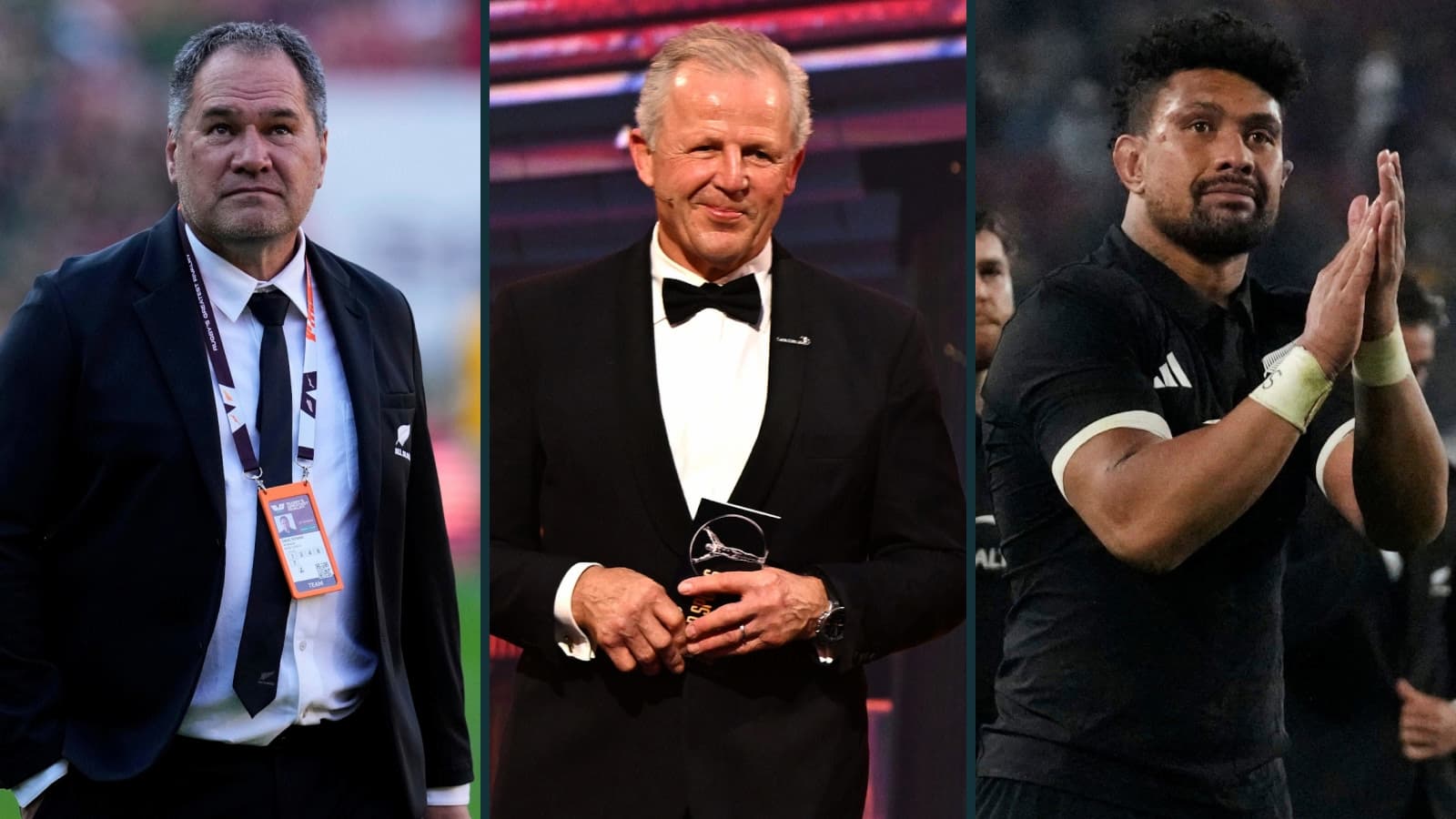
Sean Fitzpatrick thought he had experienced everything in rugby until he walked out at Ellis Park a week ago and, as the anthems began, felt the arm of All Blacks captain Ardie Savea around him.
Fitzpatrick’s brief, as captain of the first New Zealand side to win a series in South Africa 30 years ago, was to carry one half of the Greatest Rivalry trophy and place it on a plinth.
It was a ceremonial role and he expected then to leave the field. Only the plan changed. He was handed his nation’s flag and asked to hold it while “God Defend New Zealand” was played.
He agreed without realising what would happen next. The All Blacks came out onto the field, all pumped up, and lined up beside him in front of a capacity crowd.
“I was a bit awkward to say the least,” Fitzpatrick tells Planet Rugby. “To be there with the team beside Ardie, standing on the pitch at the national anthems, I didn’t feel right.”
Mind-blowing experience
The legendary hooker is no stranger to challenging environments in South Africa. In his role as chairman of the Laureus Academy he visited the Bonnytoun secure care facility on the Cape Flats.
“That area has more murders there than anywhere else in the world per capita and a lot of those are carried out by kids,” he says.
“Many of them have little teardrop tattoos for how many they’ve killed, which is just mind-blowing, and end up at that detention centre. We run boxing and rugby projects in there.”
The music started up and as Matiu Walters began singing Fitzpatrick thought to himself, ‘What on earth do I do now?’. Then Savea intervened.
“Ardie put his arm around me and I was like, ‘My God’,” the 92-cap great says. “I felt so honoured. What a moment it was, in terms of passing on the baton and the legacy of the All Black jersey.”
Legacy is everything to New Zealand rugby. The Greatest Rivalry series was devised as much to commemorate the 30th anniversary of Fitzpatrick’s ‘Incomparables’ as it was to generate commercial income.
The Auckland-born legend is in no doubt that the biennial series, controversial as it is with the Rugby Championship being canned to make room for it, is an absolute godsend for the sport.
“I take my hat off to the New Zealand and South Africa rugby unions for creating this Greatest Rivalry series,” he says. “A lot of people are saying it’s not fair on Australia, it’s not fair on Argentina, in terms of the southern hemisphere championship.
“But, honestly, the time has come that we need to create meaningful tours and meaningful games, like the Nations Championship over the summer.
“I thought that was a brilliant three weeks we had in July, with the Nations Championship creating meaningful games. And now everyone’s looking forward to November when it resumes.
“So, as much as it’s Argentina thinking, ‘we’ve been left out’, it’s a case of saying we have to do this, in terms of engaging fans.
“The fan engagement out here is just off the charts. I was at a function last night for Laureus, and everyone was talking about this series. And that’s what we need.”
Making rugby sustainable
Fitzpatrick continues: “To make our game sustainable going forward we need this engagement. It’s just a matter of finding the windows to be able to create this.
“Maybe other other tournaments are going to suffer. Maybe the Rugby Championship is going to suffer. Maybe the URC is going to suffer, but it’s about making sure the game is sustainable.
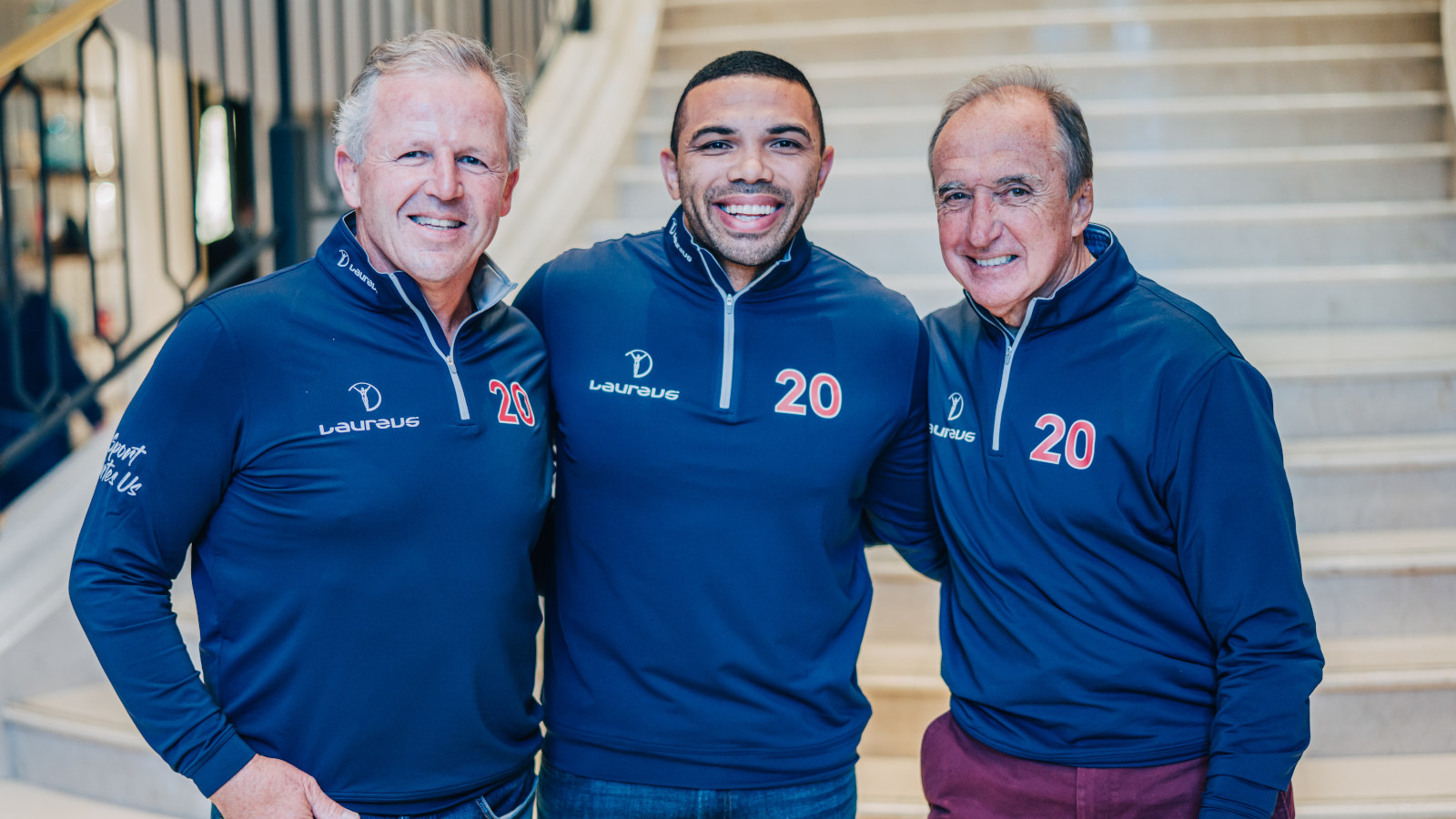
“I think World Rugby realises this, that we need to create windows that we can have these meaningful games in.
“I wouldn’t say it’s survival of the fittest,” adds a man who captained the All Blacks 51 times from 1992 through to his retirement in 1997. “It’s just a matter of everyone giving a bit, and making tough decisions.
“Not everyone’s going to be happy. But like any good businessman, you make the right decisions, you make the hard calls. Honestly, to be here is to appreciate what this is doing for rugby.”
And so to the Mother City where New Zealand have arrived feeling a whole lot more welcome than they did at Ellis Park when they lined up alongside their celebrated flag holder.
Cape Town is well populated with All Black fans, or ‘Cape Crusaders’ as they have been known since the apartheid era when many mixed-race and non-white communities in the Western Cape felt alienated by the predominantly white Springboks sides.
Siya Kolisi’s appointment as Boks captain in 2018, when he made history as the first black player to lead South Africa in a Test match, dramatically changed that perception.
And Rassie Erasmus will hope restoring his iconic skipper to colours this weekend after injury will also transform the team’s fortunes.
“Siya’s got a good rugby brain and obviously the emotion he brings and the way he can bond a team is important,” Fitzpatrick concedes.
“This is his town and him returning takes a bit of pressure off Pieter-Steph on his 100th cap. But Siya hasn’t played for a while. Whether he’s fresh enough, I don’t know.”
Dave Rennie praise
Fitzpatrick needs no reminding the job is not done, even if he is a good deal happier being one-up than one-down. He knows, from his own experience in 1996, the psychological boost winning the first game can have.
He feels, too, that in Dave Rennie the NZ Rugby Union has made a shrewd appointment, choosing a man who has already done a “phenomenal job of building the culture” of the environment.
Want more from Planet Rugby? Add us as a preferred source on Google to your favourites list for world-class coverage you can trust.
“What David Kirk [NZ Rugby chair] and the NZRU did at the start of this year is unheard of in New Zealand rugby – getting rid of the coach [Scott Robertson] mid-cycle,” says Fitzpatrick.
“I take my hat off to David and the board for making that tough decision because, two years out from the World Cup, the question was, ‘are we going to win the World Cup the way we’re going?’
“The answer was ‘no’ so we needed to make changes.
“I go back to what I said earlier in terms of big boys making big decisions. New Zealand Rugby had to make a decision that a lot of people didn’t like at the time. We’re seeing the benefits of it now.”
Sean Fitzpatrick is chairman of Laureus, a global movement that celebrates the transformational power of sport.