
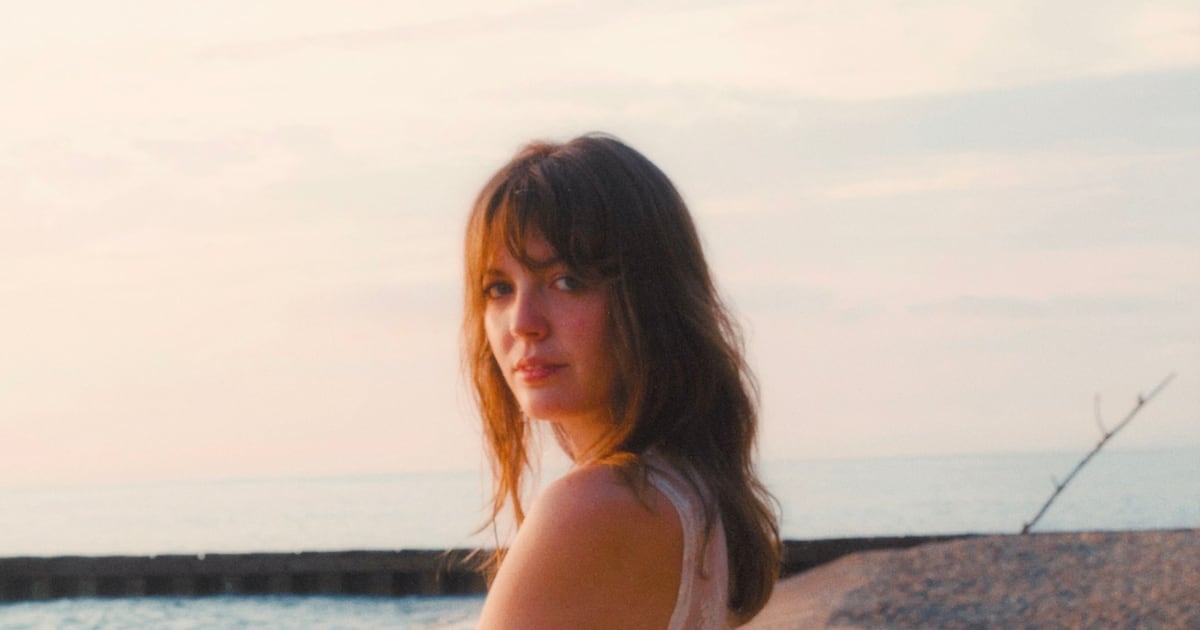
Kate Stephenson didn’t know how to tell her parents she’d dropped out of college to become a musician. So she wrote a song about it instead.
“I did it the day I decided to drop out. It was called Future Dropout. I sent it to my parents,” the 25-year-old indie songwriter says from her home in Nashville.
She thought that delivering the bombshell via a demo tape was a way to soften the blow. But, she says, “at the time it was very heated. They were, like, ‘I really don’t think this is a good decision.’”
Five years and three albums later, Stephenson has been vindicated in her decision to leave her film-studies course and dedicate herself to music. Her confessional indie pop – think Phoebe Bridgers meets Clairo with bass notes of Billie Eilish – has a cult fan base on either side of the Atlantic, and a loyal following on TikTok.
Her steady trajectory is set to move up a notch as she prepares for a European tour that includes an imminent Irish date. She has hundreds of thousands of streams on social media, while her fragile early single Exless made Spotify’s New Music Friday playlist, bringing her to the attention of its millions of followers.
She has clocked up hits, too, most recently Summerfoot, a jangly alt-folk tune about a romantic crush on a platonic friend. But she is not yet a household name, and, at her level, life can be challenging. She still works part-time when she needs to and, come the end of the month, has to worry about how to cover her rent and pay for food.
That’s a subject she touches on in her song Eat the Rich, a flinty ballad from 2020 in which she draws a contrast between her experiences and the luxury life of the “nepo baby” class of artists who have so much handed to them. (“Oh, Mummy and Daddy got you a lambo,” she drawls. “But you wanted a G-Wagon. That is so sad for you.”)
“I am going on tour, and I’m very excited about that,” she says. “But because I’m going on tour, I went to the shop down the road, and they’re not hiring me because I’m gone for so long.”
It’s a dilemma faced by many artists from ordinary backgrounds: how much are you prepared to suffer in the hope of your career going stellar?
“I’m not going to not go on tour – I feel I’m on the precipice [of becoming more popular]. I have to sacrifice financially, go on a tour and break even on that tour in the hope that, on the next one, maybe I make a little bit of money.
If she came from a wealthy family none of this would be a problem. “When your parents are paying for your rent and your parents are paying for your food, you’re already in a much easier position than those of us who are scraping by to do what we love. There’s no hate to that. [But] with Eat the Rich I was very frustrated. We’re doing the same thing, but we are in completely different playing fields.”
The feeling of being an average person in a world of privilege is not new. Stephenson grew up in the wealthy Chicago suburb of Lake Forest, which is 84 per cent white and has an average household income of more than $220,000 (about €190,000). But her family is lower middle class, and as a child she was acutely aware of existing as a have-not in a universe of haves.
“It was very difficult growing up and everyone shows up on their 16th birthday with a brand-new car. You’re walking to school because it’s the cheaper part of town that happens to be next to the school. Not any more. Now the property value has gone up. And so we don’t live there any more.”
Suburbia was a drag – but also a huge motivation to do something with her future. It was so boring it was almost inspiring, she says, laughing.
“A thing about growing up in the suburbs that I’ve grown to really appreciate is that you’re so bored that you have no choice but to make meaningful relationships with people.
“When we were parked at Target or going for a really long drive for fun, you have no choice but actually to learn how to be conversationally intimate with people,” she says. “That just exponentially helps you as a person as you go through life.”
It wasn’t an especially difficult childhood, but there were moments of frustration.
“There was a little bit of anger where your friend is, like, ‘Why aren’t you coming to [the Chicago music festival] Lollapalooza? I’m going to Lollapalooza!’ And you’re, like, ‘Oh, I don’t really feel like it. I don’t really want to.’ But really it’s because I don’t have any money, and my parents aren’t going to buy me tickets.”
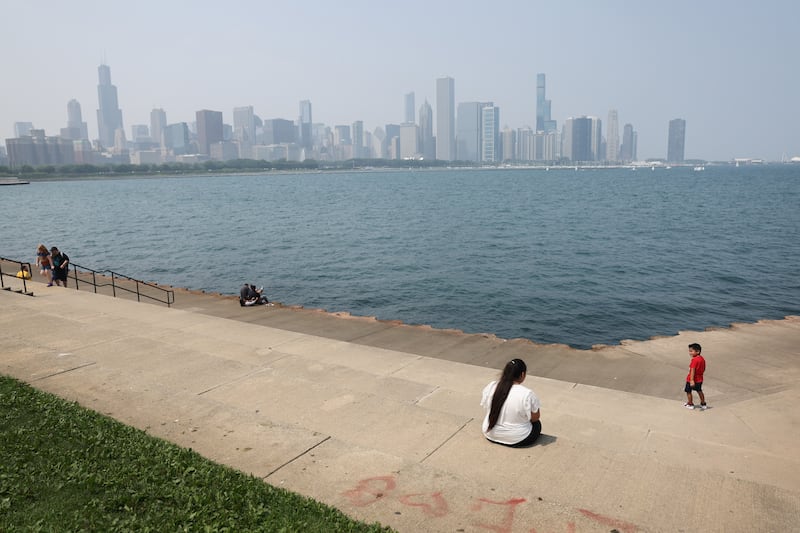 Chicago, Illinois. Photograph: Scott Olson/Getty Images
She poured her feelings about Lake Forest into one of her starkest tracks, Miraculous Myrrh-Streaming Icon of the Mother of God, which she wrote after moving home during the pandemic.
The title refers to the case of an Orthodox Christian icon in Canada that was said to have started to stream fragrant oil in the early 1980s – a North American equivalent of Ireland’s moving-statue epidemic. In the song Stephenson uses the image of a weeping icon as a metaphor for the tears she cried after going back to Chicago and discovering that home really wasn’t home any more.
“I left my hometown. Now I am back in my hometown. Covid is happening. I don’t fit in my bed any more. And my family is arguing with each other nonstop. My mom doesn’t tuck me in any more.
“When you are back in your hometown after thinking you were finally going to leave and go be this big person, your own person … and then you have no choice but to come home, you have to grapple with the fact that you are simply in a place that you were, but you’re not who you were.”
Her latest album, This Is What You Get, opens with two of her most pointed songs, Pretty and Dress Me Up. They’re about self-image and the pressure on female artists to scrub up for the spotlight where male artists are free to be their true, dishevelled selves (see Ed Sheeran, Noah Kahan and, actually, every just-out-of-bed male songwriter in history).
“I feel like I’ve gotten a lot better at my self-image and how I present myself, and how I see myself to the internet and the world. But Pretty was kind of like this … the pop star aura is something I had to come to terms with. I wanted it to be easier, to be prettier, and to be able to walk in front of people and have them listen.”
That’s a feeling she returned to on Dress Me Up, a track that interrogates the pressure to perform a version of herself.
“Dress Me Up was in response to that – fake it till you make it a little bit. Throwing out your expectations of yourself and the person that you want to be to try to be the thing that you think it would be nice to be,” she says. “Which is ultimately, as the rest of the album plays out, not going to do you any good.”
Stephenson wrote those songs at a time when she was in the habit of sharing a lot of her life with her fans. She has since had to rethink how much of herself she wants to put into the world.
TikTok has been a huge help with spreading awareness with her music, but it has a tendency to blur the divide between artist and audience. She has had to learn to be mindful of her interactions with her followers and to remind herself that, although people might appreciate her songs, they are still strangers, and there are limits to what she owes them.
“When I was younger I was a lot more interactive,” she says. “In the past few years I’ve learned that there’s a healthy boundary to set.”
Stephenson sees herself as a normal person “who isn’t a pop star”. But because she doesn’t give off a starry aura, people can assume too much.
“I do love when people come up to me respectfully and are, like, ‘Hey, I love your music. Have a great day.’ But I have noticed that when you’re not the intimidating pop-star aura and you’re writing music that they’ve experienced … You can seem to strangers as somebody that they know. I have gotten a lot better at having boundaries.”
Her parents, for their part, have finally made peace with the fact that she won’t be resuming her studies for the foreseeable future.
“They were under the belief that I was going to go back,” she says. “However, looking at the years that I would have continued to be in college, they were the most growth that I’ve had.
“They were very formative for the career I’m still building, and I would have been in a different place had I continued, got the degree, and then jumped into it at 23. I’m 25 now, and I’ve had those years of freedom.”
She has also developed a better sense of what it is audiences like about her songs. “I like to call it diary music,” she says of her music’s universal appeal. “It’s in my diary, and you might like it if it’s also in your diary.”
Kate Stephenson plays Upstairs at Whelan’s, in Dublin, on Wednesday, September 2nd
[ Dolly Parton was exploring an avatar show. Will we always love her as a hologram?Opens in new window ]