
“When they told me to send a link, I said, ‘Oh, so are you guys not coming?’
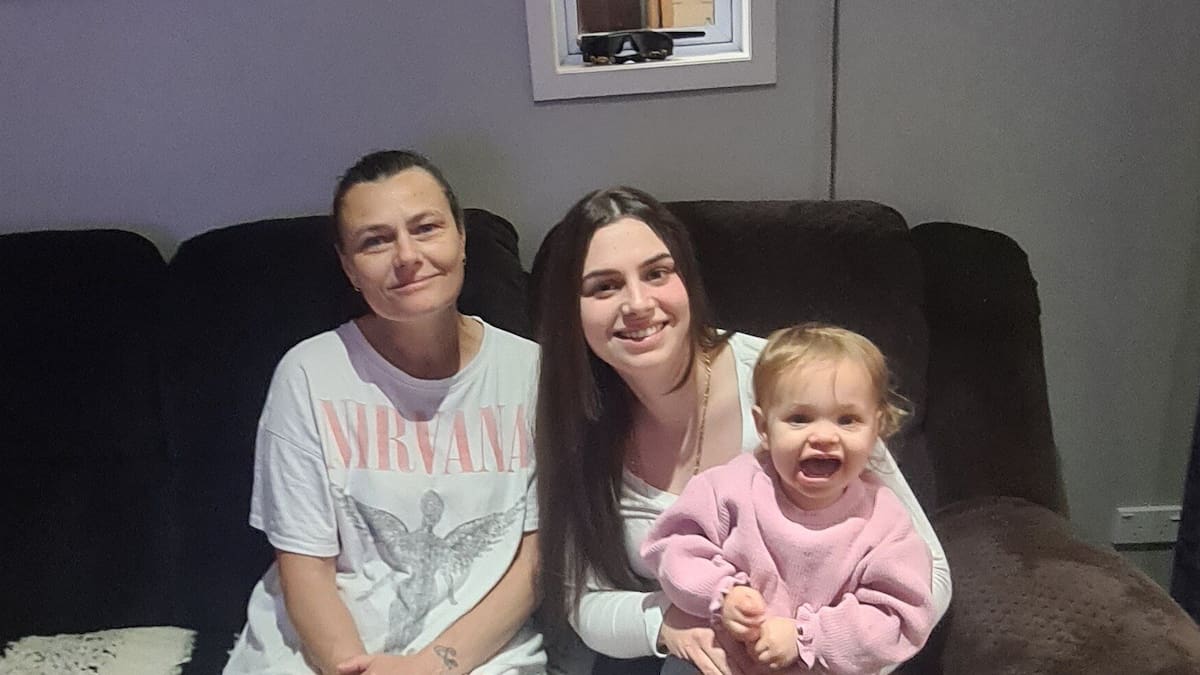
Claire Towler (left) with her daughter Demi Thomson and granddaughter Milana. Photo / Claire Towler
“And she goes, ‘No’,” Demi said.
“I ended up disconnecting the call and then I rushed her to hospital myself.”
Milana’s grandmother, Claire Towler, was present during the seizures and said the experience was “traumatic” as the 18-month-old was turning blue.
“We’re still waiting for tests, we were in hospital for four days,” Towler said.
“We’ve come out of hospital now and we’re at home and we’ve been told we have to wait five to six weeks before she can have the MRI that she needs to figure out what may be going on.”
Towler said she sympathised with the pressures ambulance workers have to face, but found it difficult to watch a close family member struggle to receive help from emergency services.
“My daughter was clearly distressed when this 111 call was being made and to be asked, ‘Can we send you a link and you send us a video?’ when her daughter in front of her is going blue and not responding,” Towler said.
“It was her one cry for help.”
Hato Hone St John head of clinical quality and safety Cheryl des Landes confirmed a 111 call was received for an 18-month-old child experiencing a seizure at 2.47pm on July 26 and, based on information provided during the initial clinical assessment, the incident was determined to be urgent but not immediately life-threatening.
“Shortly after the call, a clinician contacted the family to gather further information and review the child’s condition,” des Landes said.
A complaint by the family of Milana Thomson led to St John reviewing the incident. Photo / St John NZ
“As part of this assessment, the clinician asked the family to use our secure video assessment service so they could see the child and gain a better understanding of their condition.
“At that point, an ambulance had not been dispatched because the clinical assessment was still underway.
“A final decision about whether an ambulance would be sent had not yet been made.
“During the conversation, the family advised they would transport the child to hospital themselves.
“Because the family decided to self-transport, the assessment was not completed and no final determination about the appropriate ambulance response was made.”
Des Landes said St John acknowledged how distressing the experience was for the family.
“Seeing a child experience a seizure is understandably frightening, and we recognise that being asked to use a video assessment during an already stressful situation may also have been difficult,” she said.
“Secure video assessment is a tool regularly used by our clinicians because it can provide additional information that cannot always be obtained over the phone.
“This helps clinicians determine the most appropriate care for a patient, which may include sending an ambulance, providing care and advice remotely, or connecting the patient with another health service.”
Des Landes said St John had reviewed the incident after the family laid a complaint.
The review found personnel followed established triage and clinical assessment processes during their interactions with the family, but appreciated the concerns raised and the opportunity to reflect on the family’s experience.
“Hato Hone St John extends its best wishes to the family and hopes the child has recovered well.”
The family confirmed St John had responded to the complaint.
“We’re all doing better now, but we’re quite anxious, just if it happens again,” Demi said.