
Airport neighbour Neil Pemberton asked committee members to imagine being jolted awake at 2am by aircraft noise, house vibrations and bright landing lights shining into bedroom windows.
“You may eventually get back to sleep, only to be jolted awake again by the flight returning that same night.
“For some people, getting back to sleep can take hours. For others, that first disturbance is the end of their sleep for the night.”
Pemberton, who has lived near the airport for more than 60 years, said 156 homes were affected by aircraft noise of up to 90 decibels.
“And Onerahi residents don’t experience aircraft noise according to its regulatory classification. We experience the cumulative noise from all night-time aircraft operations at this airport.”
Pemberton said being exempt from a noise rule did not make the noise disappear or remove the consequences of repeatedly being woken overnight.
“We have doctors making critical, sometimes life-or-death decisions, bus drivers carrying passengers, teachers responsible for children, people operating heavy machinery and children who need sleep to learn and thrive.”
The latest report showed little change in complaints since the inaugural report, covering the six months to January 31, was presented to the committee in February.
That first report recorded 119 complaints relating to 202 individual noise events. It found 65.5% of complaints were about night-time helicopter operations disturbing residents’ sleep.
In the new report, incidents linked to night-time activity remained virtually unchanged at 63.4% and complaints rose by only three.
However, reported noise incidents fell almost 30%, from 202 in the inaugural report to 142 in the latest reporting period.
The complaints in the latest report came from 17 identified individuals, although one resident lodged 48 during the six-month period. A further 18 complaint records were submitted anonymously.
Concerns included sleep disruption, aircraft noise, health and wellbeing effects, and runway use.
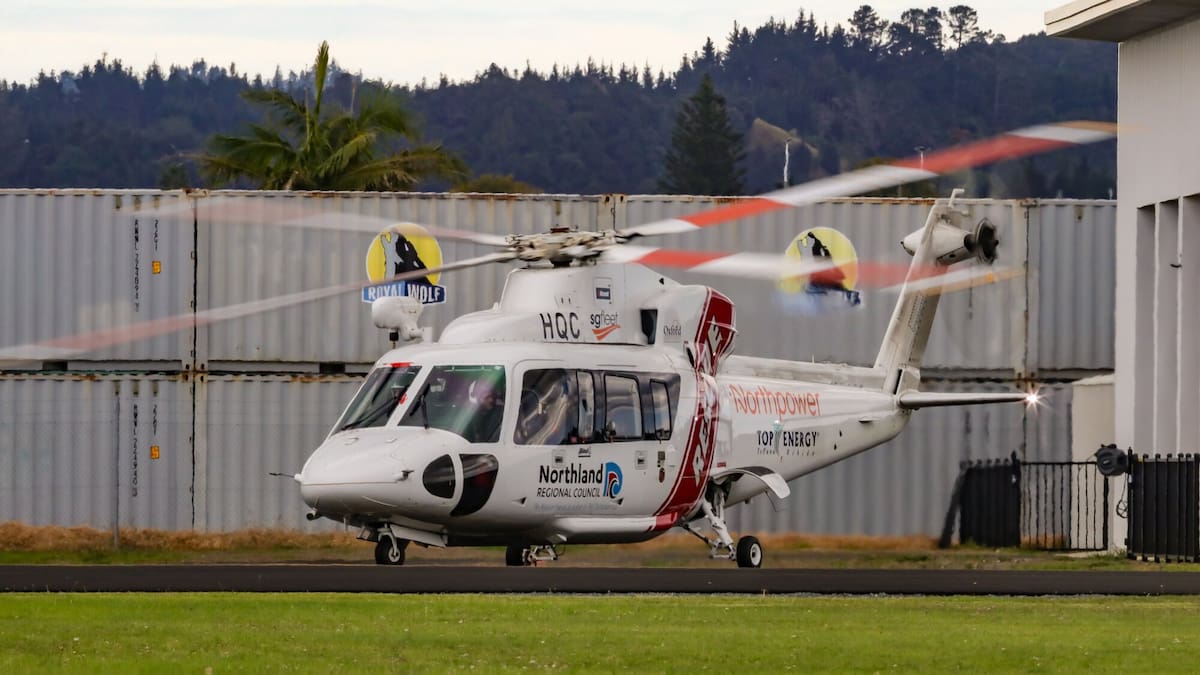
Council staff reported helicopter operations associated with Northland Rescue Helicopter Limited generated more than 1000 aircraft movements during the reporting period, including 121 night-time movements.
Staff said every complaint linked to a specific flight was reviewed by airport operations staff against Northland Rescue Helicopter’s fly neighbourly programme, operational procedures and District Plan requirements, with no breaches identified.
Onerahi resident Neil Pemberton (foreground) and other Whangārei airport neighbours at Wednesday’s airport noise committee meeting. Photo / Susan Botting
The report pointed to early signs that operational changes introduced in June may be helping reduce noise impacts.
Before revised procedures were introduced on June 2, the council received an average of 22.3 complaint records a month. Since then, that figure has dropped to 16.5 complaints a month, a reduction of about 26%.
Reported noise incidents also fell from an average of 26.8 to 17.5 a month, a decrease of about 35%.
Staff cautioned that only two months of post-change data was available and it was too early to determine whether the procedural changes were responsible for the drop.
Northland Rescue Helicopter had advised the council that the revised hover-taxi procedure was working well operationally and reduced the time helicopters spent generating noise during arrivals and departures, the latest noise report said.
Community representative Gary Stables urged the committee to support greater disclosure of airport noise monitoring information.
Onerahi’s Gary Stables is a community representative on Whangārei District Council’s airport noise committee. Photo / Susan Botting
He pushed for the release of the airport’s latest “count and calculate” noise monitoring report, including aircraft movements, recorded noise events, compliance calculations and details of flights excluded from official assessments.
Stables said committee members and residents needed more detailed information to understand compliance with planning rules and the real-world noise experienced by communities surrounding the airport.
■ LDR is local body journalism co-funded by RNZ and NZ On Air.