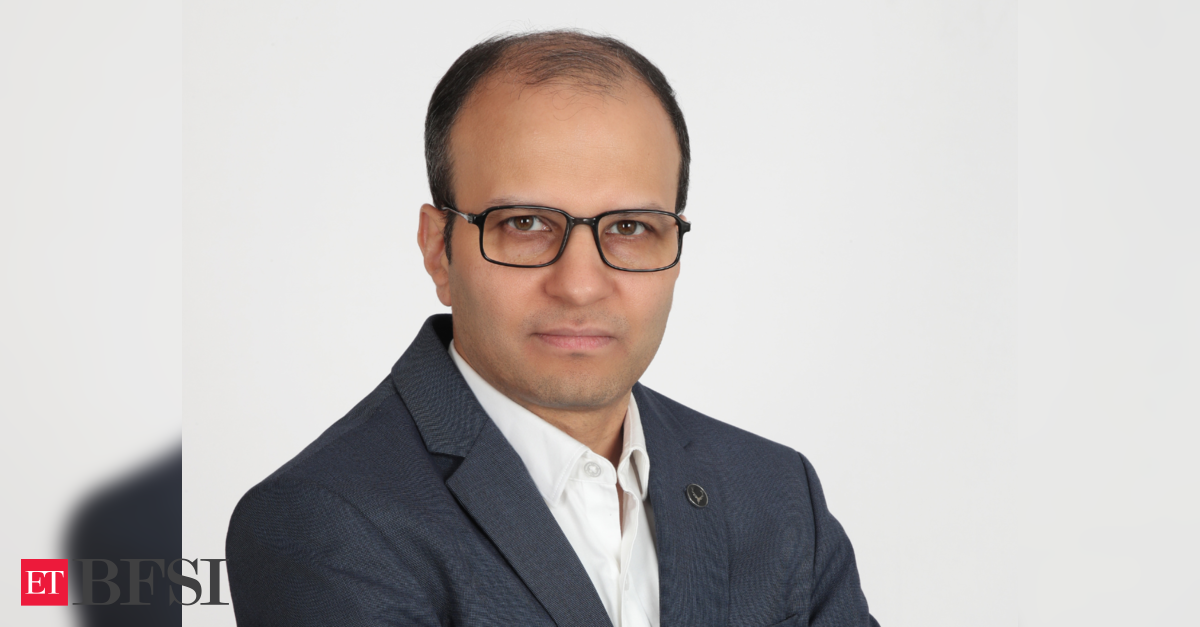
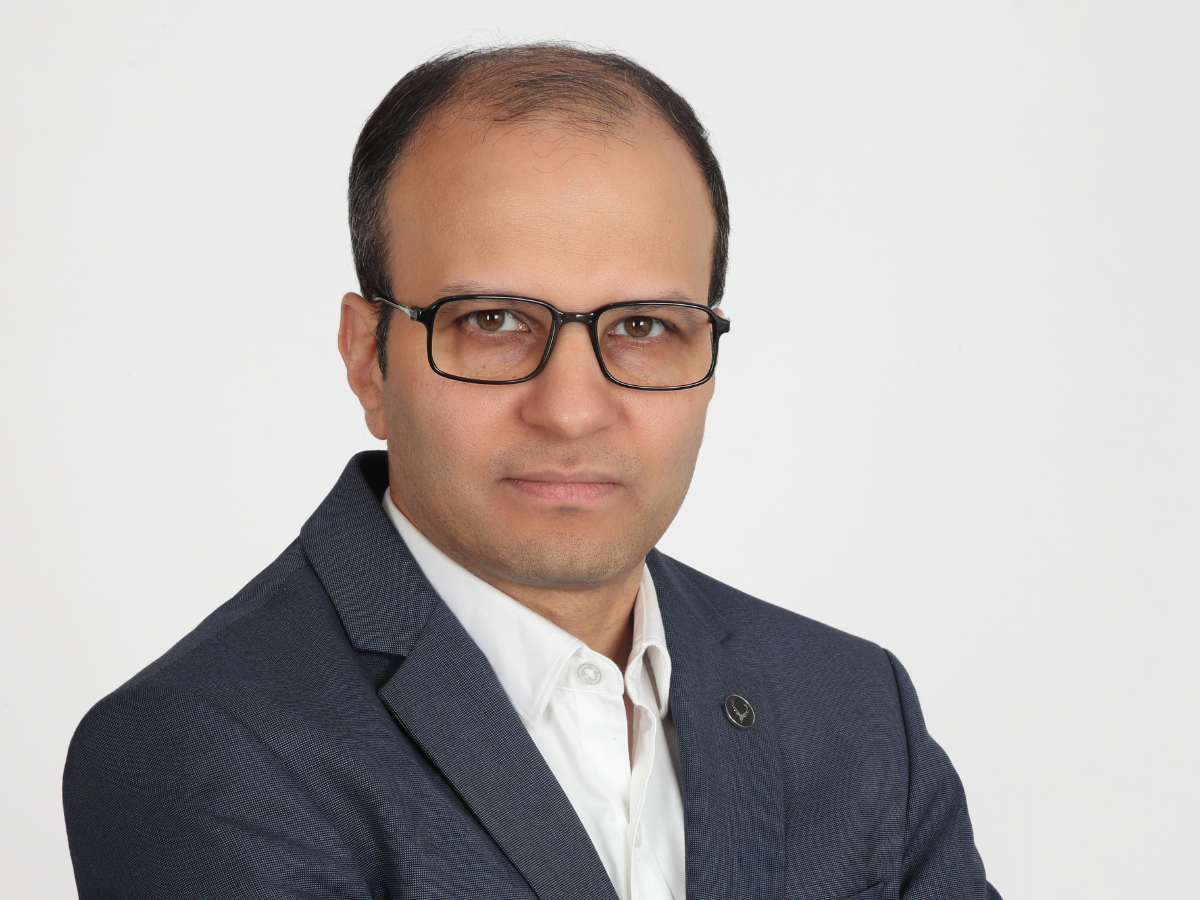
 Vishwanath Mahendra, CFO, Niva Bupa Health Insurance
Niva Bupa Health Insurance is seeing strong growth, with retail health premium rising 47% year-on-year in Q1, significantly ahead of the industry’s 32% growth. Overall premium grew 32%, while profit after tax nearly doubled 93% to Rs 138 crore, even as the insurer remained selective in group health amid an unfavourable pricing environment.
But the growth is coming against a persistent challenge for the health insurance industry: rising medical inflation and the resulting pressure on premiums. Niva Bupa CFO Vishwanath Mahendra said the insurer has already raised premiums by 8-9% annually, and expects this to continue as medical costs rise, arguing that smaller, regular hikes are preferable to a sharp increase every few years.
Mahendra also said Niva Bupa is targeting profitable growth, with a medium-term goal of a 98-99% combined insurance service ratio by FY29 and mid-to-high teens ROE, while its retail market share has crossed 11%.
Here are the edited excerpts from the interview:
Q. By how much has Niva Bupa raised its premiums this year to tackle rising medical inflation. Should customers expect another round of hikes next year as well?
Vishwanath: Medical inflation is something which is eating every day now. Ultimately, we have to pass on that to policyholders because there is no other way if we want to make the product sustainable in the long run.
We have been increasing premiums in high single digits in the past, and we would like to continue doing that. Rather than increasing premiums once in three years by a big number, our preference is to increase them by only single digits every year, so that it is not as much of a pinch for policyholders.
So, when I say 8-9%, I mean 8-9% per annum, which will be experienced by policyholders. And yes, this is something we expect to continue next year as well.
Of course, we are also doing many other things, discussions with hospitals on treatment protocols, industry initiatives and care pathways, to ensure there are no unnecessary admissions, abuse or wastage. But at some point, inflation is there in the economy and we have to pass that on.
Q. Your retail health business grew 47% in Q1, much faster than the industry. Is that growth coming at healthy economics or are you sacrificing margins to gain market share?
Vishwanath: It is coming from healthy economics. The growth is being driven by investment across distribution channels, product innovation and our claims practices.
We have been investing across agency, bancassurance, direct-to-consumer and third-party channels. Our newly launched product, ReAssure 3.0, has also been received very well by distributors and customers.
Our claim settlement ratio is close to 96%, and we are not compromising on underwriting or profitability to drive growth.
Q. You have also kept group health growth largely flat. Was that a conscious decision because pricing was not attractive?
Vishwanath: Yes. We generally write business only if it is value-accretive. The pricing environment in group health was not very supportive, so we decided to stay away from business that was not economically attractive.
We continue to focus on segments within group health which are good businesses from a profitability perspective. The approach is very clear, we want profitable growth, not growth at any cost.
Q. With 32% overall growth and 93% growth in profit after tax, how close are you to consistently generating underwriting profits?
Vishwanath: We are very much there. It is only a matter of 20 basis points. Our combined insurance service ratio has improved by 300 basis points, from 103.2% to 100.2%.
Our medium-term guidance since listing has been mid-to-high teens ROE, which corresponds to a 98-99% combined insurance service ratio by FY29. We are very much on that trajectory.
Our post-tax ROE was 11.8% for the last four rolling quarters, so the trajectory is very much there.
Q. Retail market share has crossed 11%. How much further do you want to take it?
Vishwanath: Our target is to keep growing retail health at least 8-10% higher than the industry and keep gaining market share every year.
We don’t measure it by how many basis points we want to add in a particular quarter. It is more about consistently growing faster than the industry.
Q. Direct business is your fastest-growing channel. Does that mean the traditional agency model is losing relevance?
Vishwanath: No, that would not be the right conclusion. Agency still contributes more than 32% of the overall company, while direct-to-consumer contributes around 13%.
Direct-to-consumer is a big focus area for us and is by far the most profitable channel because the cost of customer acquisition is largely in the first year and there is no renewal or trail commission. But all channels remain relevant to us.
Q. As a listed company, if you had to choose between maintaining 30%+ growth and improving return ratios, what takes priority?
Vishwanath: We want to deliver profitable growth. The last four quarters have seen around 32% year-on-year growth and around 12% ROE, while our target is mid-to-high teens ROE.
We would not like to grow at the cost of profit. That is also the reason we have not grown group health, it is flat because we choose profitable growth, not just growth.
Q. Persistency has been a sticky issue across industry. Where does Niva Bupa stand?
Vishwanath: GST exemption has helped in two ways. More people are renewing their policies, and more people are upgrading their insurance by adding riders and add-ons.
Our persistency was around 92.5% in Q1 last year, which has increased to 95.8%, or roughly 96%, on premium. That is a very good persistency level and shows that people are valuing the product. It remains a very important KPI for us.
Q. Are hospital negotiations becoming tougher as insurers try to control claims costs?
Vishwanath: It is a discussion between two institutions, so there will always be some negotiation and push and pull.
Ultimately, we want to deliver the best value to our customers. Wherever we feel we need to engage or negotiate with a provider group, we do so. But I would not say that it has necessarily become harder or easier.
Q. Do hospital tariffs need greater standardisation, given concerns that treatment costs can vary significantly?
Vishwanath: Some standardisation is required, but it has to be nuanced. It should depend on the hospital category, whether it is secondary or tertiary care, as well as geography, infrastructure, quality and accreditation.
If everything else is comparable, prices should not differ significantly. But you cannot have one fixed price for every hospital across the country. Geographical nuances, quality and infrastructure have to be taken into account.
Q. IRDAI is increasingly linking executive compensation with customer-centric outcomes such as grievance redressal and removal of dark patterns. What has changed at Niva Bupa?
Vishwanath: In some form or fashion, these were already part of the measures of success and goal sheets for top management, leadership and people down the line.
For example, net promoter score was already one way we measured customer satisfaction, as was employee satisfaction. What could be different is how we measure some of these parameters.
Some things, such as dark patterns and NDS implementation, are newer. NDS has already been implemented by us, and we will work towards these goals.
Q. What is Niva Bupa doing specifically to eliminate dark patterns?
Vishwanath: It comes under sales and compliance, and they are looking at each customer journey to identify whether there is anything that could constitute a dark pattern.
Our practices have been consumer-friendly, so we don’t expect there to be too many dark patterns. We are also considering engaging an external party to give us an independent expert view.
Wherever we find a dark pattern in any buying or renewal journey, we will certainly remove it.
Q. What are the three biggest challenges for health insurance today?
Vishwanath: One is how hospitals and insurance companies can work together better.
Second is increasing the number of lives covered. Coverage is still in single digits in terms of the population, so more and more people need to come into the insurance fold.
Third is reducing the cost for customers. These challenges are linked. If the cost of care comes down or healthcare inflation is stabilised and volumes increase, expenses as a percentage will come down, which will ultimately help increase penetration.
Published On Aug 29, 2026 at 08:08 AM IST
Join the community of 2M+ industry professionals.
Subscribe to Newsletter to get latest insights & analysis in your inbox.
All about ETBFSI industry right on your smartphone!