
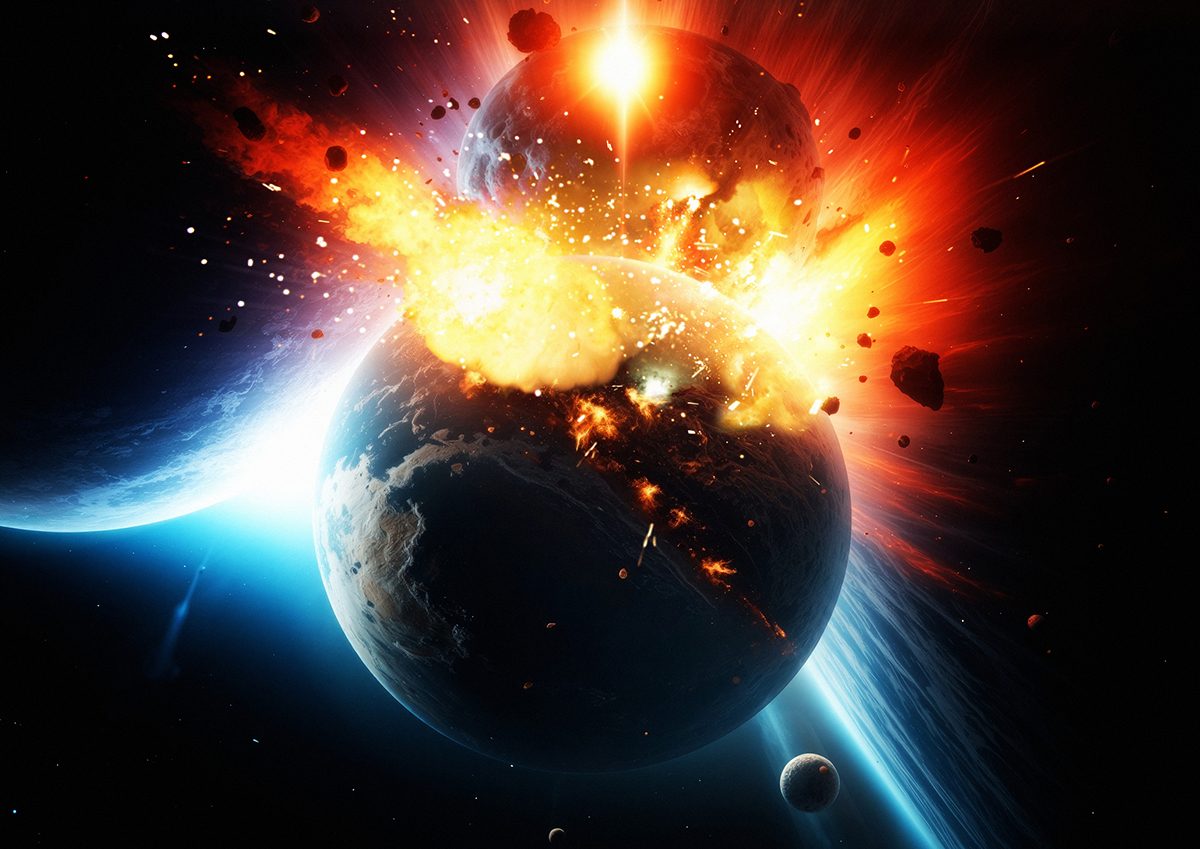
The Solar System didn’t always exist as we know it today.
It’s about 4.5 billion years old and took quite a long time to settle down into the relatively stable system of planets and other bodies orbiting the Sun that we see now.
Our best model of how the Solar System arrived at its current arrangement of planets proposes that we lost at least one and possibly two Neptune-sized planets along the way, as Jupiter and Saturn shuffled and jostled for position.
Those ice giants are now long gone, but the evidence remains of a period of great instability early in the history of the Solar System.
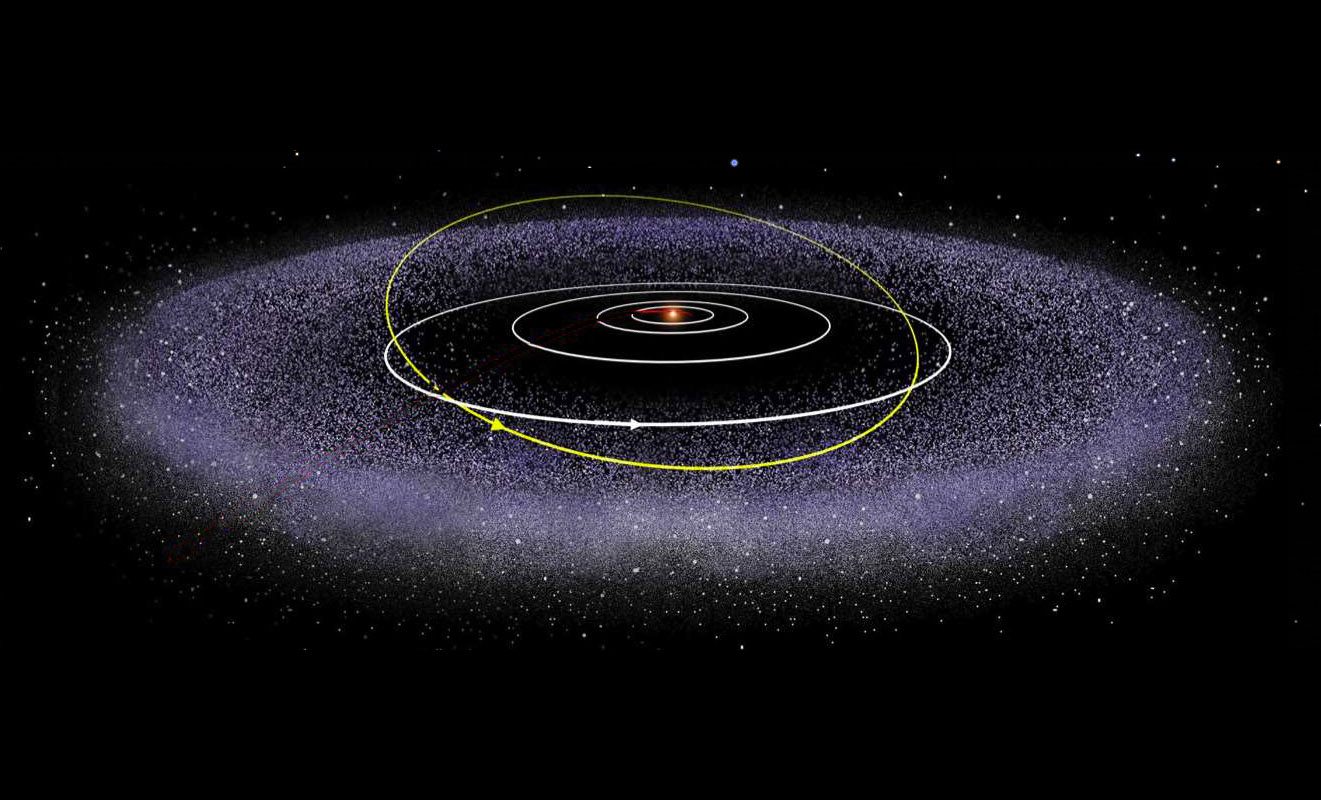 A computer model of the Kuiper Belt. Credit: NASA
The trillions of icy objects of the Kuiper Belt, the Scattered Disc (a ring of icy bodies that can reach high inclinations above the ecliptic plane) and the faraway Oort cloud were all tossed away from the Sun via gravitational interactions with the giant planets, but not quite far enough away to escape the Sun’s grasp.
The hypothetical Planet Nine could also have been ejected into the Solar System’s hinterlands during this time.
Much more material was probably lost forever. Who knows how many smaller planets were banished?
And undoubtedly, there are trillions more comets that formed alongside Earth which are now paying other planetary systems a visit, like the interstellar comets we witness passing through our own Solar System.