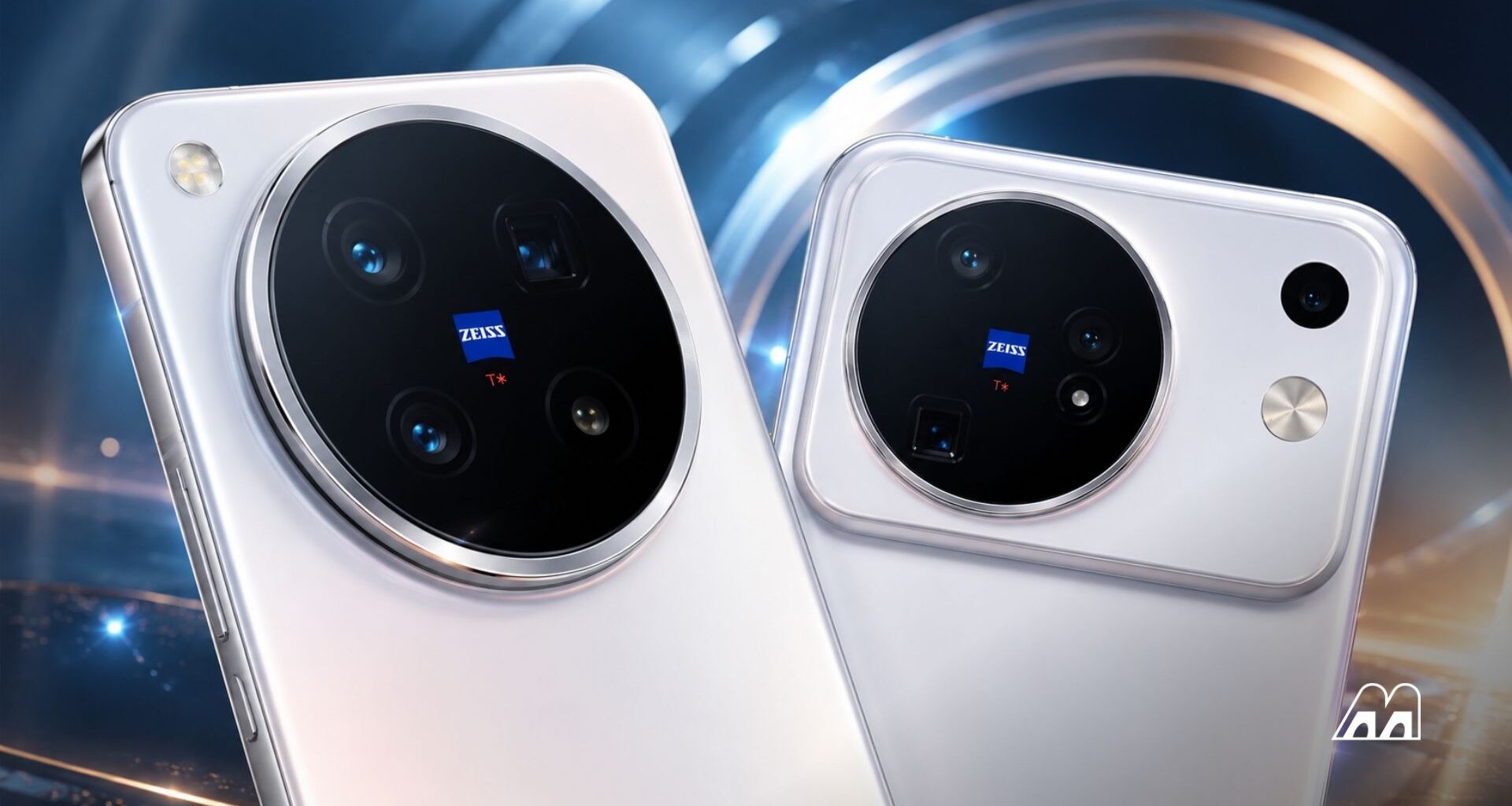
Vivo just revealed the telephoto camera specs for the X500 Pro, and the headline number isn’t the megapixel count. It’s the pixel structure. The phone uses a Sony LYTIA 610 sensor with a hybrid “GG 1×1 and RB 2×2” layout that no other smartphone has ever shipped. If that sounds like jargon, here’s what it actually means and why it matters for the photos you take.
What the Hybrid Pixel Structure Actually Does
Every camera sensor arranges its pixels in a specific pattern. Two dominant architectures exist in smartphones right now:
1×1 structure — Each pixel operates independently. You get maximum resolution and fine detail, but autofocus performance suffers because the sensor has fewer phase-detection points to work with.2×2 structure — Groups of four pixels work together. Autofocus becomes much faster and more accurate (this is how Samsung’s Dual Pixel and Quad Pixel AF work), but you lose some resolution because pixels are binned into clusters.
What Vivo’s done with the LYTIA 610 is combine both. The green pixels (GG) use a 1×1 arrangement for maximum detail capture, while the red and blue pixels (RB) use a 2×2 grouping for phase-detection autofocus. It’s a compromise that, on paper, gives you the best of both worlds — the resolution of a traditional sensor and the focusing speed of a phase-detection system.
This matters most at telephoto range. When you’re shooting at 85mm, even small focus errors become glaringly obvious because the depth of field is much shallower. A faster, more accurate autofocus system means fewer blurry portraits, fewer missed shots of moving subjects, and better tracking in video.
CIPA 7.0: The Stabilization Number That Actually Matters
Beyond the sensor itself, Vivo claims CIPA 7.0-rated image stabilization on this telephoto module. To put that in perspective: most flagship phones offer CIPA 3.0–4.0 stabilization. The iPhone 16 Pro Max hit about CIPA 4.0 on its telephoto. CIPA 7.0 means roughly 7 stops of handheld stability — letting you shoot at slower shutter speeds without motion blur.
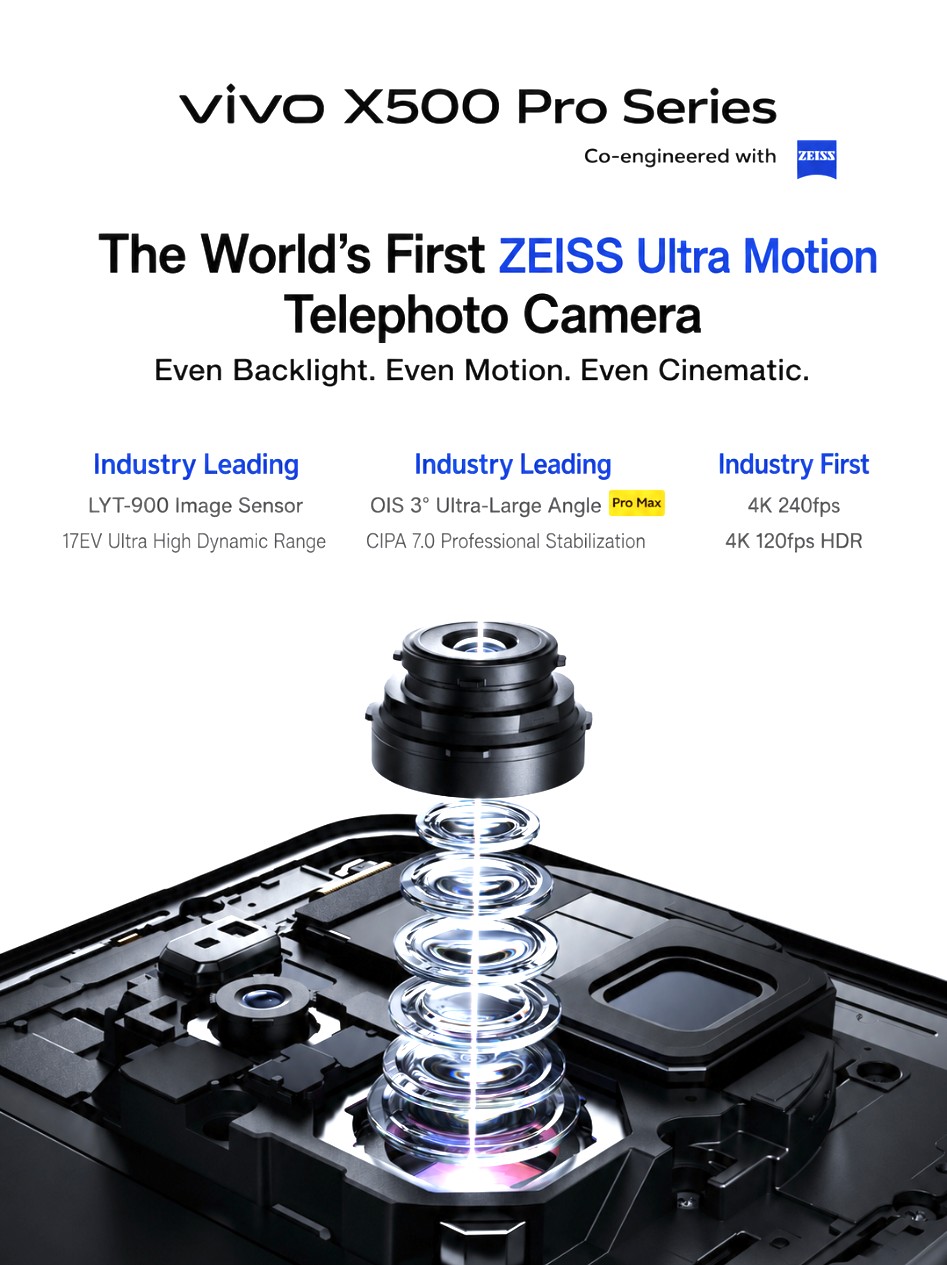
At 85mm focal length, that’s the difference between usable handheld shots in low light and needing to brace against a wall. If Vivo’s numbers hold up in real-world testing, this would be the most stable zoom camera on any phone available in 2026.
The video specs reinforce that claim. The LYTIA 610 enables 4K slow-motion at 120fps and 4K HDR at 60fps from the telephoto — capabilities that, until now, have been reserved for main sensors on most smartphones.
How It Compares to the X500 Pro Max
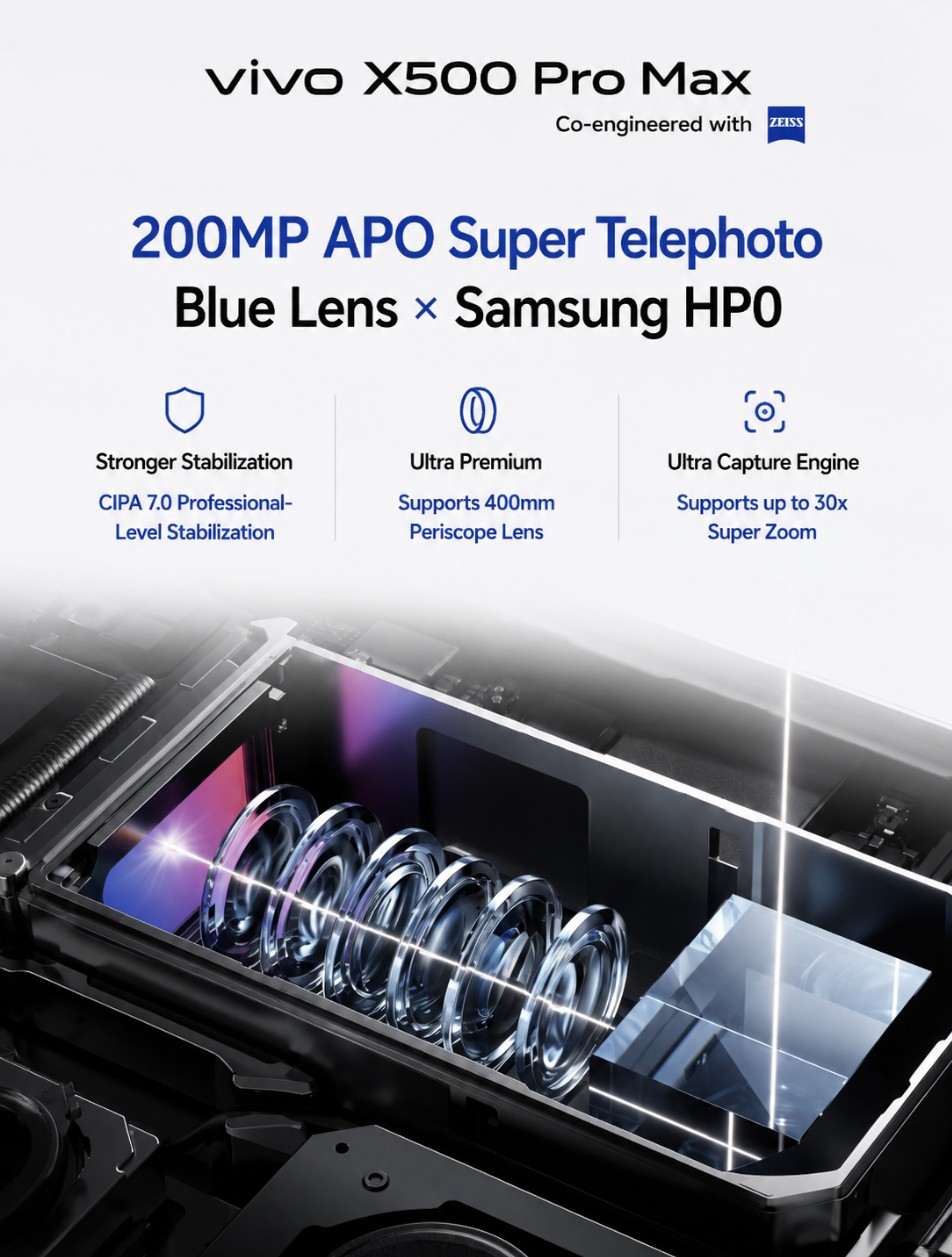
Vivo isn’t putting the same camera on both Pro models. The X500 Pro Max gets a 200MP periscope telephoto with even more cropping headroom — aimed at users who want Samsung S26 Ultra-level zoom range. The X500 Pro’s 64MP sensor prioritizes image quality per pixel over raw resolution.
FeatureX500 ProX500 Pro MaxTelephoto SensorSony LYTIA 610 (64MP)200MP sensorFocal Length85mmTBD (likely 120mm+)StabilizationCIPA 7.0CIPA rating TBDPixel StructureHybrid GG 1×1 + RB 2×2Standard 2×24K Slow-Motion120fpsTBD
The distinction is deliberate. The Pro targets portrait photographers and videographers who care about bokeh quality and focus accuracy at moderate zoom. The Pro Max goes after the maximum-zoom crowd — birders, sports shooters, and anyone who wants to crop heavily into distant subjects.
APO Lens Design: What Vivo Learned From the X100 Pro
Vivo built the X500 Pro’s lens using APO (apochromatic) technology refined from the X100 Pro generation. APO lenses correct chromatic aberration — those purple and green color fringes you see along high-contrast edges — across all visible light wavelengths. Most phone lenses only correct for two wavelengths, which is why you still see fringing in zoomed shots from even the best smartphones.
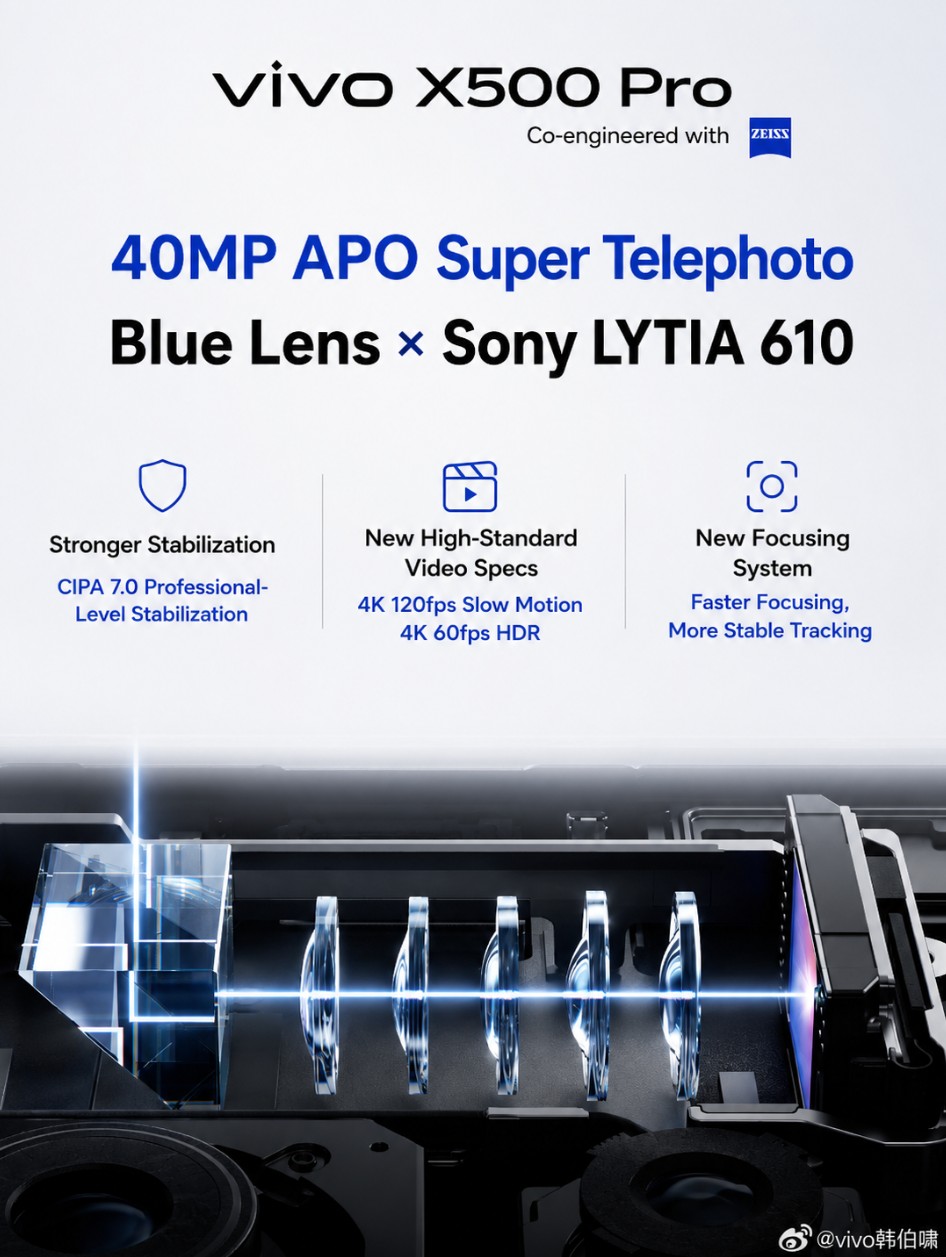
The key improvement over the X100 Pro’s implementation is physical size. Vivo says it “thoroughly resolved the size limitations of the older generation,” which suggests the new optical stack achieves the same correction quality in a thinner module. That’s critical for keeping the phone’s overall thickness competitive — you can have the world’s best optics, but if the camera bump makes the phone unusable in a pocket, nobody buys it.
What This Means for Phone Photography in 2027
The LYTIA 610’s hybrid pixel architecture is the detail worth watching. If it works as described, other manufacturers will adopt it. Sony sells sensors to nearly every major phone brand, and a proven hybrid layout would become an option for Samsung, Xiaomi, OPPO, and eventually Apple.
We’ve seen this pattern before. Sony’s Exmor RS introduced stacked sensor designs, which became industry standard within two years. Samsung’s ISOCELL GNK popularized 200MP sensors, and now every flagship competitor offers one. The GG 1×1 + RB 2×2 structure could follow the same trajectory — first in Vivo’s Pro phones, then everywhere.
The camera competition in 2026 and 2027 is shifting from raw megapixel counts to smarter sensor designs. Vivo’s X500 Pro isn’t trying to out-zoom the Galaxy S26 Ultra. It’s trying to out-focus and out-stabilize everything else on the market at 85mm — and if the CIPA 7.0 and hybrid AF claims hold up in reviews, it might succeed.
FAQsWhat is the Sony LYTIA 610 sensor?
It’s a 64MP image sensor from Sony’s LYTIA line, specifically designed for smartphone telephoto cameras. Its distinguishing feature is a hybrid pixel arrangement that combines 1×1 resolution pixels with 2×2 autofocus pixels, aiming to deliver both sharp detail and fast phase-detection AF in a single sensor.
How does CIPA 7.0 stabilization compare to other phones?
CIPA 7.0 represents approximately 7 stops of handheld shake compensation — roughly double what flagships like the iPhone 16 Pro Max or Galaxy S26 Ultra achieve on their telephoto lenses. In practice, this means sharper handheld shots at lower shutter speeds, especially in dim conditions where camera shake is most noticeable.
When does the Vivo X500 Pro launch?
Vivo has confirmed a September 2026 launch in China. Based on Vivo’s recent global launch timeline patterns, the X500 Pro should reach Southeast Asia and select European markets by November or December 2026, with broader availability in early 2027.
Is the X500 Pro better than the X500 Pro Max for photography?
It depends on what you shoot. The Pro’s 64MP LYTIA 610 sensor with hybrid AF excels at portrait-range zoom (85mm) and video. The Pro Max’s 200MP sensor gives you more cropping flexibility at extreme zoom distances. For most people taking portraits and social media content, the Pro’s image quality per pixel should be higher.
What does “APO lens” mean in a phone camera?
APO stands for apochromatic — a lens design that corrects chromatic aberration (color fringing) across three wavelengths of light instead of the usual two. The result is sharper edges, more accurate colors, and less purple or green hazing in high-contrast scenes. Vivo adapted this technology from professional camera lenses for its X-series telephoto modules.
Vincee Cole is a technology journalist with four years of experience covering the full spectrum of modern tech — from consumer devices, artificial intelligence, to quantum computing, blockchain, and digital assets. His reporting cuts through complexity to deliver stories that are sharp, grounded, and relevant to both general readers and industry insiders. Previously, he worked with fintech research teams across Southeast Asia, analysing how emerging technologies are reshaping financial systems at scale.