
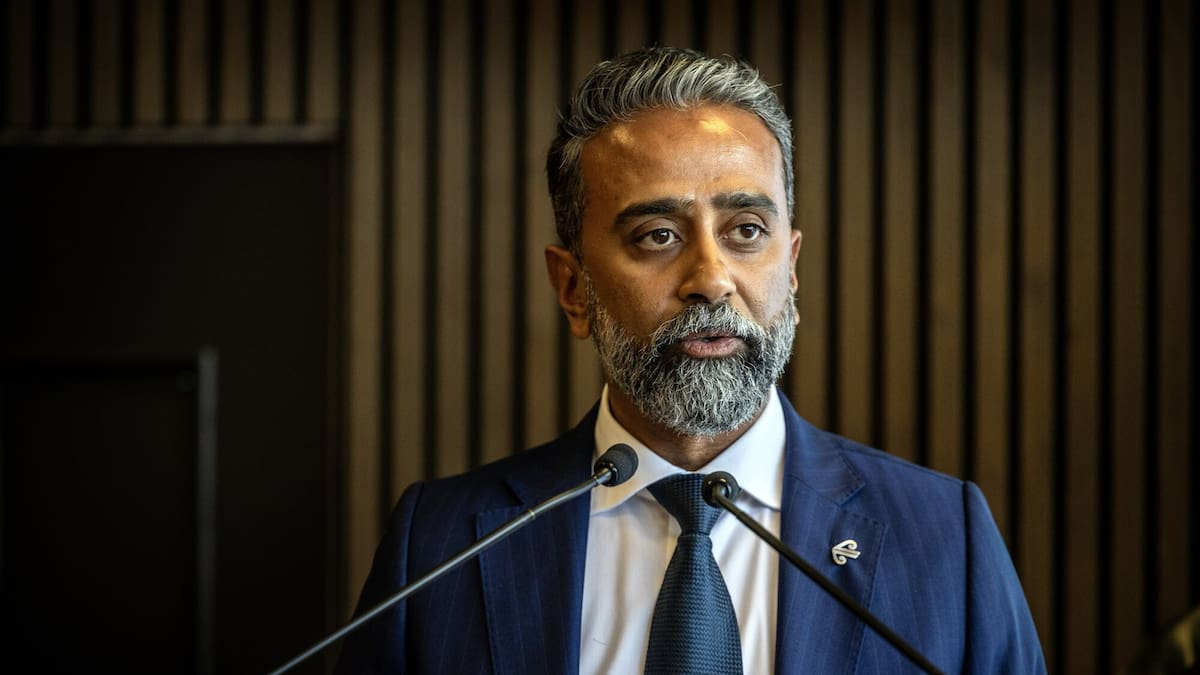
But he indicated there were several ways to claw back some of those losses.
The first involved hedging, locking in or protecting against future fuel prices.
Refineries generally applied a premium called the crack spread to jet fuel, and that spread had shot up since the Iran-Israel-US conflict started on February 28.
Hedging for crude oil was common.
“But the nature of this crisis means we’re also starting to look at what it would take to hedge the crack spread,” Ravishankar said.
Other responses involved adjusting fares and capacity.
“We try and recover as much of the extra fuel cost through fare adjustments but unlike many other industries, we can’t just pass the extra cost of fuel to our customers.”
Ravishankar said that was especially true when affordability was already a challenge for many Kiwi households.
The airline had also carried out what it called consolidation, reducing flight frequencies on some routes.
“If you’ve got two half-full planes, consolidating that on to a single aircraft means you burn half the fuel you’d otherwise burn.”
The airline had also been cutting costs through layoffs impacting some non-frontline staff.
Labour costs still increased slightly, up 1.9% to $1.739b. The airline said an absence of short-term incentive payments for the current financial year partially offset wage rate increases.
Fuel was a whisker behind, at $1.738b. Even though the Iran conflict was only on for the last four months of the financial year, the airline’s average jet fuel prices increased to US$111 a barrel from US$88 a year before.
The airline said the Middle East conflict increased its fuel bill by about $328m compared to what it expected going into the second half.
Even with hedging, the fuel bill was $205m higher than anticipated.
How bad?
Today’s $336m pre-tax loss was slightly less dire than some market analysts had been expecting.
Late last month, Forsyth Barr forecast a $350.2m pre-tax loss for the airline and said the consensus forecast from market analysts was a $364.4m loss.
In May, Craigs estimated Air New Zealand would lose $427m.
“The thing that we’re aiming to do in FY27 is to return the underlying performance of the business to turn a profit. What the impact of fuel’s going to be is something that we’ll have to wait and see. But that is the goal,” Ravishankar said.
On whether airfare increases could be ruled in or out, he indicated jet fuel prices again held the key, adding: “The short answer is at today’s fuel price we’ve got the fares in the market that you’d expect to see.”
He said the airline was trying to balance affordability and the need to recover much of the fuel price increases.
“That’s something we’re calibrating on a flight by flight, route by route basis.”
Former Air NZ chief executive and current Prime Minister Christopher Luxon blasted the airline today, saying it needed to get its act together “very quickly”.
Luxon told a press conference: “It’s clearly a very poor result. It’s clearly a very poor performance, even in the context of global aviation and other airlines as well.”
Two to tango
Meanwhile, the airline said there was healthy inbound demand, with strong forward bookings into New Zealand.
“We’ve done a lot of work around stimulating tourism out of the markets that matter,” Ravishankar said.
“We’ve got world-class brand and marketing capability.”
He said in “a chaotic world” the New Zealand tourism brand was getting stronger.
“We’re seeing that in the inbound demand.”
Some analysts have described sluggish demand for New Zealanders to travel long-haul but Ravishankar said there were signs of change there.
“We’re also starting to see some improvements in terms of domestic demand and outbound from New Zealand too.”
Fleet
All of Air New Zealand’s widebody aircraft are now out of storage. Photo / Cheng Xin, Getty Images
The airline said 2026 was a peak aircraft maintenance year, with lifecycle maintenance and additional maintenance on leased engines pushing costs up by $144m.
“We have by and large got our aircraft flying again,” Ravishankar said.
“We have all our 787s now back from long-term storage and we have one A321 that is still currently parked up as we wait for the engine situation on the Pratt & Whitney 1100 engines to improve.”
He said that was a massive gain on even a few months ago where up to 11 aircraft were parked up.
Executive pay
The airline’s annual report today said Ravishankar’s base salary for the part year was $1.29m, less than the $1.35m his predecessor Greg Foran had for the part-year.
Ravishankar, who took over as chief executive in October, also received $57,722 in benefits.
Six New Zealand managers were paid more than $1m.
Tim O’Loan, Amova Asset Management research analyst, said the airline was still dealing with many issues outside management’s control but some major issues were moving in the right direction.
“Engine-related disruptions have been hanging over the business for a long time, and there now seems to be genuine progress on getting the fleet back to a more normal operating position.”
Aircraft availability had also improved substantially.
“The challenge is that those benefits are currently being masked by elevated fuel costs, which remain the biggest driver of near-term earnings.”
John Weekes is a business journalist covering aviation. He also has experience covering consumer affairs, crime, politics and courts.
Stay ahead with the latest market moves, corporate updates, and economic insights by subscribing to our Business newsletter – your essential weekly round-up of all the business news you need.