
An ocean sunfish looks like a design somebody abandoned halfway through, a giant grey dinner plate with a mouth and a permanently startled expression. Nobody has ever called one charismatic. Yet sitting in the scientific record is an account of humpback whales apparently trying to stop killer whales from eating a pair of them.
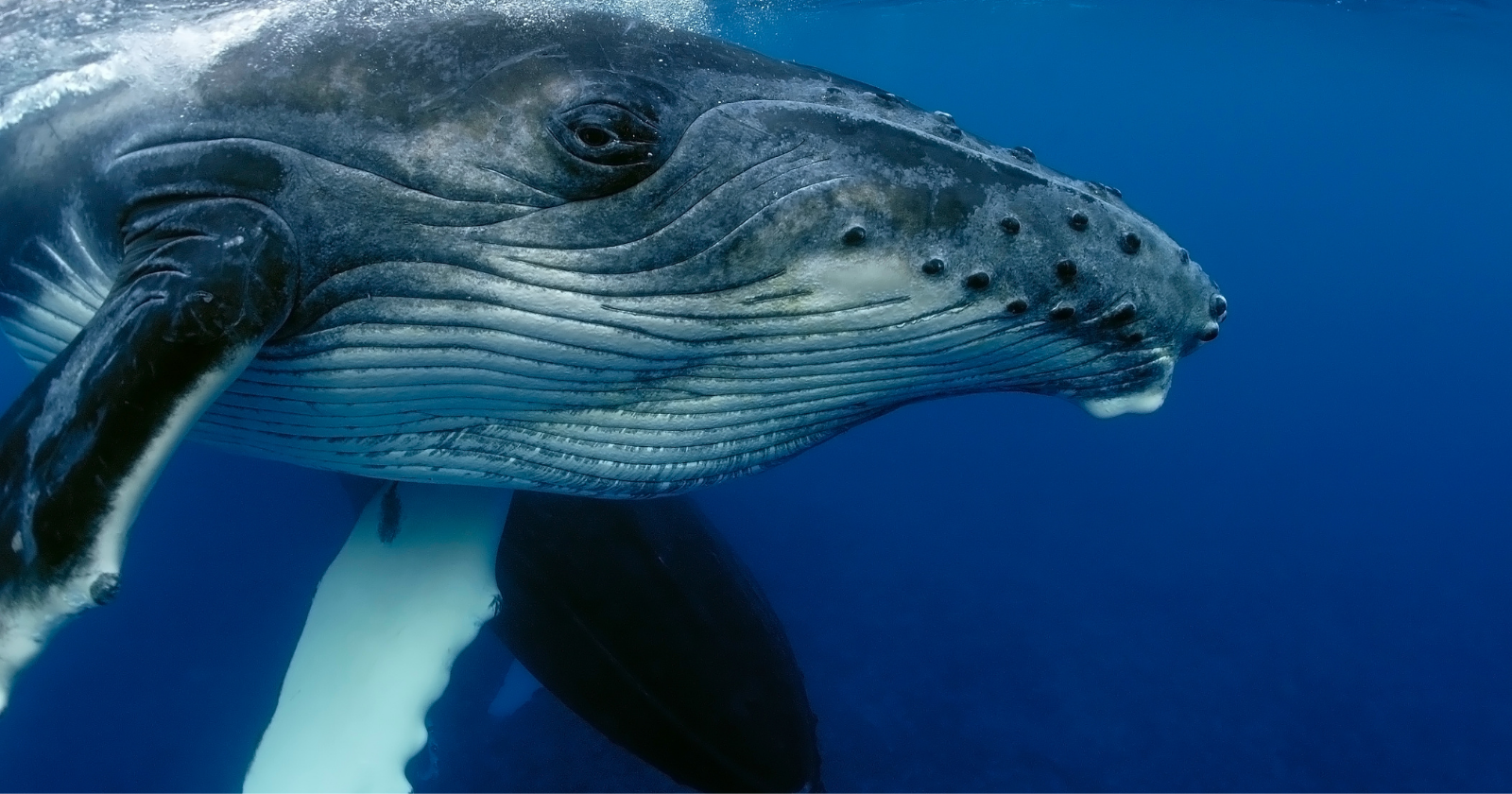
That detail comes from a review of 115 recorded encounters between humpbacks and killer whales, published in Marine Mammal Science by NOAA marine ecologist Robert Pitman and thirteen co-authors. They pulled together six decades of accounts from researchers, whale-watch skippers and amateur video. The paper’s title ends in a question mark, which tells you how confident anyone was about the answer.
What happened on the ice
January 2009, off the Antarctic Peninsula. Pitman and fellow ecologist John Durban were aboard a 65-foot yacht, hunting for the pack-ice killer whales that specialise in seals. They wanted footage of the signature manoeuvre: several whales swimming shoulder to shoulder to push a wave over a floe and wash the seal off it.
They got the wave. They also got something nobody had gone looking for, as Pitman and Durban later described in Natural History magazine. A Weddell seal, dumped into open water with the pod closing in, swam hard toward two agitated humpbacks that had shoved themselves into the hunt, “seeming to seek shelter”. As it reached the nearer whale, the humpback rolled onto its back and the 180-kilogram seal slid up onto its chest between two four-and-a-half-metre flippers. When the water rushing off started washing the seal away again, the whale nudged it back into place.
It escaped onto another floe a few moments later.
One review, 115 encounters
Humpbacks started most of these confrontations. When they approached killer whales mid-attack, the animal being hunted was another humpback only 11 percent of the time. The rest were ten other species, among them grey whale calves, harbour seals, sea lions, porpoises, crabeater seals and, yes, sunfish.
Biologists have a word for the behaviour. Mobbing is what happens when prey gang up on a predator, and it is well documented on land, most famously as crows dive-bombing a hawk until it leaves. Almost nobody had looked at it properly in whales.
This is one review rather than a settled body of evidence, and it assembles scattered observations instead of running a controlled study. Its authors say plainly that they could not rule out altruism between species, which is a long way from demonstrating it.
Why a whale would bother
So what does a humpback actually get?
The most economical answer is a surviving calf. Killer whales go after humpbacks when they are small, and a grown humpback is big enough to make a pod reconsider, so charging in at the sound of an attack could be plain self-interest that occasionally misfires. Pitman has noted that humpbacks return to their mother’s feeding grounds, which means the neighbours are frequently relatives.
Then there is the acoustic explanation, the least romantic and possibly the strongest. Killer whale hunting calls travel a long way underwater. A humpback that swims a kilometre on the strength of those calls has no idea what is on the menu until it arrives, by which point the energy is spent. Saving a sunfish becomes a side effect of a rule that says respond first and identify later.
Alisa Schulman-Janiger, a co-author who runs the California Killer Whale Project, has floated a third possibility. Not every humpback intervenes, and many that do carry scars from attacks they survived as calves, so some of this may be personal.
The Monterey Bay vigil
The strangest entry in the file is not a rescue at all.
In May 2012, killer whales attacked a grey whale and her calf in Monterey Bay, and after a struggle the calf died. Two humpbacks were already there. Then, as Jason Bittel reported for National Geographic, roughly fourteen more arrived and set about stopping the orcas feeding. One stationed itself beside the carcass, “loudly vocalizing and tail slashing every time a killer whale came over to feed”, Schulman-Janiger said.
They kept it up for six and a half hours. Thick swarms of krill, which is what humpbacks actually eat, sat nearby the whole time, and not one whale broke off. Nothing was left to save.
Where the question sits now
Pitman told Science magazine he was shocked by the seal on the whale’s chest, and that it looked to him like protection. He has also been careful about what that impression is worth, arguing that animals generally act in their own interest and that biologists should start their search there.
The behaviour has since been picked up by a research programme with a considerably odder brief. In June 2025 the SETI Institute announced that its Whale-SETI team, working with UC Davis, had documented humpbacks blowing large bubble rings at boats and swimmers, possibly as play, possibly as an attempt at contact. Co-lead author Fred Sharpe listed the reasons humpbacks make a useful model for non-human intelligence, and one item was that they “assist other species being harassed by predators”. If the aim is practice at reading an intelligence that did not evolve anything like ours, the oceans are full of candidates.
Humpback numbers have recovered enough since commercial whaling ended that run-ins with killer whales are becoming more frequent, and Pitman expects them to keep climbing. More boats, more cameras, more logged incidents. Eventually there will be enough to test the acoustic explanation properly. The unglamorous version, a reflex firing at the wrong target across an entire ocean, is still very much in play.