
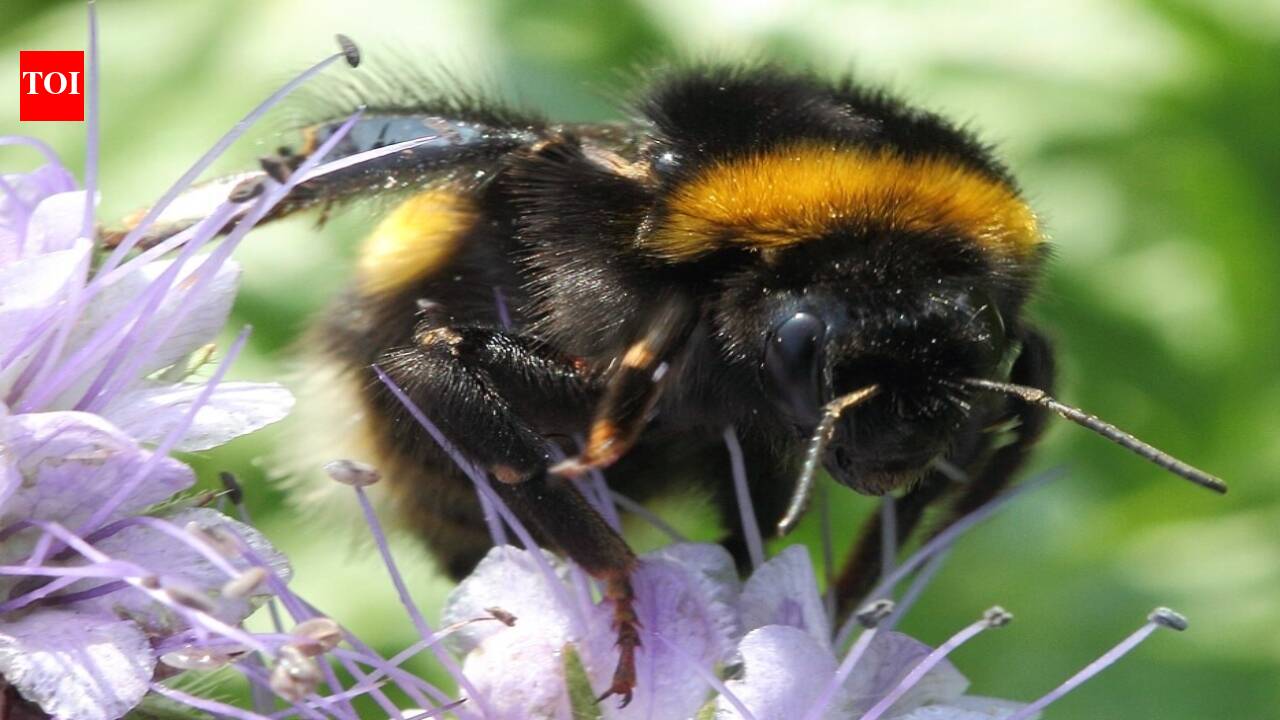
 Large earth bumblebee (queen) on phacelia blossoms. Credits – Wikimedia Commons A laboratory accident at a Canadian university led to a discovery about one of North America’s most familiar pollinators. Queens of the common eastern bumblebee, an insect with no known aquatic adaptations, can survive complete submersion in water for up to seven days. The finding began as a mishap involving flooded fridge tubes and prompted researchers to ask what else these insects can endure. The research began with a routine setup for studying how bumblebee queens overwinter. Researchers at the University of Guelph in Ontario keep hibernating queens in small tubes of soil inside a refrigerator to mimic the underground burrows where they naturally overwinter, a state known as diapause.During earlier work on pesticide residues, some of the tubes accidentally filled with water, and the queens inside were found alive after the water was drained. That accidental flooding happened during that earlier, unrelated pesticide research, and it was some time before the team returned to test the phenomenon formally rather than treating it as a one-time fluke. As the University of Guelph’s own research announcement put it, this unexpected discovery is the first study into the ability of bumblebee queens to survive prolonged periods of water submersion while overwintering underground. Rather than treat it as a fluke, the team designed a follow-up experiment to see whether the survival was consistent or a one-off. The paper adds that the accidental survivors were not active foragers but queen bees in diapause, and the team then repeated the exposure under controlled conditions to see whether the result held up. Their follow-up work showed the queens could remain alive after prolonged submersion, suggesting the flood tolerance was not a one-off fluke of the refrigerator setup.Testing it on purposeResearchers gathered 143 hibernating common eastern bumblebee queens, kept a small control group dry, and submerged the rest in water for periods of up to a week. According to the study published in Biology Letters, queens kept underwater for periods of up to seven days had survival rates similar to those that were never submerged. After being removed from the water, the queens took a few days to recover normal activity before being returned to the fridge for several more weeks. The vast majority made it through to the end of the experiment. Queen bumblebees typically choose well-drained soil for their winter burrows to avoid flooding, so finding that they can survive a week underwater came as a surprise to the scientists involved, who had assumed submersion would be fatal within hours. Once the survival itself was confirmed, the next question was how an insect with no gills manages to last that long without air.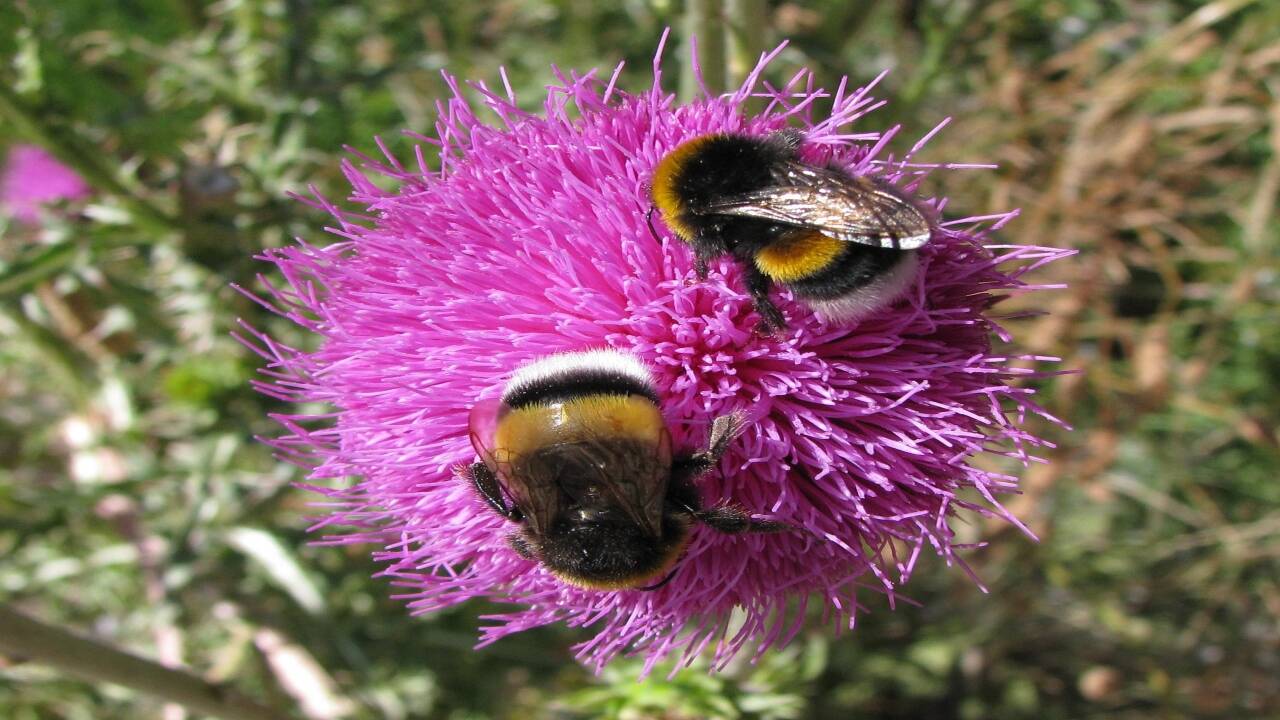
Two bumblebees foraging on a flower, taken at Bariloche, Argentina. Credits – Wikipedia
Working out how they breatheAccording to the paper published in Proceedings of the Royal Society B, the diapausing queens are not simply holding their breath underwater. Instead, they lower their metabolism dramatically and draw a small but steady amount of oxygen directly from the surrounding water, a limited form of underwater respiration broadly similar in principle to what some fully aquatic insects such as diving beetles rely on. That underwater exchange only covers part of what their bodies need while submerged, so the queens also lean on anaerobic metabolism to make up the shortfall, a process that produces lactic acid as a byproduct rather than requiring oxygen at all. Once they resurface, the queens breathe at a noticeably faster rate for several days afterward, which is how their bodies clear out that built-up lactic acid before settling back into their normal resting state.The practical significance extends beyond insect physiology. Bumblebee populations are already under pressure from habitat loss and pesticide exposure, and climate change is bringing heavier and more frequent spring flooding to many of the regions where these queens spend the winter. A species that can tolerate a week of submersion during its most vulnerable life stage may be more resilient to changing weather than researchers had assumed, offering encouraging news for a pollinator group often associated with decline headlines.