
“Ko te wawata o te ngākau, kia mau te maunga i tana kākahu tawhito i mahue iho e o tātou matua, tātou koroua.”
Our earnest wish is that the mountain should maintain her ancient raiments left since the days of our forebears.
Hiki Toko, 1985 (Te Māhurehure, Tūhoe)
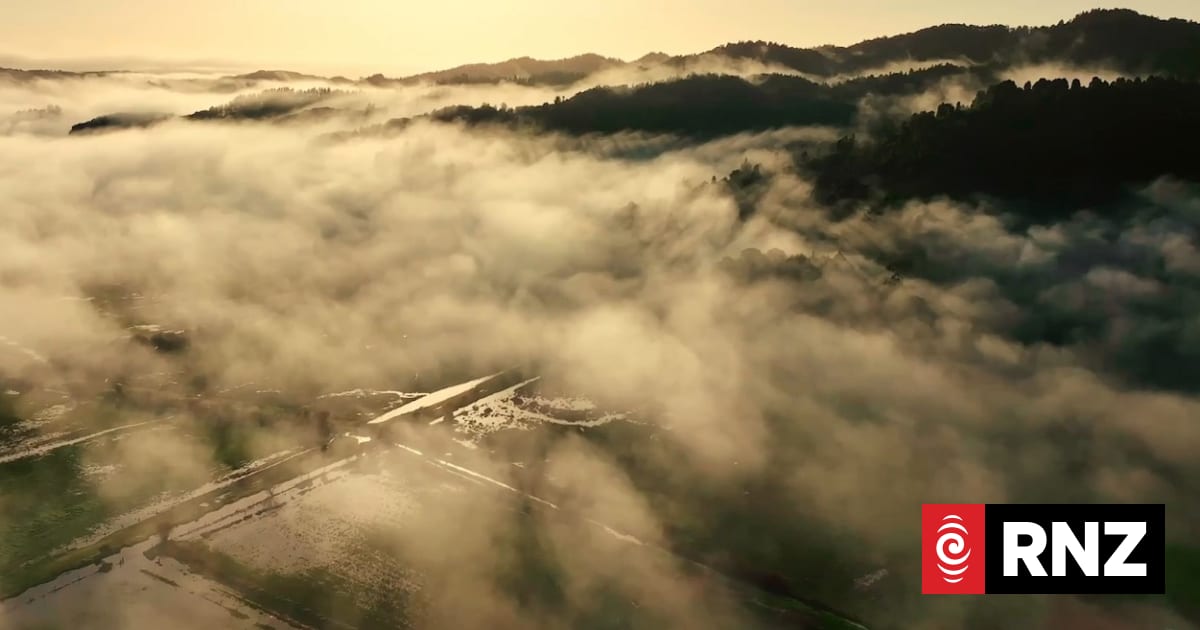
For generations of Tūhoe, Taiarahia mountain in the Bay of Plenty settlement of Ruatoki Valley has stood as a sentinel landmark watching over them and welcoming them home.
Her cliffs once held the ancient pā of Tūhoe tūpuna, her presence sheltering the marae and hapū below, her dense forest sustains and protects native species.
As forestry plans loomed, the native forest of the maunga came under threat, galvanising a unified vision voiced by Te Mahurehure, Ngāi Tūhoe kaumātua Hiki Toko from the summit of Taiarahia.
“Ko te wawata o te ngākau, kia mau te maunga i tana kākahu tawhito i mahue iho ai e o tātou matua, tātou koroua.Ko tērā kākahu tawhito o te ngahere, kaua hoki e tangohia tērā kia whakamau i te kākahu hou anō mōna.”
Our earnest wish is that the mountain should maintain her ancient raiments , left since the days of our forebears , that she should not be made to wear these new clothes.
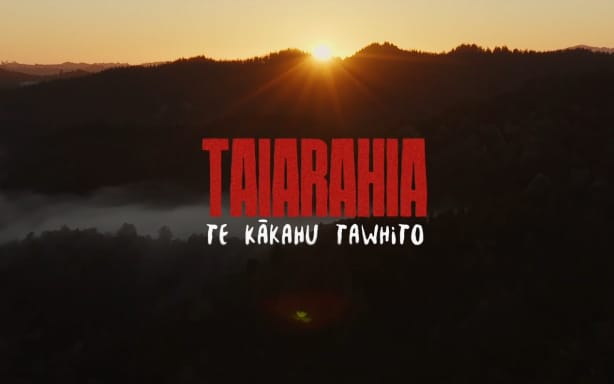
Taiarahia, Te Kākahu Tawhito Docu Series
Taiarahia, Te Kākahu Tawhito
In 1985, Tasman Forestry began earthworks as part of plans to clear hundreds of hectares of native forest and replace it with pine.
The proposal, which was approved by the Tūhoe-Waikaremoana Māori Trust Board, triggered a six-month occupation that united and divided whānau, placing relatives on opposing sides of the argument.
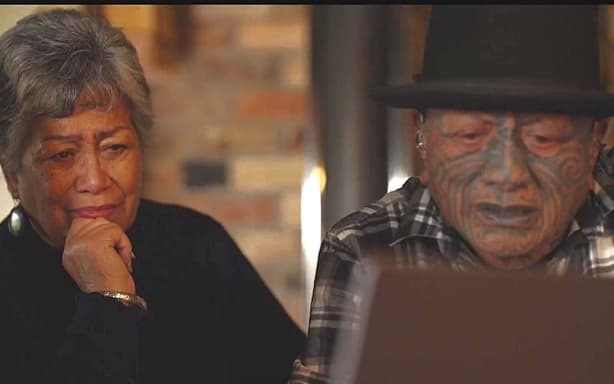
Harata Day (Te Māhurehure. Ngāi Tūhoe) and Tame Iti Te Māhurehure Ngāi Tūhoe) – instigators of the occupation of Taiarahia.
Taiarahia, Te Kākahu Tawhito
Harata Day and Tame Iti initiated a unified response when the reality of the threat became stark – bulldozers were already tearing up the earth and felling trees on the maunga.
Their coordinated campaign combined direct action with strategic advocacy. Iti and others confronted the forestry operation on the maunga, while Harata worked behind the scenes, writing to ministers, politicians and organisations including Greenpeace and Forest & Bird to raise awareness and rally support.
In the months that followed, an enduring committment to kotahitanga overcame overwhelming odds to succeed in protecting the maunga.
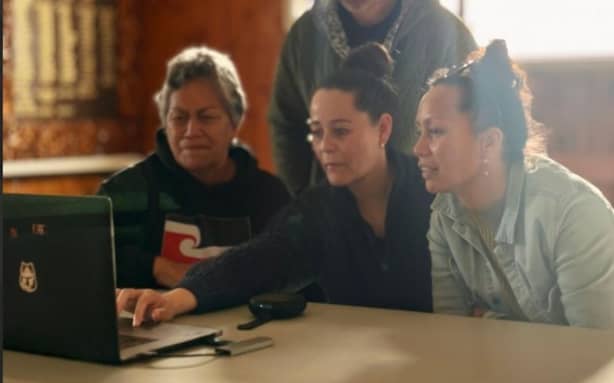
Harata Day and two of her daughters Wikitoria Day and Ngarimu Daniels.
Taiarahia, Te Kākahu Tawhito
Taiarahia: Te Kākahu Tawhito chronicles the experiences of those caught up in the occupation in a seven-part documentary series co-directed by Harata’s daughter, Wikitōria Day.(Te Māhurehure, Ngāi Tūhoe)
Day said one of its unique strengths was capturing the vastly different memories and emotions of generations who experienced the same event.
“Most documentaries are centred around a handful of kaikōrero. In contrast, this kaupapa captures at least 15 different perspectives, and what’s quite fascinating is the difference in recollections across generations .”
The series includes the voices of those who experienced the occupation as children and are now pakeke with mokopuna of their own.
“Tamariki were very involved in the occupation, but they were sheltered from the confrontational aspects,and still quite naive to the significance of what was happening, “
“They saw it as a time of adventure and playing with their cousins, despite the emotional impact of the events, they were allowed to maintain that sense of naivety children often have around kaupapa like this.”
In stark contrast to the perspectives shared by tamariki the series also captures the painful reality of whānau finding themselves on opposing sides of the argument. The impact still resonates with those involved.
Forestry provided employment when decent paying jobs were hard to come by and some of the Tasman Forestry workers sent to the maunga found themselves in stand-offs with whanaunga.
On one side was Tame Iti and his ‘puna kiore’ (rat pack) who were focused on protecting and upholding their obligation to the maunga, while on the other were whānau trying to protect jobs and feed their families.
Day described the result as an emotional rollercoaster.
“You hear anger, frustration and sadness. It’s a real concoction of emotions, and that’s what makes it really unique.”
Beyond the occupation Te Māhurehure demonstrated the value of combining whakapapa, tikanga, strategy and collective action to build a movement around an extraordinarily complex issue.
Forty years after the occupation, Day said its enduring lesson was clear.
“The biggest and strongest lesson this provides is the power of kotahitanga.”
“Kotahitanga can be achieved no matter how complex the argument, and the power of unity and kotahitanga can make a genuine and real difference.”
After six months, the occupation ended in favour of tangata whenua and the native forest remained standing.
The feature-length version of Taiarahia: Te Kākahu Tawhito won the People’s Choice award for best documentary at the Māoriland Film Festival.
The seven-part documentary series is available to watch HERE.