
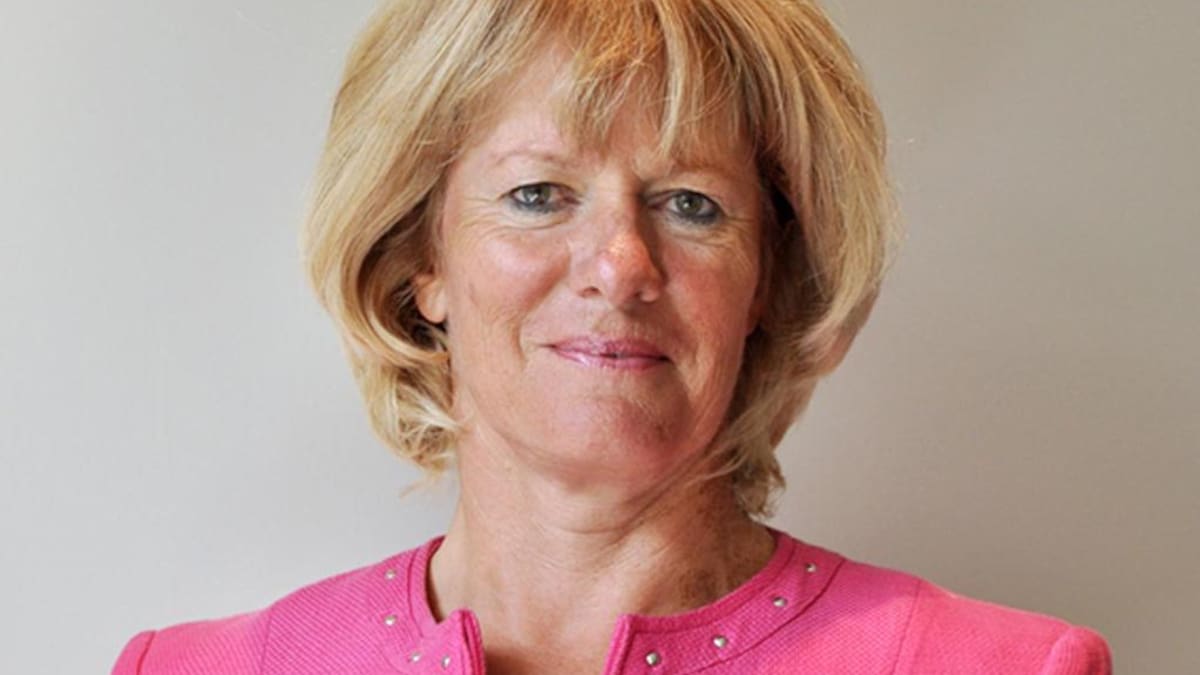
Her work experience and knowledge included capital markets, banking, finance and investment management. With this background, she also had a particular interest in risk management.
Pip Dunphy.
Dunphy was an Earthquake Commission board member for eight years.
She also served on the boards of the Fonterra Shareholders Fund, Abano Healthcare, the New Zealand Superannuation Fund, Solid Energy New Zealand, New Zealand Clearing and Depository, Mint Asset Management and NZ Post.
In 2015, the Herald’s Fran O’Sullivan wrote that Dunphy effectively blew the whistle on Solid Energy’s pending insolvency when she resigned as chairwoman less than a year into the role.
In announcing her departure from RegCo, chairman David Hunt said Dunphy had made a substantial contribution to the board and the authority since her appointment.
“Her deep knowledge of capital markets, corporate finance, risk and audit has helped shape NZ RegCo’s regulatory approach and strengthen its governance and assurance oversight,” Hunt said then.
Dunphy retired from the board of state-owned national power grid operator Transpower in 2022.
She had been a director on the Transpower board since May 2015 and chair since January 2019.
At the time, deputy chair Dean Carroll said Dunphy’s financial and business acumen had allowed Transpower to navigate challenging times such as the ongoing impact of Covid-19.
Dunphy took over from Tony Ryall as chair when he stepped down in December 2018.
“It would be fair to say she was reluctant, but nonetheless recognised that she was the best person for the job,” David Knight, executive general manager strategy, regulation and governance at Transpower, said.
Before becoming chair, Dunphy was chairwoman of Transpower’s audit and risk committee.
“She was very in the details, very focused on every last dollar and where it was,” Knight told the Herald.
“One of the things she was able to do when she became chair was step back from that and become a much more holistic and organic chair, and she was a very generous chair in that sense as well.
“Unlike a lot of chairs, she didn’t speak first, she always spoke last.
“She drove for consensus and when that wasn’t forthcoming, she applied the path of least resistance.”
At the same time, Dunphy was not one to back away from conflict, he said.
Knight said Dunphy was also the first of the Transpower chairs to fully engage directly with the state-owned company’s shareholding ministers, the Minister of Finance and Minister of State Owned Enterprises.
“She was able to engage directly with them because one of the things she observed was that with political appointments, or government appointees, you didn’t always get the board that you wanted.
“She thought that was a catastrophe in the waiting, and so she actively worked with the shareholders, both the ministers and the advisers to try and get appointments to the board that suited the board and that skills matrix and everything else that went with that.”
Dunphy also started a formal evaluation process for the board.
“She saw no reason why a SOE board shouldn’t be subject to that same discipline [as a public company’s] and so she brought a very detailed, review of performance, for the board,” he said.
Dunphy also had a deep interest in health and safety.
“She cared enormously about our people and she took health and safety personally, for the organisation.”
Dunphy had a Bachelor of Horticulture Science degree from Lincoln College and was qualified as a CFA (Chartered Financial Analyst), from the Association of Investment Management and Research (AIMR) USA.
Jamie Gray is an Auckland-based journalist, covering the financial markets, the primary sector and energy. He joined the Herald in 2011.
Stay ahead with the latest market moves, corporate updates, and economic insights by subscribing to our Business newsletter – your essential weekly round-up of all the business news you need.