
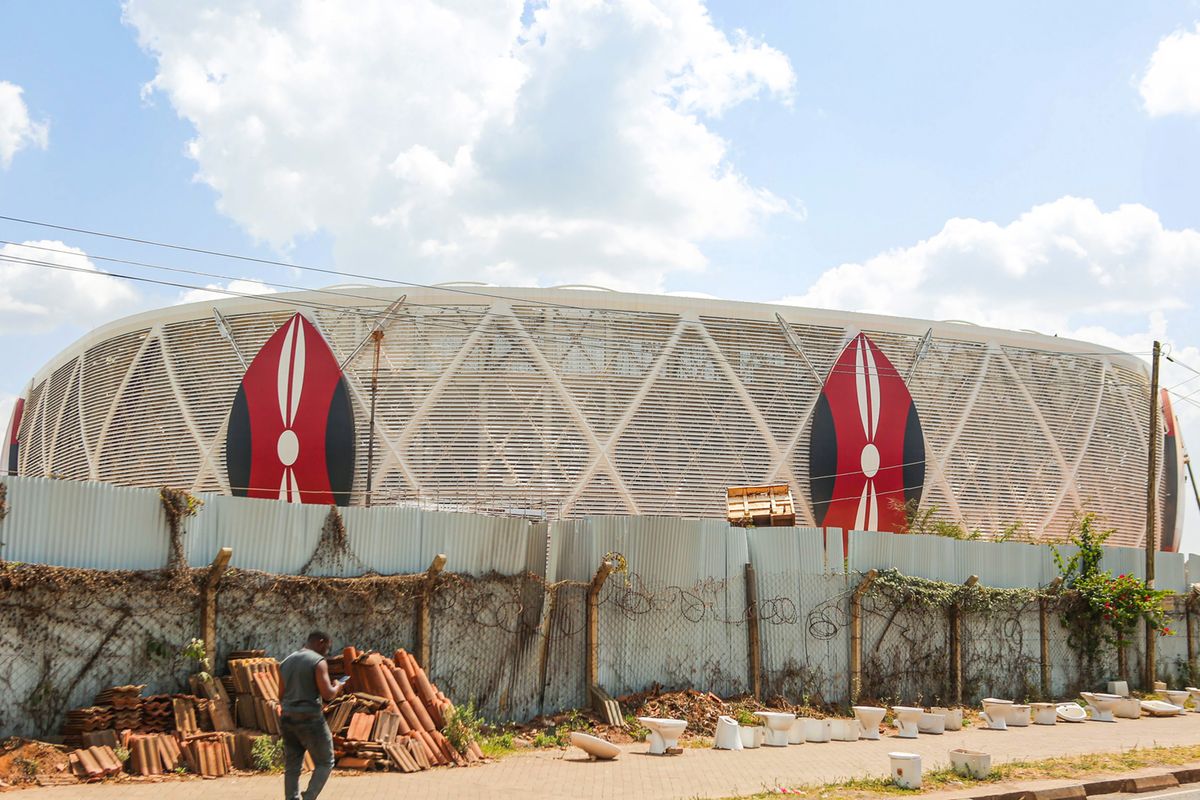
The National Social Security Fund (NSSF) and a civil servants’ pension scheme bought more than half of the Sh44.7 billion Talanta Bond, underlining the growing link between state-backed agencies and government-driven fundraisers.
Regulatory filings with the Retirement Benefits Authority (RBA) show that NSSF and the Public Service Superannuation Fund (PSSF) invested Sh24.19 billion, or 54 percent of the bond, which was used to build the 60,000-seater Talanta stadium.
The PSSF, which manages civil servants’ monthly pensions, invested Sh16.29 billion, while NSSF pumped in Sh7.9 billion into the bond issued by a firm associated with Mr Joshua Kulei, a former aide of ex-president Daniel arap Moi.
Investors get a 15.04 percent yield semi-annually from the 15-year bond, with the returns coming from the state-backed Sports Fund – the vehicle that receives taxes from gamblers and betting firms.
“It wasn’t about the stadium but the fact that it was underwritten by the Sports Fund, whose collections are good,” said a PSSF executive who did not wish to be named.
“There were questions about the returns, but the two that have fallen due since we bought in were paid promptly in February and July.”
This follows revelations that cash-rich parastatals were coerced into buying the initial public offering of Kenya Pipeline Company (KPC) to avoid the sale being declared invalid after high-net worth investors snubbed it.
The NSSF bought KPC shares valued at Sh36.3 billion, followed by PSSF (Sh12.3 billion), County Workers Pension Fund (Sh3.4 billion) and the Unclaimed Financial Assets Authority (Sh3.2 billion).
Government-supported pension schemes also participated in the Talanta Bond, including the County Pension Fund (Sh1.98 billion), CPF Individual Pension Scheme (Sh790.5 million) and the Local Authorities Pension Trust (Sh197.7 million).
The bond had a 100.2 percent subscription, indicating the offer would have fallen short of target without the government-linked funds.
The government needed at least Sh32.2 billion to complete the centrepiece football and rugby fields in the stadium, which will host the African Cup of Nations football tournament next year.
The remaining Sh12.5 billion was set aside for auxiliary facilities such as indoor arena, four training pitches and Olympic standard pools as well as Sh646.6 million that was used to pay the deal makers who worked on the bond such as Liaison Capital, KCB Investment Bank and CPF Capital.
Liaison Capital is associated with Mr Kulei and he owns 33 percent of the financial advisory company through his investment vehicle, Sovereign Group.
Others in the financial advisory are Mr Thomas Kimeu Mulwa, who doubles as the firm’s CEO, and its founder James Wachira Mahihu, its largest shareholder with a 42 percent stake.
Liaison Capital was also behind the Sh3 billion Linzi Sukuk, whose proceeds were earmarked to build houses for the Kenya Defence Forces.
PSSF was the largest participant in the Linzi Sukuk bond issued in 2023, with its current holding of the bond being Sh1.59 billion. This implies PSSF took more than half the bond issue, underlining government reliance on the cash-rich schemes under its control to fund pet projects.
Talanta Bond had been made tax-exempt in a bid by the National Treasury to attract investors.
The 15-year Talanta bond will earn PSSF approximately Sh36 billion in interest while NSSF will pocket about Sh15.7 billion.
The bond was accorded an AA rating by South African agency GCR Ratings, with the absence of an explicit government guarantee being cited for denying it a higher rating.
An AA rating means the issuer has very strong creditworthiness.
The pension schemes shrugged off the absence of the explicit guarantee, taking comfort in the premium offered by the bond and its structuring that has KCB Bank offering a standby letter of credit in case of delayed payments.
Should the Sports Fund be dissolved, the bondholders shall be transferred to the National Exchequer Account.
Bondholders are paid from the National Treasury disbursements made to the Sports, Arts and Social Development Fund (SASDF) and not proceeds from the stadium.
The two bonds are listed on the Nairobi Securities Exchange in the restricted fixed income market sub-segment allowing the funds a window to sell part of their stake to secondary investors.