
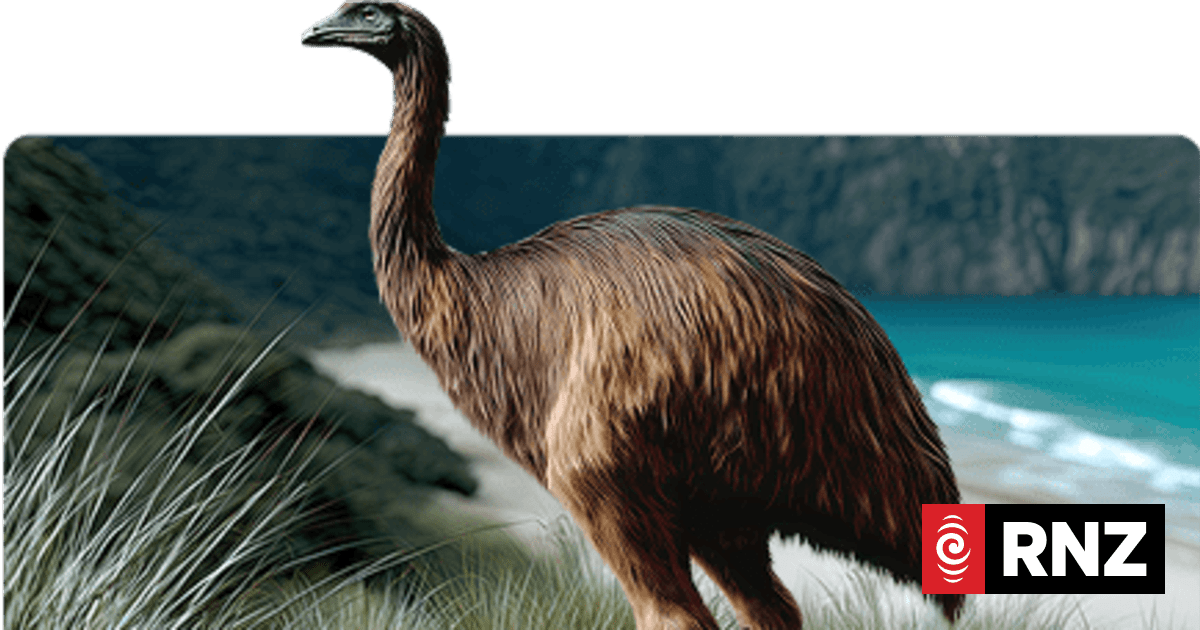
Colossal Biosciences calls itself an advanced genetics company that’s developing the science that will save us all.
But its claims of taking a novel approach to de-extinction that is “not copying or cloning” are disputed by a growing number of scientists around the world.
That is not stopping the company from pressing ahead with its moa project with the recent announcement that it hatched 26 artifical eggs in a “foundational step” toward its goal of resurrecting extinct bird species.
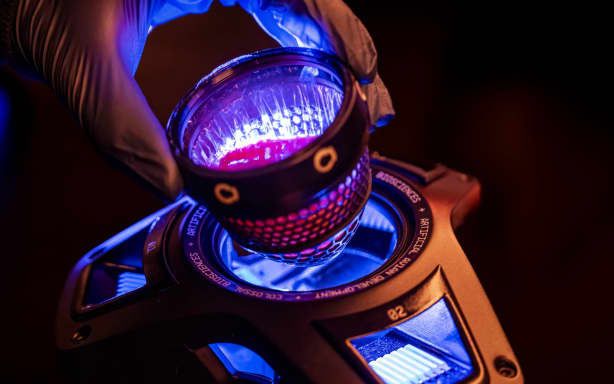
Colossal Biosciences is describing its artificial egg as a “major breakthrough” in its de-extinction moa project.
Supplied / Christopher Klee (Colossal Biosciences)
Sharon Brettkelly spoke to Colossal Biosciences for Our Changing World about its moa de-extinction plans and the critics, including the Prime Minister’s science communicator prize winner Associate Professor Nic Rawlence of the University of Otago.
He says Colossal Biosciences is wasting millions of dollars making a genetically modified emu, when the money should be spent on live, endangered species.
The two-part series also explores the ethics of bringing the moa back to life and who should be consulted on reviving what many in Aotearoa believe is a taonga.
Extinction is not the end of the story
Colossal Biosciences says it is working to bring back the woolly mammoth within five years, after engineering a woolly mouse. Also on its de-extinction list are the thylacine or Tasmanian tiger, a type of African antelope known as the bluebuck and the dodo.
It says it has already resurrected the dire wolf with the birth of pups Romulus, Remus and Khaleesi last year, after creating a genomic blueprint from a 13,000-year-old tooth and 72,000-year-old ear bone samples.
Of the moa it says it is “restoring the past for a better future” in a partnership that is as important for conservation as it is for bringing the moa back to life.
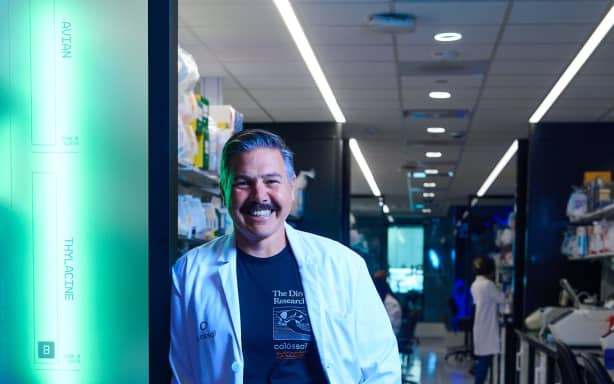
Colossal Biosciences Australia-based chief biology officer, Andrew Pask.
Supplied / Colossal Biosciences
“We can learn all sorts of things about the biology of those birds from looking at their genome,” says Colossal Biosciences chief biology officer Dr Andrew Pask.
“There’s a huge amount that you can understand about what their population sizes would have been in New Zealand. You can really start to unpack a lot more about what that landscape looked like in New Zealand with moa in it and how abundant those species were. And then really that can give you a much deeper understanding of then the impact that that’s had on your ecosystems that we have left today.”
And he says the artificial egg they have created “really opens up the possibilities of ways that we can manipulate bird development for conservation outcomes”.
A short video on its website features the New Zealand team behind the plans – Canterbury Museum’s Paul Schofield, filmmaker Sir Peter Jackson, and Mike Davidson and Kyle Davis of Ngāi Tahu Research Centre at University of Canterbury.
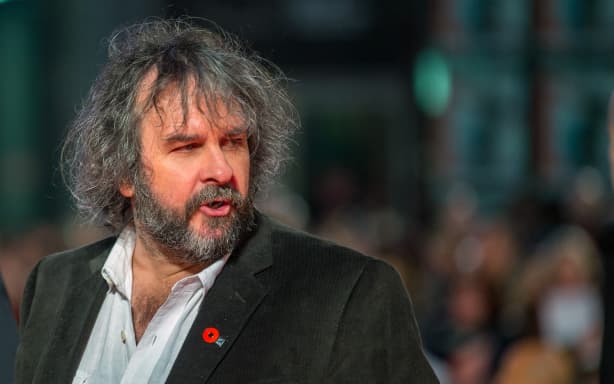
Filmmaker Sir Peter Jackson is backing plans to de-extinct the moa.
AFP / Getty
Sir Peter says it is estimated there were about 150,000 moa walking around Aotearoa before all nine species became extinct about 600 years ago.
“We’re now at the point where being extinct isn’t really the end of the story,” he says in the video.
Colossal Biosciences chief executive Ben Lamm says to bring back the animal that “has a cultural heritage here, it’s almost overwhelming”.
It emphasises it is a Māori-led initiative.
“It’s really their vision, really putting the Māori first,” Lamm says in the video.
Two sides to the story
But Māori researchers Professor Amanda Black and Professor Phillip Wilcox told Our Changing World that Colossal Biosciences has not consulted properly with tangata whenua.
“We didn’t ask to have the moa back, whose decision was that?” asks Professor Black.
“The access and benefit sharing again, that’s our genome, why have you got it?”
Dr Andrew Pask explained the process of resurrecting the flightless bird after already taking DNA samples from moa bones.
“The plan is to do it across both Texas and New Zealand,” Dr Pask says.
“We’ve only just announced the project, we’re still sequencing the moa genome so there’s still lots of stuff to figure out.
“Where the genome engineering side would happen potentially at Dallas and then a lot of the assisted reproductive technology on different bird species, artifical egg technologies and things would all happen in New Zealand.”
The technology Colossal Biosciences develops from the moa de-extinction process has immediate conservation applications for native birds on the brink of extinction in Aotearoa, he says.
He believes the first moa eggs will be hatched in New Zealand but he doesn’t know where.
“I think we’ve really got to figure out what our genomes are, which is the closest surrogate and then that will help us figure out timelines as well.”
Dr Pask says it is difficult to put a timeline on the project because Colossal Biosciences has still not identified the closest living relative – South America’s tinamou and Australia’s emu are potential candidates.
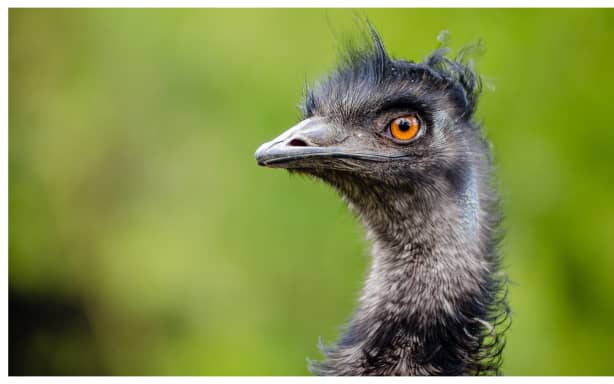
The emu (pictured) and tinamou are potential candidates to be the moa’s closest living relative.
Be Funky
Sir Peter says the moa will not be released into the wild or put into zoos.
“We want to be able to give the moa a natural environment as big as we possibly can,” he says.
The description conjures up a Jurassic Park-like setting, an image that thrills some people and disturbs others.
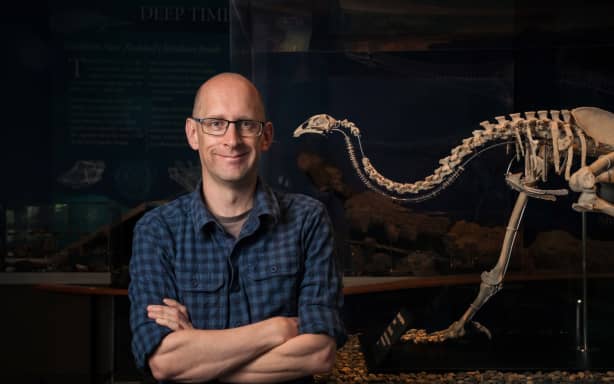
Director of the University of Otago’s paleogenetics department Associate Professor Nic Rawlence says under New Zealand’s biosecurity laws the first moa would have to be put into a strict quarantine enclosure, like Orana Wildlife Park in Christchurch.
Supplied / Te Ara
“Then apply for a soft release or a field trial, make sure all of the controls are in place and only then would you be able to release them into the ‘wild’, in quotation marks,” Dr Rawlence says.
Lincoln University’s Professor Amanda Black is skepetical about the de-extinction plans.
“It’s not really the argument that you can de-extinct something or not that I am interested in, and for the record I don’t think you can because once something’s gone it’s gone,” says Professor Black, who is on the government’s Māori advisory group on the Gene Technology Bill going through the parliamentary process and the director of government-funded Bioprotection Aotearoa.
She describes Colossal Biosciences as fascinating and concerning but believes its de-extinction plans are a “hearts and minds strategy to get the headlines”.
“The business model for Colossal is not about conservation, it’s really about intellectual property and patent technology and spinoff companies and they’re using that with genomes they’ve collected around the world,” she says.
“Ethically is that what people want to really support and let companies come into New Zealand and do?”
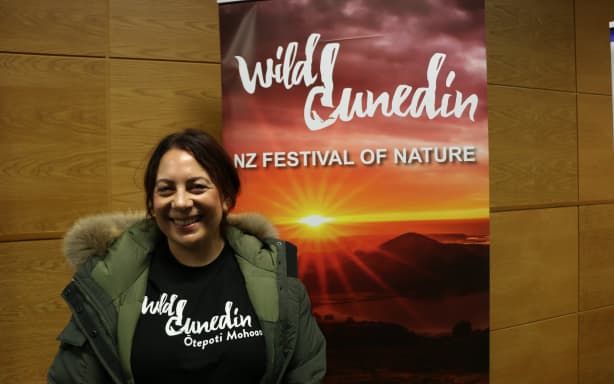
Professor Amanda Black
Claire Concannon/RNZ
Our Changing World approached Sir Peter Jackson, Ngāi Tahu Research Centre, the iwi itself and Canterbury Museum for comment and did not get any response.
In a story in Science magazine by Veronika Meduna, the research centre’s director Mike Stevens said the iwi has not mandated the research center to do this work.
He said the centre has the academic independence “to wade into difficult things,” and help the iwi explore and develop a position on the technology.
Professor Black says there is no single Māori voice on the issue, but the lack of broad consultation on the touchy subject of genetic modification is concerning. The project raises numerous questions for mana whenua.
She calls it a “very new take on an extremely old theme which is colonial practices and sovereignty”.
“Why have you got the data, do you have permission to have that data? It really speaks to the indigenous data sovereignty conversations that we’re having globally about where genomic data gets deposited.”
Professor Black says New Zealanders might want to take a leaf out of Sir Sam Neil’s book and discuss it over a cup of tea at the table.
In a written response to further questions, Colossal Biosciences says it is not appropriate for it to comment on whether it has consulted widely enough, that is “a judgement for Māori to make” and it recognises consultation is “not a box to check once” situation.
It says it is working closely with its Ngāi Tahu partners as the project progresses.