
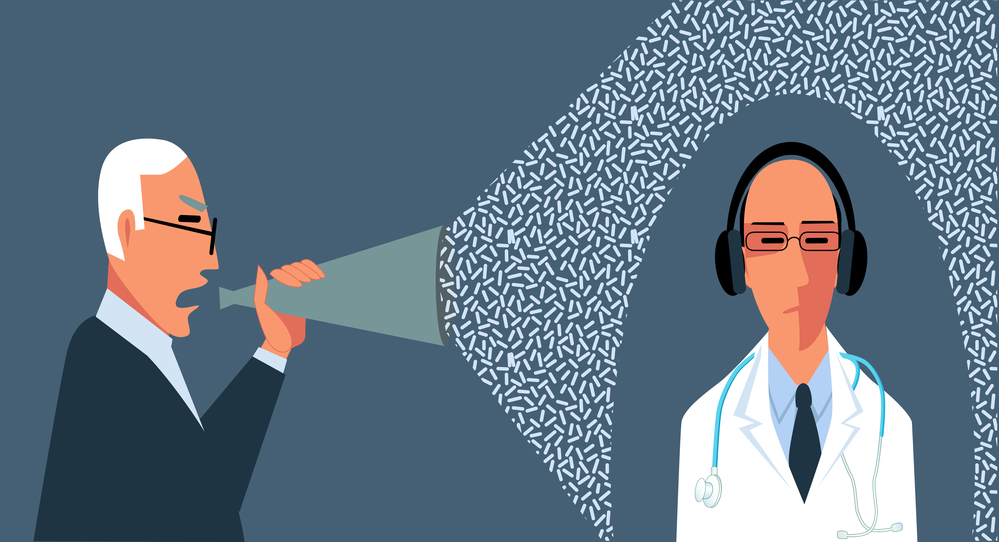
In contrast to the paternalistic approach of days past, Western medicine has almost universally adopted an aspirational philosophy of person-centered care, including shared decision-making. The doctor’s role as an expert in this model is to ensure that patients understand their options and have the right to choose their treatments—not to choose for them and hide the risks of treatments. Psychiatry, however, is the outlier as the one specialty in which the virtues of shared decision-making and informed consent have mostly still not been adopted.
Many experts, as well as the World Health Organization, advocate for shared decision-making models in psychiatry as a way to improve patients’ experience and adherence to treatment plans. However, this model faces significant implementation challenges in part due to clinicians’ negative attitudes and beliefs towards people with mental health diagnoses.
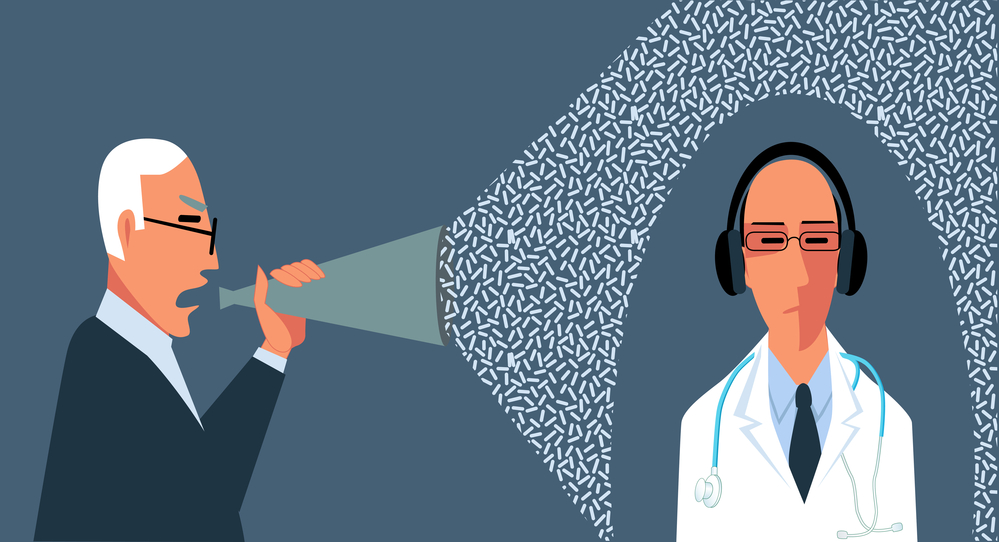
According to a new study published in the International Journal of Clinical Pharmacy, healthcare professionals routinely ignore and minimize concerns about the negative effects of antipsychotics. The researchers, Holly Grey and Laura Lindsey from Newcastle University in the UK, also report that many of their participants were not informed about the possibility of negative effects or involved in decisions around drug treatments. The authors write:
“Health care professionals provided limited acknowledgement and support for antipsychotic side effects, which significantly impacted the young adults’ lives. Young adults want to be fully informed of their medication and potential side effects but support from friends and family was a potential barrier. Changes in practice are needed including an adjustment in clinical language used by health care professionals, giving information to service users’ post-psychosis and ensuring health care professionals are trained in shared decision-making.”
Benefits and Barriers of Shared Decision-Making Models in Psychiatry
While the effect of shared decision-making on clinical outcomes is unclear, a 2026 review found that this model can improve patient involvement in treatment, autonomy, and satisfaction while lowering conflict around important medical decisions. Shared decision-making can also reduce coercion and suicide risk.
A 2025 study showed similar findings specific to people diagnosed with schizophrenia, with shared decision-making linked to improved treatment adherence, quality of life, self-esteem, and problem-solving ability. This study additionally reported improvements in patients’ ability to manage their condition and confidence communicating with clinicians. Past research also found that shared decision-making was associated with greater empowerment and reduced use of coercion for people that experience psychosis.
Despite the benefits, research has found numerous barriers to shared decision-making in psychiatry. A systematic review published in 2024 reports that barriers to implementing shared decision-making include limited resources, organizational structures and culture, prioritizing risk management, lack of training, fear and distrust between patients and clinicians, previous negative experiences, and clinician resistance to change.
A study from 2021 found that mental health professionals were often themselves a barrier to the implementation of shared decision-making due to an unwillingness to engage in the process, concerns about their professional roles and identity, and the belief that patients had “reduced capacity” and “limited insight” into their condition. In some cases, clinicians regarded “lack of insight” in people prescribed antipsychotics as an absolute barrier to the practice of shared decision-making.
Research from 2025 reports on barriers to shared decision-making from the patients’ perspectives. Barriers included lack of choice in clinical decisions, not being respected as a person, stigma from clinicians, the burden of mental health struggles, power imbalance between clinicians and patients, and low self-efficacy. Another study focused on patient views of shared decision-making around antipsychotics found that patients felt they had no choice in whether or not to take these drugs, often felt coerced, and reported a lack of information and support.
Study Details
The goal of this research was to examine the lived experience of shared decision-making about antipsychotic drugs, with a focus on how healthcare professionals involve patients and service users in treatment decisions.
The authors recruited participants through mental health support groups and social media to take part in online semi-structured interviews around shared decision-making and antipsyhotic prescription. In order to be included in the current work, participants had to have been treated with antipsychotics and have a diagnosis of schizophrenia, schizoaffective disorder, or bipolar disorder. Interviews were transcribed and coded for recurring themes. In total, the authors used data from interviews with 14 participants.
Participants were mostly from the UK (12) with one each residing in the US and South Africa. Most participants were between the ages of 18 to 29 (12) with the remaining two between the ages of 30 to 47. The length of time on antipsychotics ranged from three weeks to 11 years, with most (10) reporting at least one year of use and four participants reporting four years or more. The authors identified four major themes in the interview data: living with antipsychotics, influence of family and friends, gaining autonomy, and consequences of young adulthood
(1) “Living with antipsychotics” included the negative effects of antipsychotics, having those negative effects dismissed by healthcare professionals, and an overall lack of information regarding these drugs. Every participant reported at least one negative effect of antipsychotics. The most commonly reported were fatigue (7), dizziness (6), and weight gain (5). Notably, three participants reported that these drugs exacerbated psychosis, three struggled with insomnia, and two dealt with heart problems as a result of antipsychotics. One participant said “it [antipsychotics] deprives me of my normal life.” Another reported “I feel I’m not free, you know. I can’t do things you know, I’m afraid.”
When reporting side effects to healthcare professionals, participants often felt they were not believed, not given adequate time to discuss their concerns, and dismissed. According to the authors, this clinician attitude “stopped any implementation of the participant’s opinion into their own treatment plan and so forfeits the person-centered care approach,” severely undermining any attempts at shared decision-making. Participants’ concerns about negative effects of antipsychotics were often not taken seriously until a major adverse event occurred. One participant reported “By the time I threw up in the office and blood came out I think they got the message.” Another said “It’s devastated me that I’m not being listened to.”
Overall, participants felt that the information they were given about the negative effects of antipsychotics was poor. Five said they received no information at all while others took it upon themselves to do their own research. Many participants were prescribed antipsychotics while in the midst of psychosis, a decision that was never revisited. This effectively excluded them from an important conversation around their treatment, again undermining shared decision-making.
While all the participants reported that the drugs were effective to some degree in managing their condition, most also wanted to withdraw from them at some point. Only half (7) of the participants felt comfortable discussing stopping antipsychotics with mental health professionals. One participant said “The bottom line is, you have to take the medicine, and if you don’t, they’ll give it to you by injection.” Another said their doctor reacted negatively to discussions around stopping antipsychotics: “And he basically attacked me and said: Oh, no, you never do that. You can’t do that.”
(2) “Influence of family and friends” included experiences of support, being forced to take drugs, and lack of trust from their support system. All 14 participants had some level of family and/or friend involvement in their treatment. Less than half described this involvement as positive. Many felt their support system excluded them from conversations around treatment, kept important information from them, and forced them to take drugs. One participant said “I remember my mum being there, I was barely spoken to. I’m the patient and I’m a legal adult. But he did more of the talking with her. It didn’t feel nice. I felt like a child, quite irritating.” Another reported “There was no choice in the matter. It was mum and dad saying, ‘You going to do what the doctor says’. So my views didn’t really come into it.”
(3) “Gaining autonomy” involved participants educating themselves about antipsychotics, incomplete understandings of shared decision-making, and greater involvement in their own treatment. All participants reported having little knowledge about antipsychotics prior to taking them. All participants also did their own research around antipsychotics to some extent. Few had a good understanding of what shared decision-making means, with some believing it was when a guardian made decisions for you and others equating giving consent to treatment with shared decision-making. Some participants felt they had gained autonomy over their antipsychotic use while others reported some improvement, but not full autonomy. However, the term autonomy meant different things to different participants. For example, one participant believed having access to their antipsychotics meant they had full autonomy.
(4) “Consequences of young adulthood” involved the impact of participants’ diagnoses on their friendships and relationships. Many participants felt that their condition had led to social exclusion and loss of friends. Others reported that antipsychotics and frequent doctor appointments made socializing difficult.
In conclusion, the researchers write:
“There needs to be a recognition of potential power dynamics that have influenced young adults’ experiences with antipsychotics where the initiation of the medication has been often directed by prescribers and approved by family members. To improve shared decision-making, service users with lived experience of antipsychotics side effects should work collaboratively with HCPs to create online and physical resources to help young adults transition to having autonomy over their care. This will facilitate a more active role for young adults. Co-created online medicines resources for antipsychotics created for children and young people exist and could be used as model for developing these resources.”
This research had several limitations. The small sample size, while appropriate for a qualitative study, significantly limits generalizability. Most participants were from the UK, further limiting generalizability to other populations. The interviews and recruitment were conducted online, excluding people without access to adequate technology and the internet. The transcripts and findings were not validated with participants.
****
Grey, H., & Lindsey, L. (2026). Lived experiences of shared decision-making in young adults prescribed antipsychotics: A qualitative interview study. International Journal of Clinical Pharmacy, 48(3), 949–959. (Link)