
Wealth structuring conversations tend to begin with vehicles. Which trust, which foundation, which holding company, which jurisdiction. The question of what to build is treated as the starting point, and the discussion moves quickly into the mechanics of implementation. But this instinct, however natural, risks putting the tools ahead of the purpose they are meant to serve, and the families they are designed to protect.
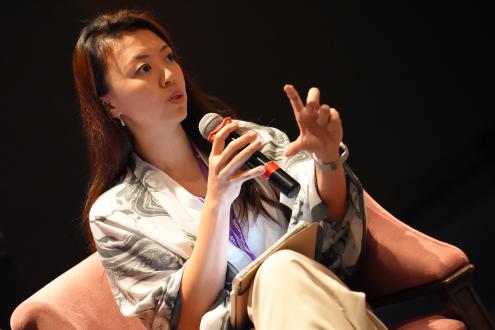
At the Hubbis India Wealth Management Forum 2026, held in Mumbai, the second panel discussion of the day, chaired by Rohit Bhardwaj, Country Head – India, Director Private Clients, Henley & Partners, brought together international practitioners to examine the cross-border structuring challenges facing Indian families. Among them, Marilyn See, General Manager and Head of Business Development, Singapore at Trident Trust, offered a perspective that cut through the technical complexity to pose a more fundamental question: before selecting the components, have we properly understood what the family actually needs, not just today, but across the generations to come?
Key Takeaways
Geopolitical Tension Is Not New, but Proximity Has Changed the Conversation: International instability has always influenced structuring decisions, but its closeness to the Indian and Asian context is driving more frequent and urgent conversations about diversification.
Structuring Vehicles Are Hardware; Governance and Intent Are the Software: Trusts, foundations and holding companies are building blocks, but they function only when accompanied by the legal frameworks, governance arrangements and articulated wishes that give them direction.
Advisers Must Resist the Urge to Lead with Products: Presenting clients with a menu of vehicles and jurisdictions before addressing the question of objectives risks overwhelming them and producing fragmented outcomes.
Flexibility Is as Important as Precision: Structures must be designed not only for the family’s current circumstances but for the evolving needs, relationships and value systems that will inevitably reshape the picture over time.
The Hardest Challenge Is Not Tax but Values: As families become more internationally mobile, the divergence in outlook between generations may prove more difficult to accommodate than any fiscal or regulatory consideration.
A Familiar Landscape, Viewed from Closer Range
See opened her contribution by offering a measured corrective to the sense of novelty that often accompanies discussions of geopolitical risk. While acknowledging that the landscape has shifted considerably, she was careful to note that international tension is not in itself a new phenomenon for the structuring industry.
“A lot has changed, but at the same time, not much has changed from our perspective,” she observed. “International geopolitical tensions have always been the case. Right now, it is just a bit closer to home.”
That proximity, however, is producing tangible effects. See reported a marked increase in conversations with Indian families about diversifying their structuring arrangements beyond a single jurisdiction. Singapore continues to attract significant interest, but discussions are also extending to Switzerland and, perhaps more surprisingly, to Hong Kong.
She described this latter development as a reversal of a trend that began approximately six years ago, when political unrest in Hong Kong prompted a wave of movement to Singapore. Some of that flow, she suggested, is now beginning to move in the other direction, with families reassessing Hong Kong’s merits as a structuring base.
Other panellists corroborated this broader pattern. One participant noted that while clients in the UAE were not departing, they were actively exploring offshore complements to existing arrangements. The consensus was clear: families with international footprints are no longer comfortable relying on a single centre.
The Lego Principle: Hardware and Software
See’s most memorable contribution was an analogy drawn from an unlikely source: her five-year-old son’s enthusiasm for Lego.
“He likes building houses,” she said. “There are different building blocks. There are pillars. There is a roof. That is a lot of how I see structuring.”
The point was disarmingly simple but carried real weight. The structuring industry has an extensive inventory of hardware: insurance, trusts, foundations, holding companies, variable capital companies. These are the components from which any arrangement is assembled. But they are only one half of the equation.
“How we put that together to serve the needs of the family, that is something that we cannot do without the software part of it,” she continued. The software, in her framing, encompasses the legal expertise, the governance arrangements, the letters of wishes and the articulated intentions that give structure to what would otherwise be a collection of disconnected vehicles.
This distinction resonated with the panel’s broader discussion. One participant described composite structures in which a foundation acts as trustee of a trust, illustrating how vehicles from different legal traditions can be combined. Another offered a detailed example of insurance being used as a wealth equaliser across three branches of a family, a solution that emerged only because the adviser looked beyond the conventional toolkit.
See’s concern, however, was not merely about choosing the right combination. It was about sequencing. She observed that advisers too often lead with the tools, presenting clients with a menu of products and jurisdictions before the more fundamental conversation about objectives has taken place.
“Very often, advisers go straight into looking at what are the tools,” she said. “Clients get overwhelmed with that. It is important to first take a step back and really look at what are we trying to achieve for the family.”
A structure designed without a clear understanding of the family’s circumstances, its current configuration, its likely trajectory and its internal dynamics is unlikely to endure. The hardware may be technically sound, but without the software to guide it, it will not perform as intended.
Designing for Flexibility
See extended the argument by emphasising that structuring is not a static exercise. Families change. Relationships evolve. Members move across jurisdictions, marry into different legal systems and develop priorities that differ markedly from those of the generation before them.
A structure optimised for the family’s circumstances today may prove inadequate a decade from now. See argued that advisers must design for flexibility as deliberately as they design for tax efficiency or regulatory compliance.
“How do we put that together, a structure that is good for what it is now, but at the same time also flexible enough to deal with the evolving needs, evolving family circumstances, evolving value systems of the different generations?” she asked. “I think that is probably the key.”
Other panellists offered practical illustrations. One described a family whose three sons were placed in Hong Kong, Dubai and India respectively, only for divergent property markets, investment returns and business contributions to produce a significant equalisation problem over the course of a decade. The structure that seemed equitable at the outset no longer reflected each son’s position, and a separate mechanism had to be introduced to restore balance.
Another participant noted that parallel structures are becoming increasingly common precisely because they offer this adaptability. A trust in one jurisdiction managing one pool of assets can coexist with a family office in another, and the overall framework can be adjusted as circumstances require without dismantling the entire arrangement.
The Hardest Problem: Bridging Value Systems
In her closing remarks, See turned to what she described as the most difficult challenge of all, and the one least amenable to structural solutions.
“We talk a lot about international mobility of the Indian family,” she said. “We discuss a lot about tax implications. But the key here really is for advisers to go a step further.”
Her concern was that as families become more internationally dispersed, the differences that matter most are not fiscal or regulatory but ideological. A patriarch in Mumbai, a son in Singapore and a daughter in London may share a balance sheet, but they may hold fundamentally different views on how wealth should be managed, distributed and governed. The older generation may prioritise consolidation and control. The younger generation may value autonomy, participation and transparency. These are not differences that a trust deed or a foundation charter can easily reconcile.
“It is easier to plan a structure that has tax implications,” See observed, “but a lot harder to design a framework that can bridge ideological or value differences in value systems.”
This observation struck at something the panel had circled throughout the discussion. One participant had identified family conflict as the single greatest threat to wealth transfer. Another had urged advisers to reframe succession planning as a continuum rather than a point-in-time event. See’s contribution added a further dimension: that even when control is transferred successfully, the values that inform how it is exercised may differ profoundly between generations, and this divergence must be anticipated rather than ignored.
Beyond the Building Blocks
See’s contributions reflected a philosophy of structuring that places the family, in all its complexity, at the centre of the exercise. The vehicles are important. The jurisdictional choices matter. The tax and regulatory analysis is essential. But none of it amounts to very much if the structure does not reflect the family’s actual circumstances, if it cannot adapt as those circumstances change, and if it fails to account for the human dynamics that will ultimately determine whether wealth is preserved or dissipated.
For advisers working with Indian families whose lives now span multiple jurisdictions, the takeaway was both practical and philosophical. Start with the objectives. Assemble the hardware carefully. But invest at least as much thought in the software, the governance, the communication, and the shared understanding of purpose, that will determine whether the structure endures across not just borders but generations.