
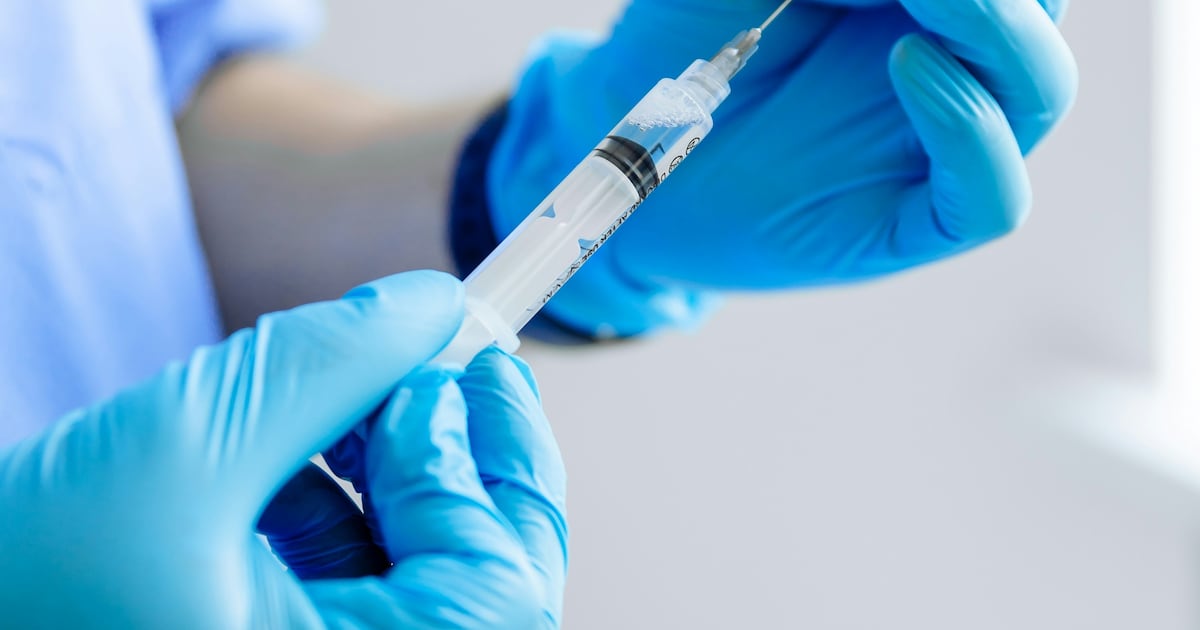
Lindiwe Mqatazana is not taking any chances with her health, or with that of her unborn child.
“There are a lot of guys who won’t tell you they are HIV-positive. I have to protect myself,” said the 25-year-old municipal worker, a resident in Cape Town’s Gugulethu township. She is among the first cohort of South Africans to start using Lenacapavir, the twice-yearly HIV prevention shot which became available at select public clinics in June.
Optimism about Lenacapavir is running high as clinical trials found it provided users with almost complete protection against HIV infection. However, global supplies are severely constrained, forcing the health department to ration the limited stock it has on hand.
Mqatazana is one of the lucky ones. She previously took oral pre-exposure prophylaxis (PrEp), a daily pill to protect her against HIV infection, but struggled with the nausea and headaches it triggered. On a recent visit to Vuyani Clinic, she confirmed her pregnancy and received her first dose of Lenacapavir ― two subcutaneous shots in the buttocks with two pills, followed by a second round of pills she took at home 24 hours later. Aside from some mild pain at the injection sites, she’s had no side-effects and has been assured the drug is safe for her baby.
South Africa has the world’s worst HIV burden, with almost 8-million people living with the disease, according to the latest Tembisa model. It estimated there were 140,000 new infections last year, or more than 380 a day.
Stopping the epidemic in its tracks by virtually eliminating transmission is possible with well-established tools such as antiretroviral treatment and oral PrEp. But that would take decades, said modellers.
Adding Lenacapavir to the mix could dramatically reduce the time to achieve the goal, particularly if the shot was prioritised for people at greatest risk of infection, according to a study led by the Wits Health Economics and Epidemiology Research Office (HER2O).
But the numbers are huge: reducing HIV incidence in South Africa to less than 0.1% a year by 2039 would require providing Lenacapavir to 2.9-million people a year. If a more modest target of 1.7-million people a year was reached, it would take until 2043 to end the epidemic, said the study’s lead author, Lise Jamieson, a senior researcher at HE2RO.
Oral PrEp has been available in South Africa since 2016, and though about 600,000 people start each year, many struggle to stick with it. Dimpho Tsotetsi, a transgender activist from Gauteng, started using oral PrEp in 2017 but said she often missed a day or two, reducing its efficacy. She jumped at the offer of Lenacapavir.
“Getting a shot every six months is transfabulous. Anything to make my life convenient, make my life simpler,” she said.
Lenacapavir triggered surprisingly painful lumps at the injection sites on her abdomen, but it hasn’t put her off. “It hurt so much for the first two weeks I couldn’t laugh [or] do anything that required me to use my stomach muscles. But I’m definitely going for my second dose,” she said.
Despite the promising science, the health department has only managed to secure a commitment from the Global Fund to Fight Aids, TB and Malaria to supply 1-million doses of Lenacapavir over a two-year period. That is enough for about 470,000 people, according to the department’s technical adviser Hasina Subedar, a fraction of the number modellers estimate is needed to end the epidemic.
Read: EDITORIAL | Ending the Aids pandemic requires more than science
The health department has so far received only 115,320 of the initial doses it was promised. Up to last week, 88,000 doses had been distributed to public health care facilities in the six provinces earmarked for the first phase of the rollout and more than half the shots (46,233) had been administered.
South Africa is currently paying $60 per person per year for Lenacapavir obtained via the Global Fund. While the price tag is a potential stumbling block to mass access, the current supply constraint is due to the fact that :enacapavir’s patent holder, Gilead, is still the sole manufacturer. It determines the volumes allocated to conduits such as the Global Fund, and while it has granted voluntary licences to six generic drug manufacturers, they are only expected to reach the South African market in the second half of next year. The generic price is expected to be significantly lower, at $40 per person per year.
The supply crunch has put the health department in a difficult position. Not only does it have to figure out with the help of modellers how to get the greatest impact from the limited doses at its disposal, it also has to strike a balance between promoting the benefits of the new shot and creating expectations it cannot meet.
The health department selected 360 public health facilities targeted at some of the people at greatest risk of HIV infection ― female sex workers, transgender people, men who have sex with men, pregnant and breastfeeding women, and teenage girls and young women.
It initially planned to allocate shots to each of these high-risk populations in specific ratios intended to maximise their effect on the epidemic, but has found it difficult to do so in practice as most people do not want to discuss their sexual preferences with a nurse, said Subedar. Clinic staff are consequently not restricting access to Lenacapavir. After all, she said, the people who are asking for lenacapavir know they need it.
Correcton: this story has been edited to correct the current price South Africa pays for Lenacapavir ($60 per person per year), and to clarify the price will be lower when generics become available ($40 per person per year). A previous version of the story incorrectly stated South Africa would pay $47 per injection and $17 for the pills.
Business Day