
In a statement today, MPI Fisheries Northland detailed the offending uncovered by officers.
On August 20, officers saw two people leave the area in a hurry after apparently abandoning a catch bag containing eight undersized packhorse rock lobster, all of which had been taken using purpose-made illegal crayfish hooks.
Several of the lobsters were also in soft-shell condition, making them particularly vulnerable, MPI said.
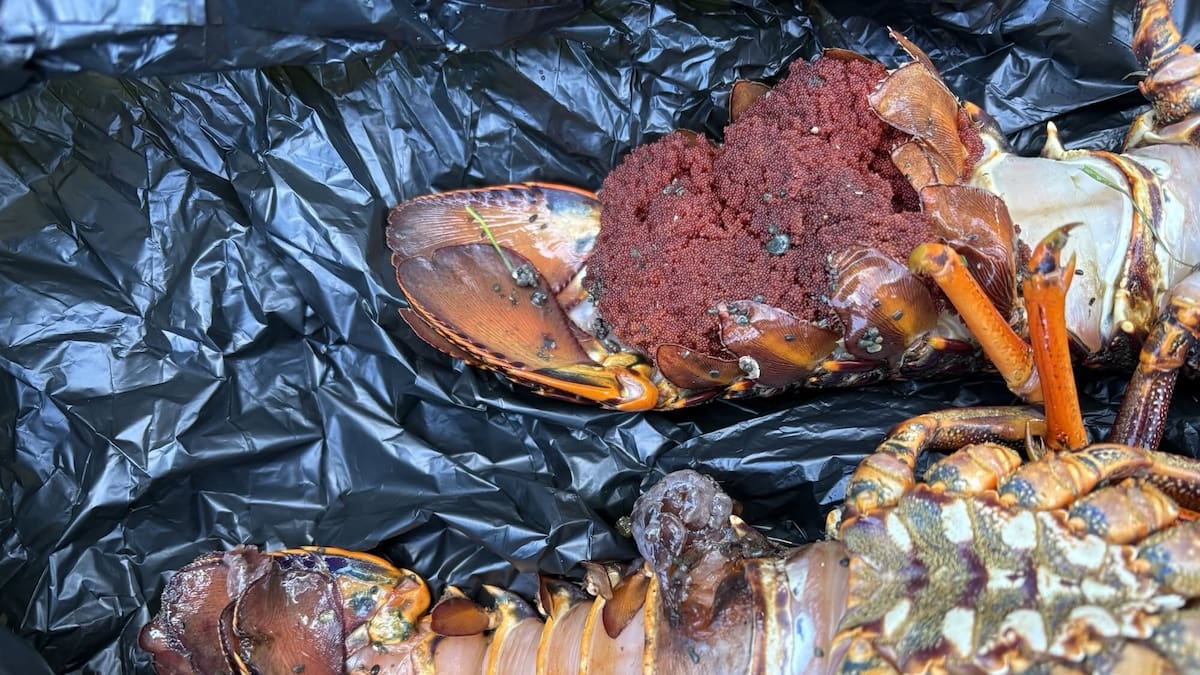
The catch also included four red rock lobsters, one undersized and another an egg-bearing female.
In addition, officers found four undersized pāua, indicating the area targeted by the illegal fishers was likely functioning as a nursery habitat for juvenile marine species.
Five days later, officers inspected catches brought to shore by two men seen diving and found them in possession of eight undersized packhorse rock lobsters, including several in soft-shell condition. MPI said each man will receive infringement notices of up to $750.
On their third visit to Whananaki, officers found three divers who had hidden their catch bag nearby.
The bag contained 26 undersized packhorse rock lobsters and a female red rock lobster carrying external eggs.
Many of the packhorse lobsters had been speared and some were in the soft-shell stage, MPI said.
Officers spoke with the men, seizing full sets of dive gear from two of them and warning they would likely face prosecution.
“This incident is of particular concern given the number and state of the rock lobster,” MPI said.
“These incidents highlight the ongoing pressure being placed on local fisheries resources.
“If current levels of non-compliance continue, the long-term sustainability of these valuable resources will be at risk.
“Protecting them requires a collective effort to ensure future generations can continue to enjoy and benefit from healthy marine ecosystems.”
It is illegal to use spears or other puncturing devices on rock lobsters, and the possession of lobsters caught by those means is an offence. Photo / MPI
Illegally taken crayfish and the prohibited devices used to catch many of them. Photo / MPI
MPI said local communities played a vital role in protecting fisheries and called on anyone who witnesses suspicious or illegal fishing activity to report it by calling 0800 4 POACHER (0800 476 224).
“Any information, including vehicle registration details, can be extremely helpful to investigations,” MPI said.
Gathering red spiny rock lobster (red crayfish) is banned at Whananaki and along the entire east coast of Northland under a strict “no-take” rule that started on April 1 this year and applies to recreational and commercial fishers.
The ban is expected to last for at least five years to help local numbers recover.
The west coast remains open, though with updated daily bag limits designed to ensure sustainability:
Spiny rock lobster (CRA 1): limit of two per person in open areas.Packhorse rock lobster (PHC 1): limit of three per person nationwide.
Offenders face fines of up to $100,000 and the potential seizure of vessels and gear. MPI urges fishers to “know before you go” and to download its NZ Fishing Rules app.
Sarah Curtis is a news reporter for the Northern Advocate, focusing on a range of issues. She has nearly 20 years’ experience in journalism, much of which she spent court reporting in Gisborne.